
Lieferung heute & morgen

Qualitätsgarantie

Willkommens-Angebote freischalten: KOSTENLOSE Lieferung | Bis zu 80 % RABATT | Kostenlose 30-Tage-JoyPlus-Testphase
App herunterladen
If you want to buy mochi ice cream online, you will find a wide selection of small frozen desserts: from classic Japanese mochi ice cream and fruity varieties to vegan mochi ice cream. These products combine a soft rice casing with a frozen centre. However, to ensure your order suits your taste and household, you should look beyond the brand name and packaging design.
Names such as Mochi Ice Cream, “Mango” or “Berry” initially describe only the flavour and type of product. The ingredients list is what really matters. For example, a mango mochi may contain milk ingredients, while another mango variety may be made with coconut milk. Fruit purée, fruit pieces or simply natural flavourings may also be used.
A product with a creamy consistency is not automatically vegan. Milk, cream, mascarpone and whey ingredients are used in several varieties. Conversely, plant-based products such as Little Moons Mochi Ice Cream Chocolate Fudge or Yuzu & Lemon explicitly state that they have a vegan recipe. If you have allergies, you should still check the complete allergen information, including any precautionary statements about possible traces.
Mochi ice cream is a frozen product and should be stored continuously at -18 °C or below. Straight from the freezer, the rice casing is often firm. Most packs recommend leaving the pieces at room temperature for around five minutes. Allowing them to thaw for longer may change their shape and texture. In line with the stated storage instructions, thawed products must not be refrozen.
The outer casing typically consists of water, sugar and glutinous rice flour or rice starch. It should completely enclose the ice cream and become soft and pliable after a short period of thawing. The fillings vary considerably:
If you prefer a particular texture, you should therefore not choose solely by the flavour name.
Before buying, check the product information for milk, soya, nuts, peanuts and other declared allergens. For example, Honey Roasted Pistachio lists pistachios, milk and soya. According to the product information, the vegan chocolate product contains soya and may contain milk, nuts, peanuts and eggs.
“Gluten-free” does not necessarily mean vegan either. Strawberry & Mascarpone Cheesecake is described as gluten-free and vegetarian, but contains milk and soya. For households with different preferences, ordering a selection of varieties may be useful, provided the individual packs are stored separately.
Many packs contain six pieces. Koyuki Japanese Mochi Ice Cream is available in 180 g, 6 × 30 g. Several Little Moons varieties contain 6 × 32 g, while Strawberry & Mascarpone Cheesecake contains four pieces of 30 g each. It is therefore worth comparing the price per 100 g or per piece, rather than just the pack price.
Nutritional values also vary. Koyuki Yuzu contains 204 kcal per 100 g, while Koyuki Mango contains 226 kcal. Little Moons Chocolate Fudge provides 235 kcal per 100 g, whereas Strawberry & Mascarpone Cheesecake contains 306 kcal per 100 g. These figures are intended as factual guidance and are not a substitute for individual nutritional advice.
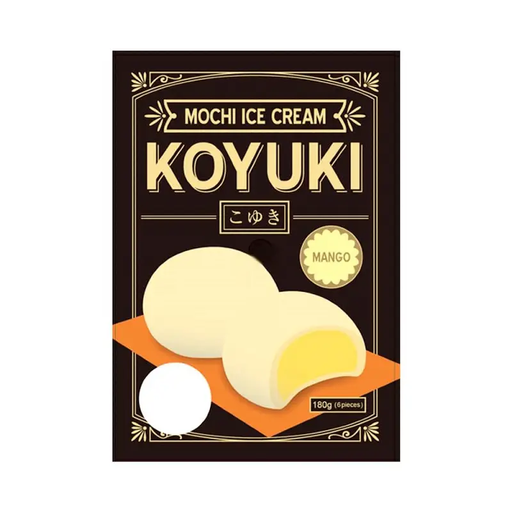
Why this product suits this profile: The pack contains six evenly sized pieces, making it suitable for trying or sharing at home. Mango purée is listed at 34%.
The ingredient and nutritional information clearly shows the fruit content, number of portions and energy value.
Six 30 g portions; fruity mango recipe, stored below -18 °C.
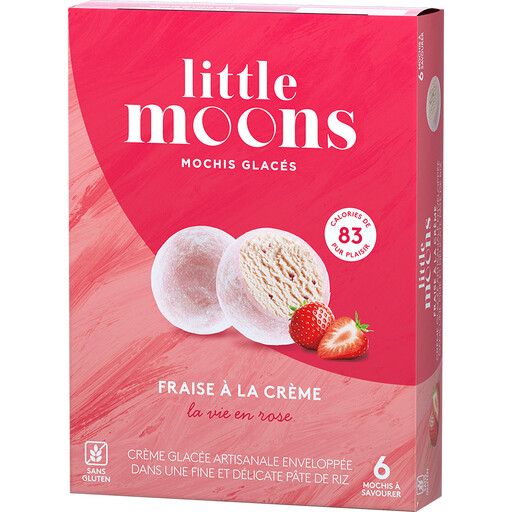
Why this product suits this profile: Milk, cream, mascarpone and strawberry purée are combined with a rice casing; the product information also describes it as gluten-free and vegetarian.
The information distinguishes vegetarian and gluten-free properties from vegan recipes, and lists milk and soya as allergens.
192 g total quantity; six pieces of 32 g each; strawberry purée and freeze-dried strawberry pieces are declared.
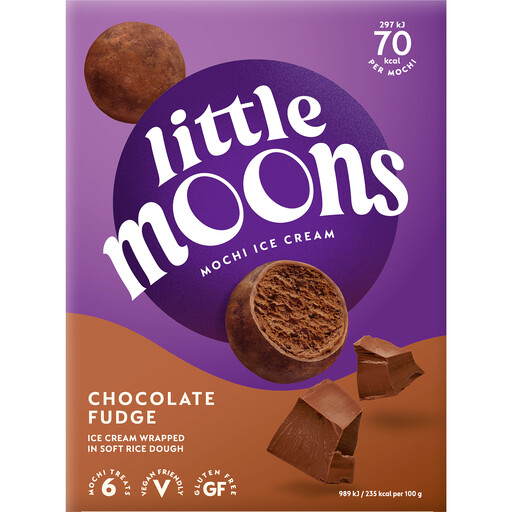
Why this product suits this profile: The recipe is described as vegan and combines coconut milk, dark chocolate and vegan fudge pieces.
The plant-based recipe is stated in the product description; soya is listed as an allergen and should be checked before purchase.
Six portions of 32 g each; chocolate and fudge pieces add extra inclusions to the filling.
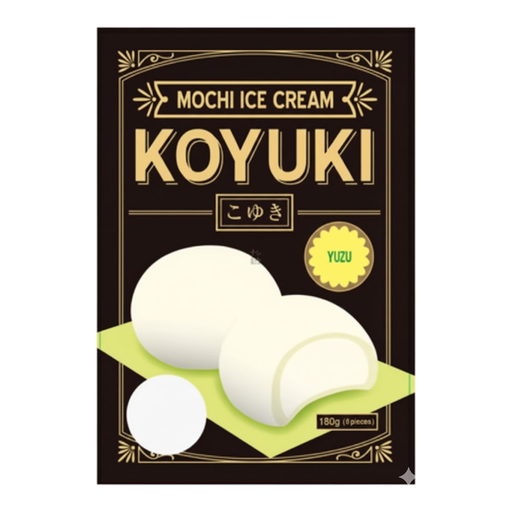
Why this product suits this profile: Yuzu and lemon juice are listed in the ice cream mixture. The six small portions are ideal for serving chilled after a short standing time.
The product data lists the ingredients, portion size, nutritional values and the required storage temperature below -18 °C.
Yuzu and lemon juice as declared ingredients; 180 g pack with six pieces.
After delivery, mochi ice cream should ideally be placed in a suitable freezer compartment straight away. Check the packaging for the stated best-before period and storage recommendation. For many varieties, leaving them at room temperature for around five minutes is sufficient before serving. For Little Moons, this period is given as three to five minutes or around five minutes, depending on the product.
Only take the number of pieces you need from the pack. For products that must not be refrozen after thawing, it is particularly important to maintain the cold chain. Packs containing six individual portions are practical for families, dessert evenings or stocking up; if you are simply trying one flavour, a smaller pack of four pieces may be sufficient.
We have compiled a complete, regularly updated list of products that fully meet these strict selection criteria and the safety regulations applicable in the EU.
Most of the products listed here should stand at room temperature for around five minutes. Koyuki also recommends taking the product out of the freezer a few minutes before serving. The specific instructions on the relevant packaging take priority.
No. Many varieties contain milk, cream or mascarpone. Vegan recipes are clearly labelled, such as Little Moons Chocolate Fudge, Yuzu & Lemon or Passion Fruit & Mango. You should also check the allergens and any precautionary statements about possible traces.
The best-before date is printed on the packaging. Unopened products must be stored frozen in accordance with the product information. After thawing, mochi ice cream must generally not be refrozen; some products also include additional instructions to consume within one day.