
Lieferung heute & morgen

Qualitätsgarantie

Willkommens-Angebote freischalten: KOSTENLOSE Lieferung | Bis zu 80 % RABATT | Kostenlose 30-Tage-JoyPlus-Testphase
App herunterladen
As a Joybuy Product Recommendation Officer, I see the immense joy a detailed model car can bring every day—and the deep disappointment when a product fails to meet expectations. Whether it's a gift for boys and girls, an addition to a personal collection, or a decorative piece for car enthusiasts, the selection is vast, but not every offer delivers on its promise. Before you buy model cars, you should be aware of the common pitfalls that often lead to frustration.
Many buyers fall into traps cleverly disguised by marketing. These primarily include:
To avoid these issues, it's crucial to focus on the objective and verifiable features of a model car.
To make an informed decision, you should examine three core aspects. These define the quality, purpose, and long-term value of a model, whether you're looking for collector's model cars or durable toys.
The scale indicates the size ratio of the model to the original vehicle. It is the most important indicator of the actual size and potential level of detail.
The term die-cast model cars refers to models produced using the zinc die-casting process. This provides a satisfying weight and high stability. Pay attention to the following points:
Functions increase a model's play value or realism.
Based on these objective criteria, we have selected a few models for different user profiles.

Why this model is a great fit: Ideal for children looking for a durable and functional toy. Siku is known for its long-lasting metal models that can withstand intense play. The police theme sparks the imagination and offers high play value.
This model avoids the pitfall of inferior materials. The body is made of sturdy metal, and the rubber tyres ensure durability, rather than relying on fragile plastic.
Features a trailer hitch compatible with other SIKU trailers, expanding the play possibilities.
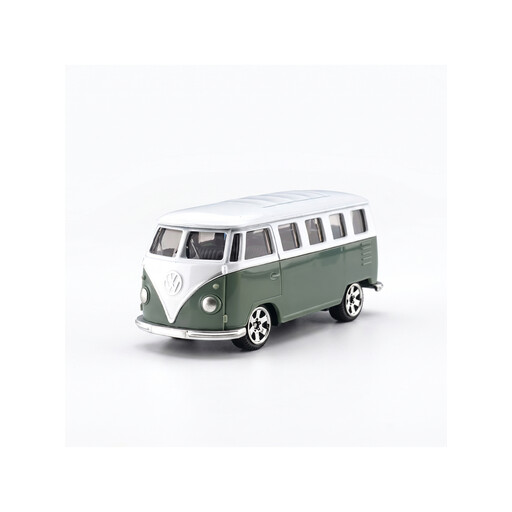
Why this model is a great fit: The VW Bus model is an icon. This officially licensed model captures the charm of the original and is suitable both as a collector's item for a display case and as a high-quality toy for nostalgists.
It avoids the "false exclusivity" trap. Instead of relying on empty hype, it delivers value through an official license and an authentic replica of a true classic.
The construction with shock absorbers ensures smooth movement and increases the model's durability during handling.

Why this model is a great fit: For many, a Lamborghini model car is the epitome of a supersports car. This 1:36 scale model offers a great balance of size and detail, perfect for a desk or display case without taking up too much space.
It avoids the misleading size trap. The 1:36 scale is clearly defined, delivering a model large enough for visible details like opening doors, and won't disappoint by being too small.
The combination of a robust alloy body and the integrated pull-back function offers added value to both collectors and casual players.
We have compiled a complete, up-to-date list of products that fully meet these strict selection criteria and relevant safety regulations.
The scale indicates how many times smaller the model is compared to the original vehicle. A scale of 1:43 means that every unit of length on the model is 43 times larger in reality. A 4.3-metre-long real car would therefore be 10 centimetres long at this scale. The smaller the second number (e.g., 18 in 1:18), the larger the model car.
To preserve the condition of collector's model cars, you should protect them from direct sunlight and dust. A display case is ideal. For cleaning, a soft, dry cloth or a brush is usually sufficient to remove dust from crevices. According to the manufacturer's instructions for some models, like those from CCA, a cloth with a very small amount of alcohol can be used to remove fingerprints. Water should be avoided as it can lead to corrosion on metal parts.
Models with a car with a pull-back motor are generally designed for children aged 3 and up. It is important to look for a sturdy construction from which no small parts can detach. Models from established brands like Siku or Majorette are subject to strict safety tests. Always pay attention to the manufacturer's age recommendation and ensure the model has rounded edges to minimise the risk of injury.