
Lieferung heute & morgen

Qualitätsgarantie

Willkommens-Angebote freischalten: KOSTENLOSE Lieferung | Bis zu 80 % RABATT | Kostenlose 30-Tage-JoyPlus-Testphase
App herunterladen
Deciding to buy a new mountain bike can quickly become overwhelming given the sheer number of models, technical specs, and marketing promises. Many buyers invest in features they will never use or overlook critical flaws that compromise riding enjoyment and safety. This guide focuses on the essential aspects that truly matter for beginners and recreational cyclists, helping you make an informed decision.
Before you choose a model, you should be aware of three common traps:
To avoid these traps, you should focus on three core parameters that determine a bike's quality, safety, and versatility.
A bike with disc brakes offers consistently reliable braking performance, regardless of weather conditions. Unlike rim brakes, which press against the wheel rim, disc brakes act on a separate disc mounted to the wheel hub. This provides better modulation and greater stopping power, especially in the rain or on muddy trails. For everyday and recreational use, mechanical disc brakes are a low-maintenance and cost-effective solution that offers a significant safety advantage.
The frame is the heart of the bicycle. The most common materials in the entry-level and mid-range classes are steel and aluminium.
For most beginners, an MTB hardtail is the ideal choice. These bikes have a suspension fork at the front to absorb shocks from uneven terrain, while the rear of the frame is unsuspended (rigid). This design is efficient, requires less maintenance, and is more affordable than a full-suspension bike, offering sufficient comfort for forest paths, gravel tracks, and city traffic. For riders who place a high value on easy mounting and dismounting, such as seniors or commuters in everyday clothing, a step-through city e-bike with an adapted frame geometry is an excellent option.
The tyres largely determine where and how you can ride.
Based on these objective criteria, we have compiled a few models for different user profiles.
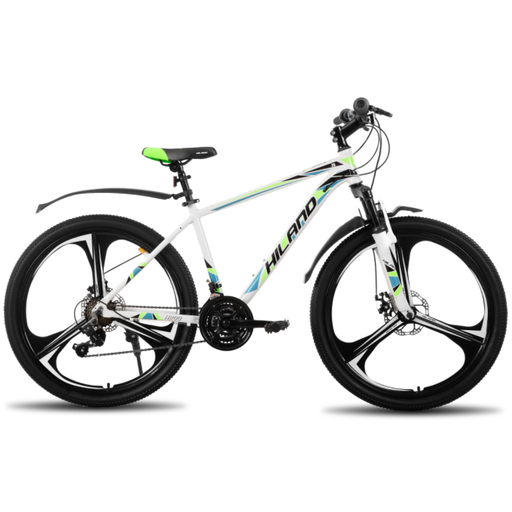
Why This Fits Their Persona: Ideal for riders seeking a versatile bike for daily commutes, light forest trails, and weekend tours without paying for superfluous pro-level features.
Focuses on the essentials: a lightweight aluminium frame, a reliable 18-speed drivetrain, and mechanical disc brakes. It avoids the cost trap of unnecessary high-end specs.
Dual disc brakes for safe braking in all weather conditions. The front suspension fork enhances comfort on uneven routes.
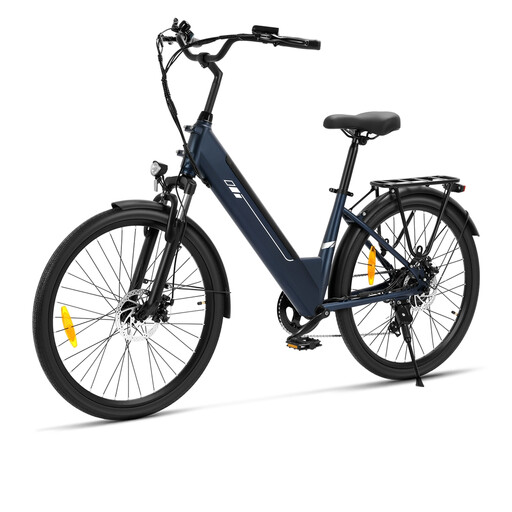
Why This Fits Their Persona: Perfect for daily commutes, shopping trips, or relaxed tours. The step-through frame and electric motor make riding effortless for everyone, including seniors or individuals with limited mobility.
Solves the problem of improper frame geometry. The step-through frame allows for easy and safe mounting and dismounting, even in regular everyday clothing.
The 561.6 Wh battery provides a range of up to 100 km in assist mode, according to the manufacturer. The battery is also removable and can be conveniently charged indoors.
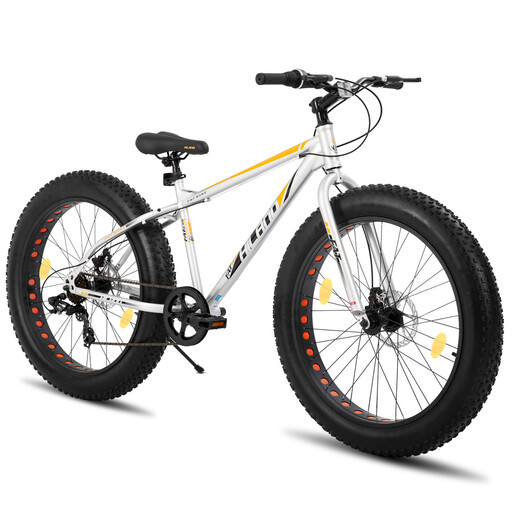
Why This Fits Their Persona: For riders who refuse to be stopped by difficult terrain. Ideal for tours on the beach, in the snow, or on muddy trails where conventional tyres reach their limits.
This bike makes no compromises. It is specifically designed for maximum traction and combines this with a robust steel frame and reliable disc brakes to ensure safety even in extreme conditions.
The 4.0-inch wide fat tyres offer superior grip and stability. The Hi-Ten steel frame is extremely durable and effectively absorbs shocks.
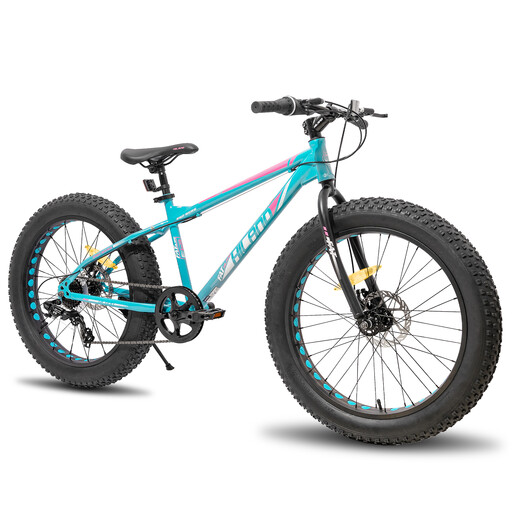
Why This Fits Their Persona: For parents looking for a robust and safe bike for their children that can handle more than just the ride to school. The wide tyres inspire confidence and stability on any surface.
Directly addresses parents' safety concerns by integrating mechanical disc brakes, which ensure reliable stopping power for children.
The combination of 20-inch fat tyres and a 7-speed Shimano drivetrain makes this bike extremely versatile and easy for kids to handle as they expand their riding skills.
We have compiled a complete, up-to-date list of products that fully meet these strict selection criteria and UK/EU safety regulations.
The right frame size is crucial for riding comfort. It is usually determined based on your height and inseam length. Most manufacturers, like Hiland Mountainbike or Touroll E-Bike, provide height recommendations in their product descriptions (e.g., "suitable for riders between 160–200 cm"). As a rule of thumb, you should be able to touch the ground with both feet when standing in front of the saddle, with a few centimetres of clearance between your inseam and the top tube.
Mechanical disc brakes are known for their reliability and relatively low maintenance. The brake pads need to be replaced occasionally depending on usage frequency and riding style, which is a straightforward process. The brake cables should be checked regularly for tension. Compared to the performance boost, especially in wet conditions, the maintenance effort is minimal and manageable for any hobby cyclist. Replacement parts like a new disc brake rotor are also readily available.
Yes, modern e-bikes are very beginner-friendly. Models like a men's e-bike or a women's trekking e-bike feature multiple levels of assistance (e.g., 12, 15, 18, 21, 25 km/h). This allows you to adjust the motor's power to your needs. You can start with a higher level of support and reduce it as your fitness improves. E-bikes are ideal for covering longer distances, climbing hills effortlessly, or simply commuting to work in a relaxed manner without much exertion.