
Lieferung heute & morgen

Qualitätsgarantie

Willkommens-Angebote freischalten: KOSTENLOSE Lieferung | Bis zu 80 % RABATT | Kostenlose 30-Tage-JoyPlus-Testphase
App herunterladen
If you want to buy muesli online, you will quickly find a wide range of options: oat muesli, chocolate muesli, crunchy muesli, organic muesli, fruit muesli and high-protein blends. Families can also choose from children’s muesli, baby porridge and muesli multipacks. However, product names do not always tell the full story. The ingredients list, nutrition table and intended age group are what really matter.
Claims such as “30% less sugar” or “50% less sugar” refer to a comparison with another product group. On their own, they do not tell you how much sugar the product actually contains per 100 g. For example, Kölln Crunchy Oat Muesli with 50% less sugar contains 8 g of sugar per 100 g, according to the product information. This gives you a clear point of reference to compare with other products.
“No added sugar” should not be confused with “sugar-free”, either. Fruit, raisins, bananas and fruit juice ingredients may naturally contain sugar. Kölln 50% Fruit Muesli with no added sugar contains 22 g of sugar per 100 g, which, according to the product description, comes from the fruit ingredients.
Organic muesli is made in accordance with the applicable requirements for organic farming. However, this does not automatically indicate its calorie content, sweetness or suitability for allergy sufferers. For example, organic crunchy muesli may contain rice syrup, unrefined cane sugar or other sweetening ingredients.
You should therefore also check:
Baby cereal products are intended for a specified age group and are prepared differently from oat muesli for adults. According to the product information, Bebivita Good Night Porridge Biscuit & Banana is intended from the 5th month and is mixed with water. HiPP Bio Good Night! 3-Grain Flakes is suitable from 8 months, according to the product information.
Age recommendations, preparation instructions and allergens should be checked particularly carefully when it comes to baby food. The meal should be prepared fresh; leftovers and temperature instructions should be handled in accordance with the packaging. Baby porridge should not be given in a bottle if the manufacturer expressly specifies spoon-feeding.
Always compare the figures per 100 g, rather than looking only at the values per serving. Recommended serving sizes may vary. In crunchy and chocolate muesli, ingredients such as glucose syrup, rice syrup, honey or fructose-glucose syrup may also be used alongside sugar.
A lower sugar content may appeal to people who prefer a less sweet breakfast. If you choose reduced-sugar muesli, you should also check whether the flavour is mainly influenced by chocolate, dried fruit or sweeteners.
Wholegrain flakes provide clear information about the cereal content. According to the product information, 69% of the ingredients in Dr. Oetker Vitalis Yoghurt & Strawberry Muesli are wholegrain oats. The product also contains 7.3 g of fibre and 11 g of protein per 100 g.
High-protein muesli may contain a high proportion of soya protein, milk protein, nuts or other sources of protein. The ingredients list for Dr. Oetker High Protein Muesli Chocolate & Nut includes 44% soya protein and 6.7% soya protein isolate. This composition is not suitable for people with soya, milk or nut allergies.
The main allergens must be highlighted in the ingredients list. Commonly relevant allergens include:
Vegan muesli can be an option for a plant-based diet, but it is not automatically low in sugar or reduced in calories. Dr. Oetker Vitalis Vegan Crunchy Triple Choc includes oats, sugar, glucose syrup and cocoa, among other ingredients. The nutritional information states 16 g of sugar per 100 g.
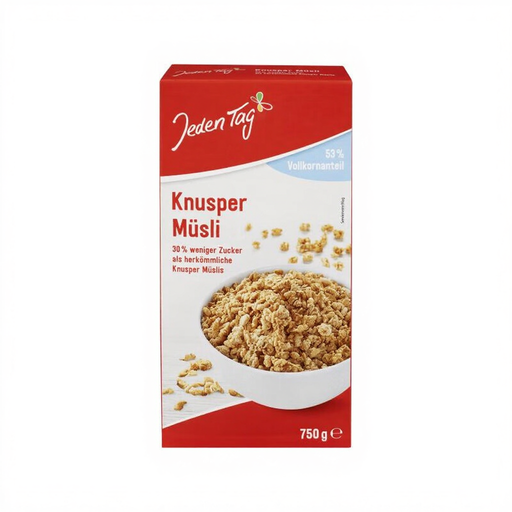
Why this product suits this profile: The 750g pack is ideal for keeping a regular breakfast supply. According to the product information, it contains 12 g of sugar, 8 g of fibre and 10 g of protein per 100 g.
The “Less Sweet” description is supported by specific nutritional information. The ingredients list states 55% wholegrain oat flakes and 15% wholegrain wheat flakes.
Large pack size, wholegrain content and a clearly stated vegan recipe.
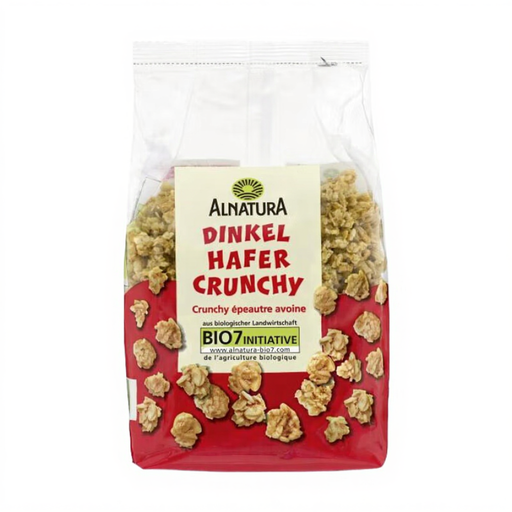
Why this product suits this profile: According to the product description, the ingredients come from certified organic farming. Wholegrain spelt and oat flakes form the base.
The organic claim is not the only information available: the product data lists 35% wholegrain spelt flakes, 33% wholegrain oat flakes and 13 g of sugar per 100 g.
Organic cereal base, product information stating that it is palm-oil-free, and versatile serving options with milk, yoghurt or plant-based alternatives.
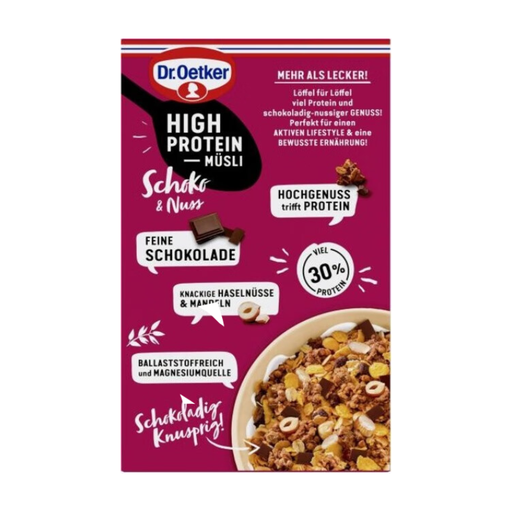
Why this product suits this profile: This recipe is aimed at people who specifically focus on their protein intake at breakfast. According to the ingredients list, it contains soya protein, milk protein, almonds and hazelnuts.
The focus on protein is clear from the ingredients list. The allergens present are also explicitly identified.
Protein-focused recipe with chocolate and nuts; suitable for a vegetarian diet according to the product information.
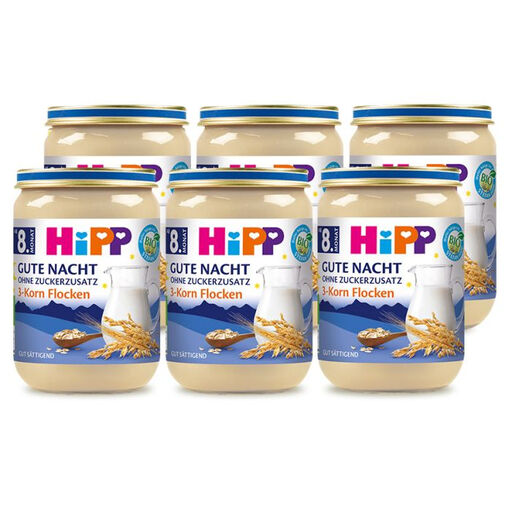
Why this product suits this profile: The muesli multipack contains six units and, according to the product information, is intended for babies from 8 months. The recipe contains milk and three types of cereal.
The age group and serving format are clearly stated. The product description also specifies “no added sugar” and lists the allergens gluten, oats, milk and wheat.
Organic certification, a multipack with 6 x 190 g and preparation as a hot or cold meal according to the product information.
We have put together a complete, regularly updated list of products that fully meet these strict selection criteria and the safety regulations applicable in the EU.
Before clicking “Buy”, it is worth making a quick comparison:
The best-before date applies to the unopened pack. Once opened, quality depends mainly on moisture and storage. Seal the inner bag tightly and store the muesli in a dry place at room temperature. If its smell or taste changes, or if you notice anything unusual, it should no longer be eaten.
No. Oat muesli and crunchy muesli mainly differ in their processing and recipe. Crunchy blends are often baked and may contain oil, sugar or syrup. Compare the wholegrain content, sugar, fibre and ingredients list instead of relying solely on the product name.
Baby porridge and baby cereal products should only be used in accordance with the specified age group and preparation instructions. Muesli for adults is not automatically suitable for babies or toddlers. Also check the consistency, allergens and information on the original packaging.