
Lieferung heute & morgen

Qualitätsgarantie

Willkommens-Angebote freischalten: KOSTENLOSE Lieferung | Bis zu 80 % RABATT | Kostenlose 30-Tage-JoyPlus-Testphase
App herunterladen
If you’re looking to buy non-alcoholic drinks online, you’ll find a huge selection of beer, pilsner, malt drinks, cocktails and sugar-free soft drinks. Shopping online makes it easier to compare prices and pack sizes, but it also comes with a few typical pitfalls. A prominent label like “non-alcoholic” alone doesn’t tell you anything about the actual alcohol content, the nutritional values, or whether it’s suitable for certain diets.
With beer, “non-alcoholic” can mean a residual alcohol content of less than 0.5% vol. or a specifically stated lower value, depending on the product. Krombacher Non-Alcoholic Pils, for example, is listed at 0.1% vol. Other drinks carry the 0.0% vol. label, such as the non-alcoholic cocktail Berry Mule.
If you want to avoid alcohol completely or are specifically looking for a drink for driving, you should check the value in the product description and on the label. If the information is contradictory, the packaging label is the deciding factor.
Non-alcoholic malt drinks and beer mix drinks can contain carbohydrates or sugar. Supermalt, for instance, lists 15 g of carbohydrates and 13 g of sugar per 100 ml. Fruity non-alcoholic cocktails can also have a higher energy content due to juice concentrates and sugar.
For shoppers looking for sugar-free drinks, it’s worth checking:
Non-alcoholic drinks in bulk packs are practical for parties, clubs and regular consumption. At the same time, 24 cans or bottles need storage space and can create extra return trips due to single-use or returnable deposits. Before you buy, you should calculate the total volume: a pack of 24 bottles of 0.5 litres contains 12 litres of drink.
Distinguish between non-alcoholic beer, non-alcoholic pilsner, radler, malt drink and non-alcoholic cocktail. A pilsner typically has a more bitter hop note, while a radler also contains citrus or fruit components. Non-alcoholic cocktails are often more heavily sweetened and tend to taste fruity or spicy.
For products labelled 0.0% vol., this information should be directly in the product details or on the label. “Non-alcoholic”, on the other hand, can include a small residual alcohol content.
Many non-alcoholic beers contain water, barley malt, hops and carbon dioxide. This means they generally contain gluten. This applies to Krombacher, Jever Fun, Kirin Ichiban and Seoul Breeze Yuzu Beer, among others. These products are not suitable for people with coeliac disease or gluten intolerance.
You should also check the ingredients of international speciality drinks. Korean TWF Makgeolli Korean Melon Ade contains erythritol, among other things, and notes possible laxative effects if polyols are consumed in excess. If you have allergies or intolerances, the full ingredient list on the packaging is what matters.
Always compare nutritional values per 100 ml, not just per bottle. This makes it easier to compare a 330 ml bottle and a 500 ml can. For households and hosts, 24-packs are efficient, while individual sizes are better if you want to try a flavour first.
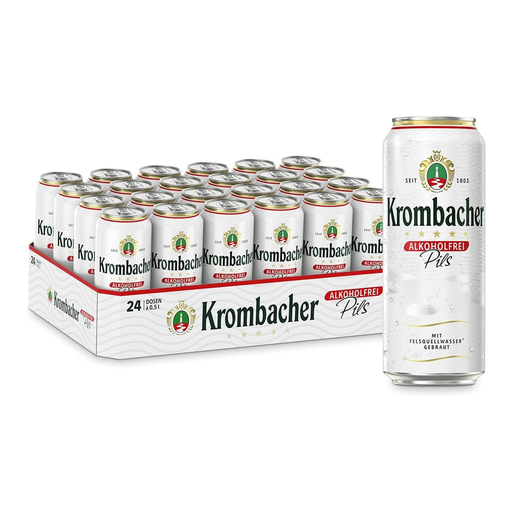
Why this product fits the profile: The 24-pack of 0.5-litre cans is ideal for shoppers who regularly drink non-alcoholic pilsner or need supplies for guests.
The alcohol content is specifically stated as 0.1% vol. Ingredients, allergens and nutritional values per 100 ml are also listed.
24 cans totalling 12 litres; 26.53 kcal per 100 ml; labelled as suitable for vegan and vegetarian diets.
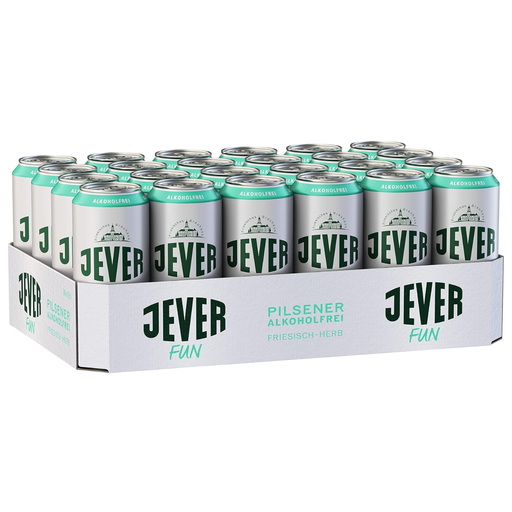
Why this product fits the profile: The stated bitterness of 40 bitterness units is aimed at shoppers who prefer a distinctly hoppy, Frisian-style dry pilsner profile.
The product data lists pack size, ingredients, nutritional values and the non-alcoholic pilsner category. Shoppers should check the exact alcohol value on the packaging before buying.
40 bitterness units; 15 kcal per 100 ml; 24 cans of 0.5 litres each.
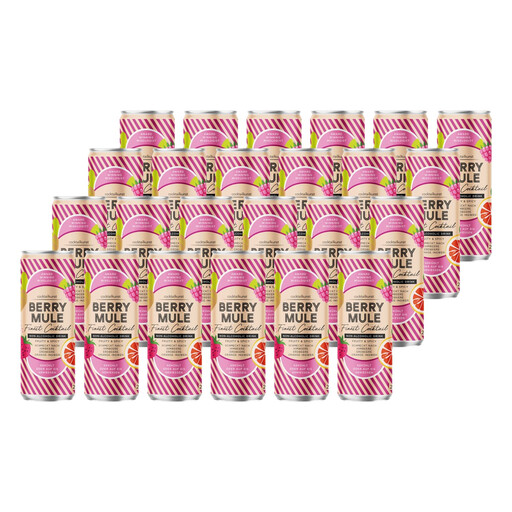
Why this product fits the profile: Small 250 ml portions are ideal for parties, buffets and events where ready-to-serve non-alcoholic cocktails are wanted.
The alcohol content is stated as 0.0% vol. The ingredient list also transparently shows the sugar content of 15.1 g per 100 ml.
24 glass bottles of 0.25 litres; fruity-spicy recipe with raspberry, strawberry, orange and ginger.
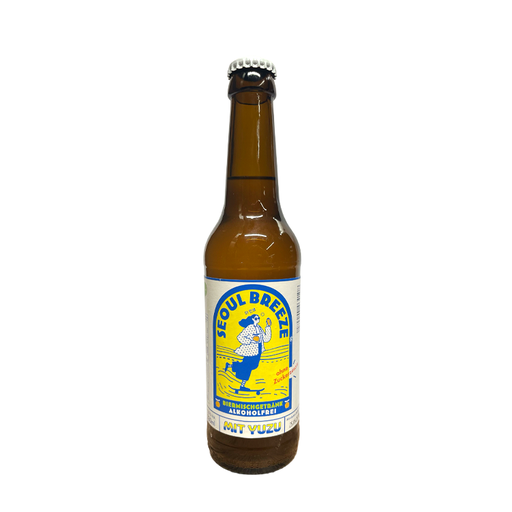
Why this product fits the profile: The combination of non-alcoholic beer, yuzu and lemon offers an alternative to classic pilsner and suits shoppers who want to try Korean non-alcoholic drinks.
The product information states 0.0% vol. as well as 22 kcal and 2.8 g of sugar per 100 ml. Wheat and barley malt are listed as gluten-containing allergens.
330 ml bottle; yuzu and lemon components; clear allergen information for wheat and barley malt.
We’ve put together a full, regularly updated list of products that fully meet these strict selection criteria and the safety regulations in force in the EU.
The best-before date is on the packaging. Unopened drinks should be stored cool, dry and away from direct sunlight, according to the manufacturer’s instructions. Opened bottles or cans should be consumed promptly and refrigerated if necessary.
Not every beer labelled “non-alcoholic” has 0.0% vol. Some products can contain a small residual alcohol content. If you want to avoid alcohol completely before driving, you should specifically choose a product with a clearly stated 0.0% vol. and check the information on the packaging.
For larger events, non-alcoholic drinks in bulk packs are usually easier to budget for. The key factors are the price per litre, the portion size, the storage space and the deposit. For different tastes, a combination of non-alcoholic pilsner, radler, sugar-free drinks and non-alcoholic cocktails can be more sensible than a single bulk pack.