
Lieferung heute & morgen

Qualitätsgarantie

Willkommens-Angebote freischalten: KOSTENLOSE Lieferung | Bis zu 80 % RABATT | Kostenlose 30-Tage-JoyPlus-Testphase
App herunterladen
A stable training surface is a fundamental factor for the correct and safe execution of exercises. Using a non-slip fitness mat prevents slipping during dynamic movements, thereby contributing to injury prevention. The selection of the right model depends on objective criteria such as material properties, thickness, and surface texture. These parameters determine the mat's functionality for specific applications like yoga, Pilates, or general fitness training.
The decision for a suitable exercise mat should be based on an analysis of technical specifications. The following points are relevant for evaluation.
The material composition significantly influences properties such as grip, cushioning, and durability.
TPE (Thermoplastic Elastomers): This material is characterized by its high density and elasticity. TPE mats offer good resilience, meaning they quickly return to their original shape after being compressed. They are often lighter than mats made from other materials and feature a closed-cell structure, which reduces the absorption of moisture and bacteria. The grip is typically very high, making them an excellent choice for yoga and exercises that require a stable position.
NBR (Nitrile Butadiene Rubber): NBR foam is known for its excellent cushioning properties. Mats made from this material are often thicker and softer, which makes them particularly joint-friendly. They are ideal for Pilates, gymnastics, and floor exercises where knees, elbows, and the spine are under greater stress. The surface is usually textured to increase slip resistance, but it can lose grip during heavy sweating.
The thickness of a training mat is a compromise between cushioning and stability.
Thin Mats (up to 6 mm): Offer more direct contact with the floor and promote stability during balance exercises, as is common in yoga. A thickness of 6 mm, often found in TPE mats, represents a good balance between cushioning and stability.
Thick Mats (10 mm to 12 mm): A thick fitness mat provides maximum cushioning and comfort. This is advantageous for exercises performed lying down or sitting and protects the joints during static holds. However, for dynamic standing exercises, a mat that is too thick can compromise stability.
The surface texture is crucial for slip resistance. Many mats use a double-sided design with different patterns (e.g., line and wave patterns) to ensure grip on various floor surfaces like tile or wood parquet.
For use at home and at the gym, portability is an important factor. A low weight and a fitness mat with a carrying strap make transport and storage significantly easier.
Based on the technical criteria mentioned, we present a selection of models that are suited for different user profiles due to their specific properties.

Why we recommend this product: This model combines the beneficial properties of TPE material with a 6 mm thickness. It represents a balanced solution for users who need both stability for balance exercises and basic cushioning. The double-sided anti-slip texture is designed for use on various floor surfaces.
Pros:
Who it's for: Users looking for a versatile yoga mat or gymnastics mat for exercises where stability is a priority. Suitable for beginners and advanced practitioners in yoga and Pilates.
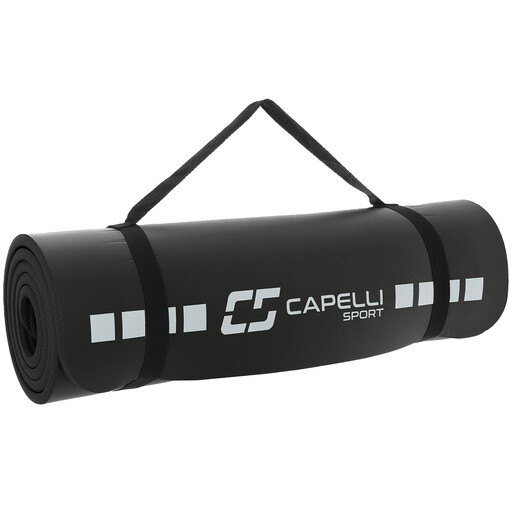
Why we recommend this product: With a thickness of 12 mm (1.2 cm) and made from NBR foam, this model clearly focuses on maximum cushioning and comfort. Its shock-absorbing properties make it a particularly joint-friendly option for floor exercises.
Pros:
Who it's for: Individuals looking for a thick fitness mat with maximum padding for stretching, Pilates, and general floor exercises. Ideal for users with sensitive joints or for training on hard surfaces.
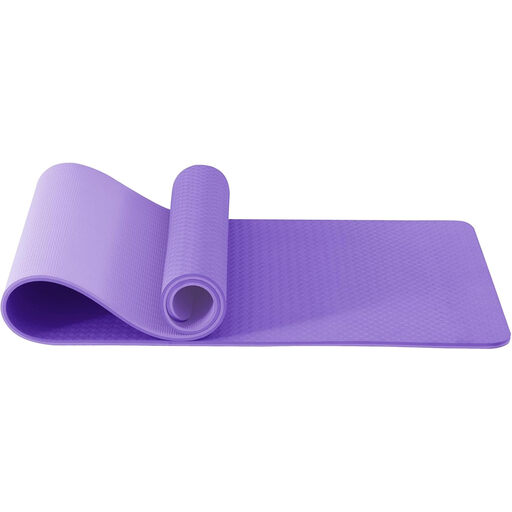
Why we recommend this product: This model offers significant cushioning at 10 mm, combining it with the advantages of TPE material. It's a great choice for users who want more comfort than a standard yoga mat but prefer the lightweight and grippy nature of TPE.
Pros:
Who it's for: Users seeking a comfortable mat for a wide range of activities such as Pilates, gymnastics, meditation, and general fitness training for home use. A good compromise between cushioning and functionality.
If the models presented here do not exactly meet your specific requirements, you can find a wider selection of mats and other accessories in our Fitness & Exercise Equipment category. Additional variations in terms of material, thickness, and design are available there.
1. How do you properly clean a non-slip fitness mat? Most TPE and NBR mats should not be machine washed. The recommended cleaning method is to wipe them down with a damp cloth and mild soap. Afterwards, the mat should be allowed to air dry completely before being rolled up and stored to prevent material damage and odour build-up.
2. Which material is better for a yoga mat, TPE or NBR? There is no single "better" material; the choice depends on the intended use. TPE is often the preferred choice for yoga as it offers excellent grip and stability at a low weight. NBR, due to its superior cushioning properties, is better suited for static floor exercises, Pilates, or for individuals who need an especially joint-friendly surface.
3. How thick should a gymnastics mat be for home workouts? For general home workouts, a thickness between 6 mm and 12 mm is a good guideline. A 6 mm mat is an all-rounder for yoga and dynamic exercises. A 10 mm or 12 mm mat offers more comfort and is ideal for exercises performed on the floor for extended periods, such as crunches, planks, or stretching.