
Lieferung heute & morgen

Qualitätsgarantie

Willkommens-Angebote freischalten: KOSTENLOSE Lieferung | Bis zu 80 % RABATT | Kostenlose 30-Tage-JoyPlus-Testphase
App herunterladen
Anyone looking to buy a nut mix will find a wide range online: trail mix, roasted nuts, salted nuts, nut and fruit mixes, and spicy snack mixes. Packaging often uses terms such as “high-protein”, “natural” or “premium”. For an informed purchasing decision, however, the key factors are the ingredients list, nutrition table, allergens and pack size.
The Joybuy Product Recommendation Officer explains the most important selection criteria and presents products for different everyday situations.
A nut and fruit mix can contain significantly more sugar than a pure nut mix because of raisins, cranberries, chocolate, honey or caramelised ingredients. This is not automatically a disadvantage, but it does affect the flavour, nutritional values and suitable uses. If you are looking for a neutral snack for the office, check the sugar and carbohydrate content per 100 grams.
Nuts naturally contain protein, but the precise amount varies depending on the blend. A product containing dried fruit or chocolate may provide less protein per 100 grams than a mix with soya beans or a higher proportion of nuts. Therefore, compare the stated “protein per 100 g” rather than relying only on the front of the packaging.
Nuts, peanuts and soya beans are common allergens. In addition to the ingredients list, pay attention to statements such as “May contain traces of …”. For people with allergies, it is also important to remember that recipes and production conditions can change. The labelling on the packaging actually supplied is the deciding factor.
Ingredients are listed in descending order by weight. If raisins or sugar appear first, the product is more likely to be a sweet fruit and nut mix. In a savoury blend, the desired ingredients, such as almonds, cashews, peanuts, seeds or edamame, should be clearly identifiable.
Also look out for additions such as sunflower oil, rapeseed oil, salt, smoke flavouring or spice blends. In roasted nuts, these ingredients can affect the flavour and crunchiness.
The standard serving reference makes for a fair comparison. The most relevant values are:
A small portion may be more convenient when you are out and about than a large pack. Large bags or tubs, on the other hand, are suitable for regular consumption, provided they are resealed properly after opening.
If you are looking for vegan snacks, check for a corresponding product statement and review the ingredients list at the same time. Honey, milk ingredients or chocolate may make a mix unsuitable for a vegan diet. The specific product labelling is also decisive for a gluten-free diet.
Nuts should be stored in a cool, dry place and protected from heat, moisture and strong odours. After opening, a tightly sealed bag or food storage container is recommended. For some products, consumption within a few days or weeks is advised.
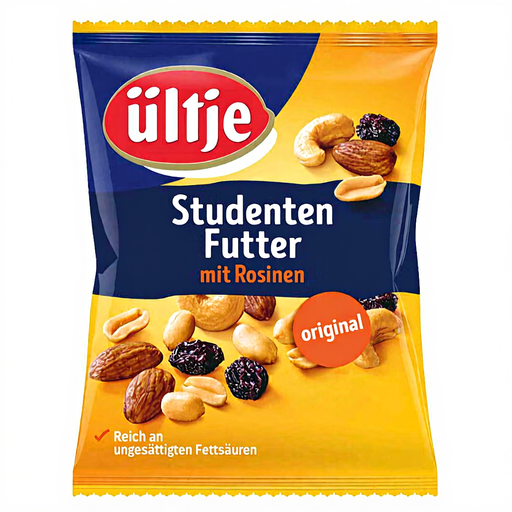
Why this product suits this profile: The 200-g pack combines 30% raisins with peanuts, cashews and almonds. It is therefore suitable for students, commuters and anyone looking to buy a classic trail mix.
The proportion of raisins is stated explicitly in the ingredients description. The nutritional information lists 17 g of protein, 20 g of sugar and 0.07 g of salt per 100 g.
A clear combination of nuts and raisins, ready to eat and, according to the product information, made in Germany.
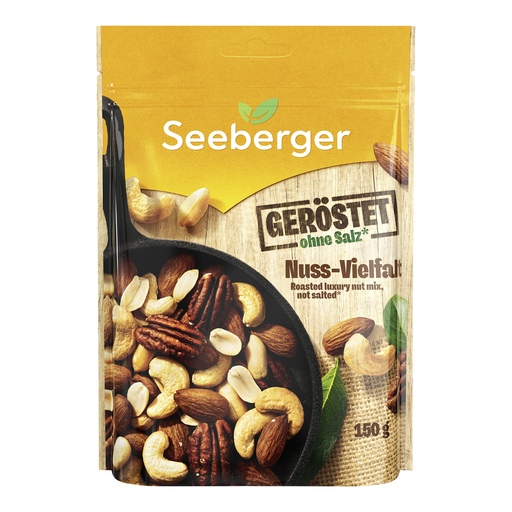
Why this product suits this profile: This mix contains almonds, cashews, pecans and peanuts, and is roasted. It is aimed at people who prefer a pure, savoury nut mix without raisins.
The product information states 0.01 g of salt and 4.6 g of sugar per 100 g. This clearly distinguishes the mix from more heavily seasoned or sweetened varieties.
Four different types of nut, 24 g of protein per 100 g, plus information indicating that it is suitable for vegan and lactose-free diets.
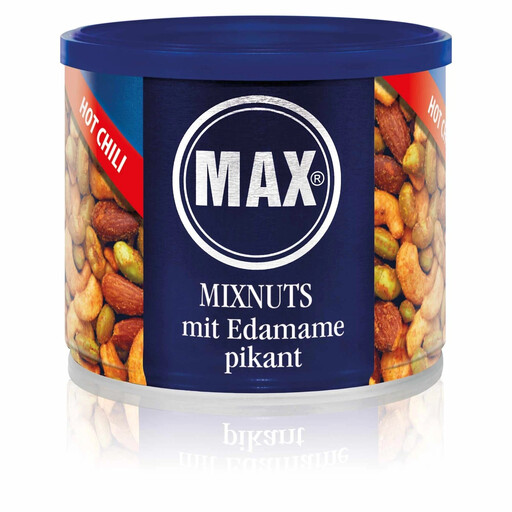
Why this product suits this profile: The combination of roasted almonds, cashews and edamame with chilli seasoning suits a vegan diet, as well as hikes, work breaks and active everyday situations.
The protein content is clearly stated as 25 g per 100 g. At the same time, the ingredients list includes salt, sugar and spices, making the savoury character transparent.
250-g pack, ready to eat and, according to the product information, vegan, with almonds, cashews and soya beans.
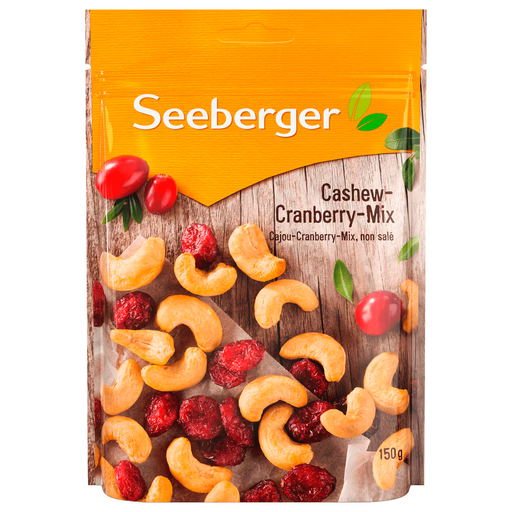
Why this product suits this profile: This mix combines 60% roasted cashews with 40% sweetened dried cranberries. It is suitable as a sweet snack or as a topping for yoghurt and muesli.
The fruit content and added sugar are clearly stated. With 31 g of sugar and 12 g of protein per 100 g, you can assess the mix according to your own snacking plans.
A clearly stated ratio of cashews to cranberries, a convenient 150-g pack and versatile uses.
We have compiled a complete, regularly updated list of products that fully meet these strict selection criteria and the safety regulations applicable in the EU.
Nuts readily absorb moisture and strong odours. After opening, the pack should therefore be resealed and stored away from the cooker, radiators and direct sunlight. An airtight container can be useful for larger quantities.
Small portions are practical for the office, studying or hikes. If you buy a large pack, you can divide the contents between several containers in advance. This prevents the pack from being left open for long each time you take some out. Children under four should not be given whole nut and seed mixes, as they pose a choking hazard.
Classic trail mix usually contains nuts and raisins. Products such as the Ültje Classic Student Mix or the Seeberger Studentenfutter Trail Mix combine these ingredients. If you prefer less sweetness, choose a nut mix without raisins or roasted nuts instead.
Some products are described as vegan by the manufacturer, including certain pure nut mixes and the Max Mix with edamame. Nevertheless, check the ingredients list and allergen information before eating. Honey, milk ingredients or certain types of chocolate may make a product unsuitable for a vegan diet.
This depends on the product, packaging and storage conditions. Some products recommend consuming them within two to three days, while others remain flavoursome for several weeks when stored in a dry, sealed container. For the definitive shelf life, refer to the best-before date and the information on the packaging.