
Lieferung heute & morgen

Qualitätsgarantie

Willkommens-Angebote freischalten: KOSTENLOSE Lieferung | Bis zu 80 % RABATT | Kostenlose 30-Tage-JoyPlus-Testphase
App herunterladen
Anyone looking to buy nuts and snacks online will quickly find a huge selection: sweet chestnuts, peeled chestnuts, hazelnut kernels, walnut kernels, macadamia nuts, pine nuts, cashew kernels, peanuts and sweet snacks. Product images often look similar, but pack sizes, ingredients, allergens and whether products are ready to eat can vary considerably.
As a Joybuy Product Recommendation Officer, I filter market information according to practical criteria. What matters is not a promotional title, but whether a product suits your household, your taste and its intended use.
A product may consist solely of nuts or sweet chestnuts and still have been altered by roasting, salting, sweetening or flavouring. That is why it is worth checking the ingredients list and salt content when choosing roasted and salted nuts.
Even seemingly minor additions can be relevant. Flavoured products, for example, may contain sugar, sweeteners, spices or flavourings. A product name such as “Milk Flavour” therefore does not necessarily mean it has a short ingredients list.
500 g of macadamia nuts may be suitable for a party or frequent users. For one person looking for a snack to take on the go, 68 g, 80 g or 125 g is often easier to portion. Once opened, storage, moisture and exposure to air can affect quality.
Pay attention to:
The term healthy snacks alone says little about a product’s composition. Nuts are often high in fat and energy, while candied or flavoured varieties may also contain sugar or sweeteners. That is why you should compare the nutritional values per 100 g, rather than looking only at the portion size.
Allergen labelling is particularly important with nuts. Hazelnuts, walnuts, cashew kernels, macadamia nuts, peanuts and pine nuts are each listed separately. Possible traces of other tree nuts, soya, sesame and cereals containing gluten may also be stated.
Families with allergies should check the product page carefully before buying. The labelling on the packaging delivered remains decisive, as recipes and warnings may change.
Ready-to-eat nuts and peeled sweet chestnuts can be eaten straight from the pack. This is practical in the office, while travelling or as a snack on the go. Whole hazelnut kernels and walnut kernels are also suitable for baking, adding to muesli or using as a dessert ingredient.
With sweet chestnuts and peeled chestnuts, you should check whether they are peeled, cooked and ready to eat straight away. Information such as “ready to eat” or “consume directly after opening” is more helpful for everyday use than general advertising claims.
Energy and salt values show how much nut products can vary. In the product information available, for example, values range from 166 kcal per 100 g for Jia Jian Cheng Chu Chestnut Kernels to 756 kcal per 100 g for Seeberger Roasted & Salted Macadamia Nuts. This is not a quality judgement, but an objective basis for comparison.
For seasoned or sweetened snacks, also check:
Small bags are practical for the office or school bag. A larger pack may be a better choice for sharing at parties or for regular baking. For example, a 180-g pack is more suitable for sharing than a 68-g bag.
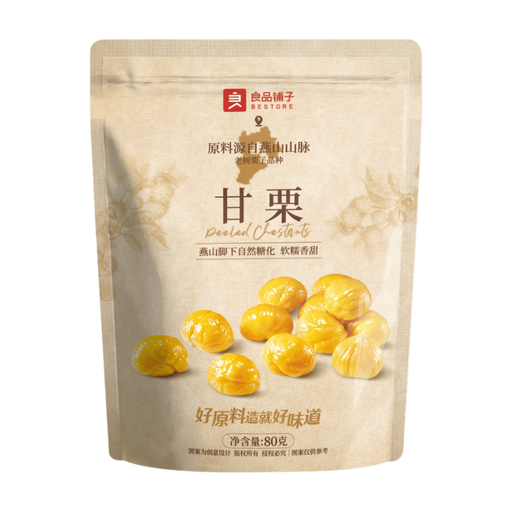
Why this product suits this profile: The 80-g pack is easy to portion and, according to the product information, ready to eat straight away. The ingredients are listed as 100% sweet chestnuts.
The ingredients list is short; however, allergy information and the current packaging should still be checked before buying.
80 g net weight, ready to eat straight away and, according to the product information, suitable for baking, porridge or desserts.
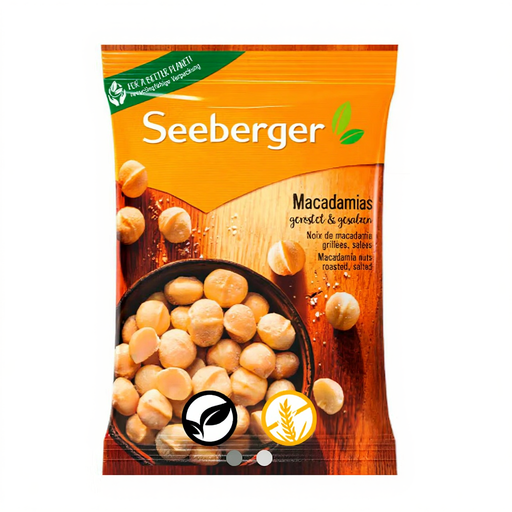
Why this product suits this profile: The product information specifies roasted macadamia kernels with salt, along with a net weight of 125 g. This makes it a good choice when you are looking for a clearly described flavour.
The ingredients and possible traces of other nuts are listed. The salt content of 0.8 g per 100 g provides a clear basis for comparison.
125-g pack, ready to eat and with clearly stated allergens and nutritional values.
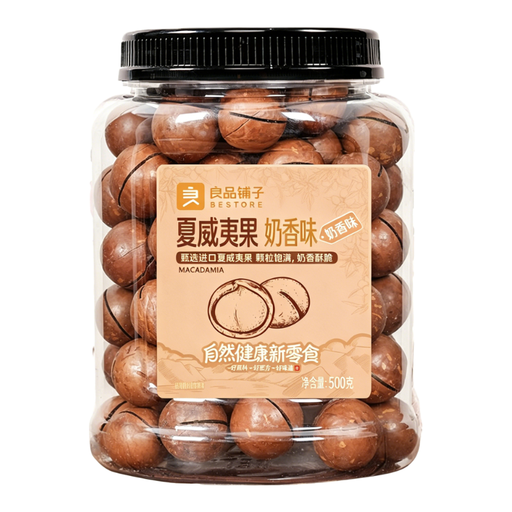
Why this product suits this profile: The 500-g pack is aimed at households, frequent users or parties. According to the description, the product is ready to eat and combines sweet and savoury elements.
The ingredients list includes sugar, salt, flavourings, sweeteners and E621. The warning about aspartame and a source of phenylalanine should also be noted.
Large 500-g pack, at least 98% macadamia nuts according to the product information, and suitable for snacking straight away.
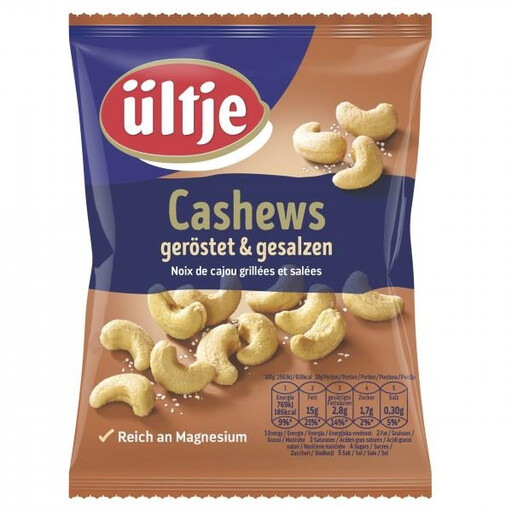
Why this product suits this profile: The 150-g bag is ready to eat and, according to the product information, suitable for taking on the go, enjoying in the office or serving at a party.
The ingredients list specifies 96% cashew kernels, sunflower oil and salt. Possible traces of other tree nuts and peanuts are stated.
150 g net weight, roasted and salted, with 21 g of protein and 1.0 g of salt per 100 g according to the product information.
We have put together a complete, regularly updated list of products that fully meet these strict selection criteria and the safety regulations applicable in the EU.
Ready-to-eat products in small or medium-sized packs are particularly practical. Peeled sweet chestnuts, peeled chestnuts, cashew kernels or roasted peanuts can be eaten straight from the packaging. Once packs have been opened, you should follow the relevant storage and consumption instructions.
This depends on the product, packaging and storage conditions. Many products should be sealed airtight after opening and consumed within a few days. Cooked sweet chestnuts may have a considerably shorter shelf life. The specific information on the packaging is the deciding factor.
This depends on age, allergies and individual dietary requirements. Check the ingredients, salt and sugar content, as well as any warnings. Young children can choke on whole nuts, so the relevant safety advice should be followed.