
Lieferung heute & morgen

Qualitätsgarantie

Willkommens-Angebote freischalten: KOSTENLOSE Lieferung | Bis zu 80 % RABATT | Kostenlose 30-Tage-JoyPlus-Testphase
App herunterladen
Choosing the right office chair is a critical decision that significantly impacts your posture and well-being during sedentary work. An ergonomic office chair is designed to support the body and promote a neutral posture. This is achieved through a range of specific design features and adjustment options that can be tailored to the user's individual body measurements. The focus is on reducing the physical strain that can result from prolonged sitting.
The evaluation of an office chair is based on objective, technical parameters. The following criteria are important when selecting a model for the office or home office.
The lower part of the human spine has a natural inward curve, known as the lordosis. An office chair with lumbar support is engineered to support this specific area and minimise pressure on the spinal discs. There are two main types:
A chair can only deliver its ergonomic benefits when it is correctly adjusted to the user. Essential adjustment options include:
The choice of material influences both comfort and longevity. An office chair with a mesh back offers high breathability, which is particularly beneficial during long periods of sitting. Padded seats with high-quality foam distribute pressure evenly.
The maximum weight capacity is a critical safety feature. Models like an office chair for up to 150 kg are equipped with reinforced gas springs and a more robust base. Certifications like BIFMA or SGS provide information about the tested stability and durability of a chair.
Based on the technical criteria mentioned, we present a few models that stand out for their specific ergonomic features.
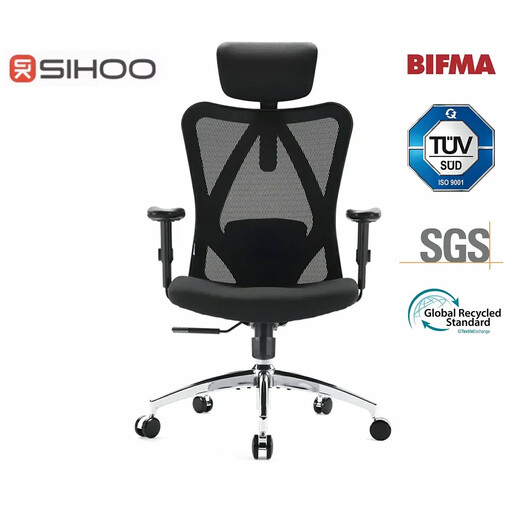
Why we recommend this product: The SIHOO M18 combines the appearance of a classic executive chair with comprehensive ergonomic adjustment options. According to the manufacturer, the model is BIFMA and SGS certified and designed for a load capacity of up to 150 kg. The high backrest with an adjustable headrest and lumbar support provides continuous support for the entire spine.
Pros:
Who it's for: This model is suitable for individuals who need a robust chair for prolonged sitting and prefer a high backrest to relieve strain on the entire back and neck.
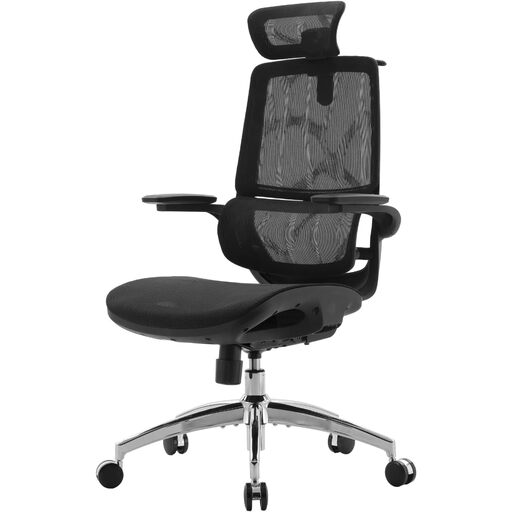
Why we recommend this product: The SIHOO M59AS is distinguished by its adaptive lumbar support, which, according to the product description, adapts to the user's movements. Another practical feature is the 80° flip-up armrests, which allow the chair to be pushed under the desk to save space.
Pros:
Who it's for: This model is a great option for users in space-constrained environments, such as a home office, who do not want to compromise on dynamic back support and flexible armrests.
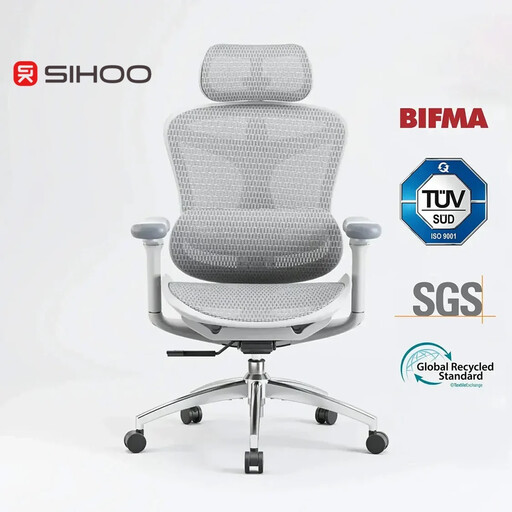
Why we recommend this product: The Sihoo Doro C300 is equipped with an intelligent weight sensor and self-adaptive lumbar support. The backrest's dynamic tracking system adapts to body movements. The 3D armrests synchronise with the backrest's recline to support the arms in any position.
Pros:
Who it's for: This model is aimed at users who value advanced, automated adjustment mechanisms and want continuous, dynamic support throughout their workday.
The choice of an office chair depends on individual requirements related to body type, sitting duration, and work environment. If the featured models do not exactly meet your needs, you can find a wider selection of alternatives in our Office Desk Chairs category.
1. What are the core features of an ergonomic office chair? An ergonomic office chair is characterised by several adjustable components. These include an adjustable seat height, customisable seat depth, a supportive backrest with lumbar support, and adjustable armrests. A synchronous mechanism, which allows for coordinated movement of the seat and backrest, also promotes active sitting.
2. How do I correctly adjust my office chair for prolonged sitting? Start with the seat height, ensuring your feet are flat on the floor and your knees form a 90-degree angle. Adjust the seat depth so there is a gap of about three fingers' width between the back of your knees and the front edge of the seat. Position the lumbar support in the natural curve of your lower back. The armrests should be set so that your forearms rest horizontally on them with your shoulders relaxed.
3. Is an office chair with a mesh back better than a padded one? Both materials have specific advantages. A mesh office chair is highly breathable and prevents heat build-up, which is often found to be more comfortable during long periods of sitting. High-quality padding can distribute pressure very effectively and offers a softer seating experience. The choice depends on personal preference and the room's climate conditions.