
Lieferung heute & morgen

Qualitätsgarantie

Willkommens-Angebote freischalten: KOSTENLOSE Lieferung | Bis zu 80 % RABATT | Kostenlose 30-Tage-JoyPlus-Testphase
App herunterladen
Anyone looking to buy orange drinks online will find a wide selection, including orange juice, orangeade, orange nectar, syrup, Italian specialities and international drinks. Searches also often bring up orange perfume, orange Eau de Parfum and orange toner. However, these products do not belong in the same comparison group as drinks.
The product name alone is therefore not enough to make the right choice. The key factors are fruit content, sugar and calorie values, pack size, and storage instructions.
An orangeade may contain only a small amount of orange juice, while orange juice made from concentrate or not from concentrate belongs to a different product category. Orange nectar also often contains water and, depending on the recipe, sugar. The fruit content should therefore be checked directly in the ingredients list or product description.
Examples from the product data:
Terms such as “light”, “reduced sugar” or “Zero Sugar” do not always refer to the same properties. Check the value per 100 ml rather than looking only at the serving size. For example, Fanta Zero Sugar Orange is listed as containing 3 kcal and 0.3 g of sugar per 100 ml. The sweeteners sodium cyclamate, acesulfame K and sucralose are also listed in the ingredients; a source of phenylalanine is mentioned as well.
In a standard fruit juice, the sugars generally come from the fruit. However, this does not mean that the drink is low in sugar. Amecke Orange-Citrus, for example, lists 9 g of carbohydrates and 9 g of sugar per 100 ml.
A drinks carton containing 6 x 1 litre or a multipack of 24 cans can be practical at home, in the office or at a party. At the same time, such packs require more storage space and need to be consumed more quickly after opening.
Pay attention to:
For a breakfast juice, products with a high fruit content, such as organic orange juice, 100% orange juice or a comparable fruit juice, are suitable. If you prefer carbonation and a sweeter taste, you could choose orangeade, aranciata or an Orange Passionfruit Spritzer.
The types of drink can broadly be categorised as follows:
Compare the nutritional values per 100 ml. With a multipack containing 6 x 1.25 litres, even a small difference per 100 ml can affect the total amount. For products containing sweeteners, you should take the ingredients used and any warnings into account.
According to the product information, Sanpellegrino Aranciata Rossa contains 15% fruit juice in total, comprising 10% orange juice and 5% blood orange juice. Its energy content is 38 kcal per 100 ml. The classic Sanpellegrino Aranciata is listed as containing 17 kcal and 4 g of sugar per 100 ml. These differences are more relevant for a direct comparison than terms such as “fresh” or “original”.
For families and offices, 1-litre bottles are generally easier to portion. Individual 0.33-litre cans or glass bottles are more suitable for guests, meals and chilled serving. Recommendations after opening vary by product: some juices should be consumed within 3 to 4 days, while other drinks should be used within a few days or immediately after opening.
If you want to mix your own drinks with water and carbonation, syrup can be a suitable format. The SodaStream Syrup Orange 440 ml is listed as containing, among other ingredients, sugar, orange juice concentrate, sweeteners and a source of phenylalanine. Before buying, check that the mixing ratio and yield match your usual consumption.
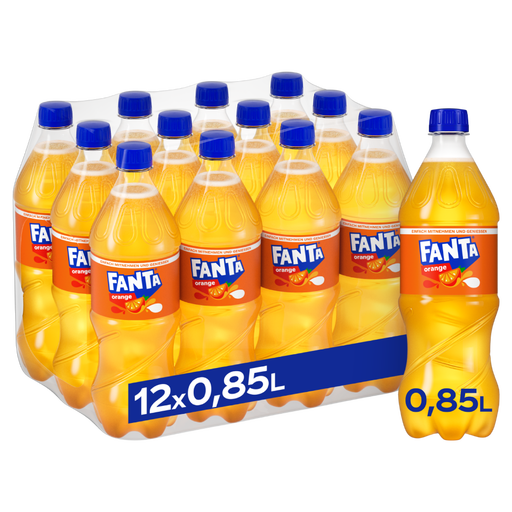
Why this product suits this profile: The 12-pack provides 10.2 litres in total for the home, office or guests, and its ready-to-drink orangeade format makes it easy to plan for.
The stated fruit content of 5% prevents it being mistaken for 100% juice; the nutritional information lists 43 kcal and 10.6 g of sugar per 100 ml.
12 bottles containing 0.85 litres each; no declarable allergens according to the product information.
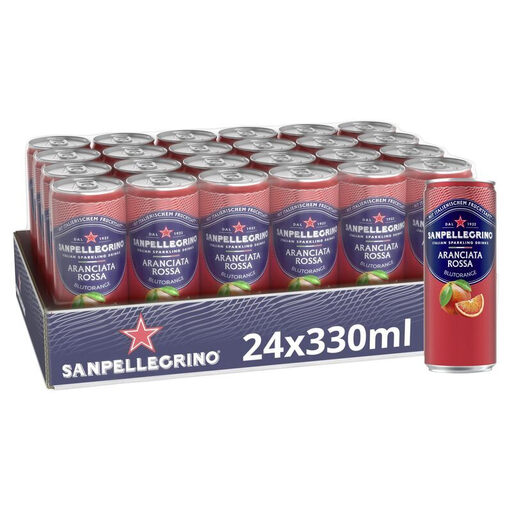
Why this product suits this profile: This Italian orangeade comes in 24 cans of 0.33 litres, making it suitable for meals, receptions and stockpiling, with a clearly defined individual serving.
The product data states 15% fruit juice in total, natural flavourings and no artificial colourings.
Origin: Italy; 0.33-litre cans and 38 kcal per 100 ml according to the product description.
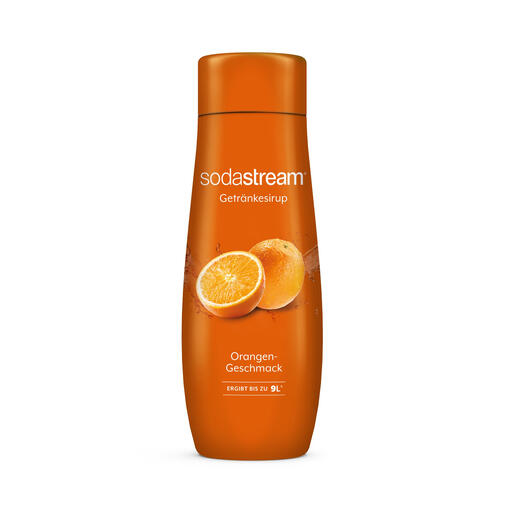
Why this product suits this profile: This syrup is ideal for households that want to prepare orange drinks in individual portions with water and carbonation.
The ingredients list states 50% orange juice concentrate based on the reconstituted juice, as well as several sweeteners.
440 ml bottle; 14 kcal and 2.8 g of sugar per 100 ml according to the product information.
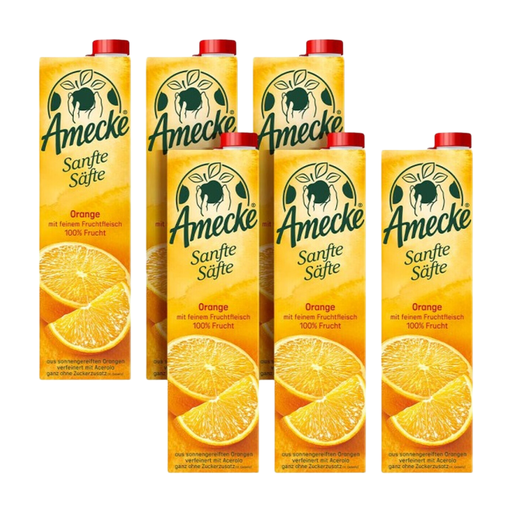
Why this product suits this profile: Six 1-litre cartons provide a reliable supply for several people and are clearly distinct from orangeades with a lower fruit content.
The product description states 100% orange juice with no additional ingredients, making the type of drink clear.
6 x 1 litre; 42 kcal and 9 g of sugar per 100 ml according to the nutritional information; described as vegan.
For sugar-free orangeade, the ingredients and nutritional information should be checked together. If you are looking for a Japanese speciality, you could choose Ramune Orange, such as GENKI RAMUNE Orange Drink 200 ml. This drink is described as containing carbonated water, fructose-glucose syrup, sugar and flavouring components.
The search terms orange perfume and orange Eau de Parfum, on the other hand, lead to cosmetics. Etat Libre d’Orange Sous le Pont MIRABEAU EDP 100 ml and Eau de Protection EDP 50 ml are fragrances for external use, not food products. An orange toner, such as the ATREUS VC Sweet Orange Toner, is also a facial skincare product. Pay attention to the directions for use, ingredients, distance from the eyes and skin compatibility; no medical claims can be inferred from these details.
We have put together a complete, regularly updated list of products that fully meet these strict selection criteria and the safety regulations applicable in the EU.
Multipacks containing 6 x 1 litre, 6 x 1.25 litres or 24 individual containers are practical for families, offices or events. The available storage space and the amount likely to be consumed after opening are the key considerations.
Depending on its labelling, orange juice consists of juice obtained entirely or almost entirely from oranges. Orange nectar has a lower fruit content and is made with water and, where applicable, sugar. The precise fruit content is stated on the label.
This depends on the mixing ratio, the price of the bottle and your actual consumption. Compare the cost per finished litre and also take sugar, sweeteners and the cost of obtaining water and carbonation into account.