
当日/次日达

品质保障

开启新人专享福利: 全场免邮 | 低至 2 折 | 免费试用 30 天 JoyPlus 会员
下载 Joybuy
Anyone looking to buy orange juice online will find a wide selection: 100% orange juice, orange juice from concentrate, mild varieties, organic orange juice, orange nectar and orange drinks for when you’re on the go. At first glance, the products may look similar. However, differences in fruit content, sugar, pack size and storage can affect taste, price and everyday practicality.
“Orange” in a product name does not automatically mean that it is pure juice. The descriptions provide important clues:
The ingredients list is therefore what matters, not just the image on the front of the pack.
A juice can be made with no added sugar and still contain natural sugar from oranges. The nutrition table shows how many carbohydrates and how much sugar are contained per 100 ml. For comparison: according to the product details, Hohes C Mild Orange contains 8.8 g of sugar per 100 ml. Capri-Sun Orange contains 7.9 g per 100 ml; however, this drink has a fruit content of just 10% and also contains sugar in the ingredients list.
A multipack can be practical for families, offices and people who drink a lot of juice. For a small household, however, a multipack of orange juice only makes sense if it can be used within the recommended period. After opening, most juices need to be refrigerated and consumed within around three to four days. With individual portions, this issue does not arise, but there is more packaging per serving.
First, check whether you are looking for pure juice, nectar or a fruit drink. Anyone who prefers 100% orange juice should look for an ingredients list such as “orange juice from orange juice concentrate”. With orange nectar, take account of the water, sugar and stated fruit content.
It is also worth checking the nutritional information on products labelled orange juice with no added sugar. “No added sugar” describes how the product is made; it does not mean that it contains no natural fruit sugar.
A mild orange juice may be a good choice for households with different taste preferences. According to the product description, Hohes C Mild Orange is made from orange juice concentrate and acerola juice concentrate, and contains 32 mg of vitamin C per 100 ml, equivalent to 40% of the reference intake. Such information should always be checked against the label of the specific product.
With a vitamin C orange juice, it is also important to distinguish between vitamin C that occurs naturally in the fruit and vitamin C that has been added. A vitamin C declaration is nutritional information, not a medical claim.
For the breakfast table, 1-litre orange juice is often a suitable choice. A carton or bottle can be stored in the fridge and poured out as needed. For families, offices or events, 6x1-litre or larger packs may be more practical. 0.2-litre portions are easier to carry for school, days out and lunchboxes.
Also check the storage instructions: unopened products are usually stored in a cool, dry place away from direct sunlight. Once opened, they should be kept in the fridge. Shake the juice before serving so that natural components are distributed evenly.
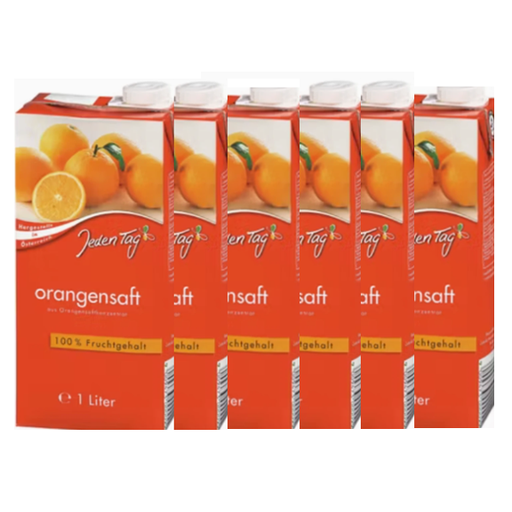
Why this product suits this profile: The 6x1-litre pack is aimed at households that regularly serve juice and prefer clear product labelling.
The ingredients list states 100% orange juice from orange juice concentrate. This clearly distinguishes the product from nectar and orange drinks.
100% fruit content, 6 x 1 litre and around 45 kcal per 100 ml according to the product details.
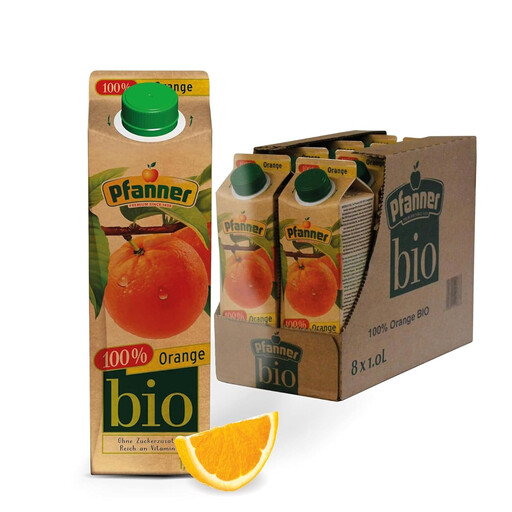
Why this product suits this profile: The organic label and stated fruit content appeal to shoppers who take a closer look at ingredients and provenance.
The product name specifically states that it is 100% organic orange juice from concentrate. The nutritional information also shows the natural sugar content.
Organic orange juice, 100% fruit content and an 8x1-litre format for reliable supplies.
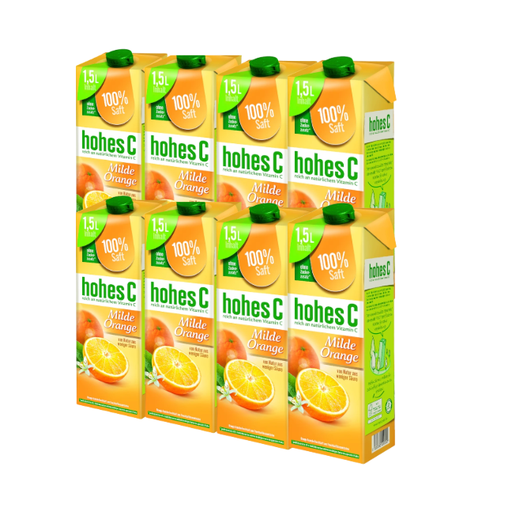
Why this product suits this profile: The total volume of 12 litres is designed for regular consumption by families, in offices or at larger gatherings.
The large pack only offers good value if your consumption matches the recommended period after opening. The 1.5-litre bottles can be opened one after another as needed.
Mild taste, 8 x 1.5 litres, 99.5% orange juice from concentrate and 32 mg of vitamin C per 100 ml according to the product details.
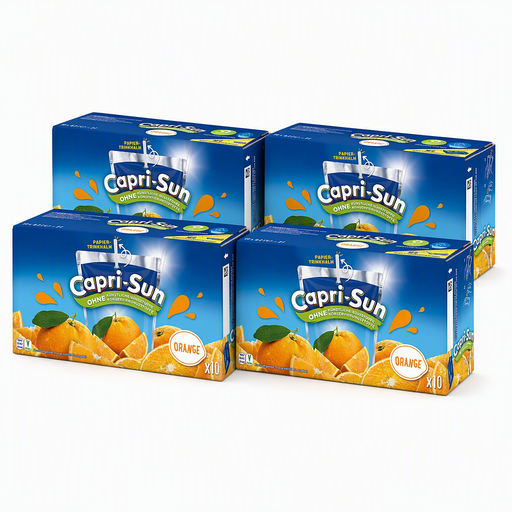
Why this product suits this profile: The 0.2-litre portions are ideal for lunchboxes, days out and situations where an opened litre bottle would be impractical.
The stated fruit content of 10% makes it clear that this is an orange drink, not 100% orange juice.
40 individual portions, 0.2 litres per pack and, according to the product details, suitable for vegan and lactose-free diets.
We have put together a complete, regularly updated list of products that fully meet these strict selection criteria and the safety regulations applicable in the EU.
“From concentrate” describes how the juice is made. If the concentrate is reconstituted with water and sold as 100% juice, it can still be 100% orange juice. The deciding factors are the legal product description and the ingredients list on the packaging.
This depends on the product. Many suppliers recommend keeping opened juice refrigerated and consuming it within three to four days. For individual portions, follow the specific guidance on the packaging. Changes in smell, taste or appearance are a reason not to use the product.
Comparing the price per litre is more meaningful than comparing the pack price. Nectar may have a different price per litre because it contains less fruit. Also compare the fruit content, sugar, pack size and intended use. This makes it easier to decide, when buying orange juice, which format is right for your household.