
Lieferung heute & morgen

Qualitätsgarantie

Willkommens-Angebote freischalten: KOSTENLOSE Lieferung | Bis zu 80 % RABATT | Kostenlose 30-Tage-JoyPlus-Testphase
App herunterladen
By a Joybuy Product Recommendation Officer, 28 July 2026
Fruit puree pouches are a convenient staple for many parents. They're quick, perfect for on the go, and a hit with most children. However, the market can be overwhelming, and not every product that looks healthy actually delivers on its promise. Before you make a decision, it's important to understand a few common pitfalls to make a conscious choice for your child.
The selection on supermarket shelves can be daunting. Colourful packaging and marketing claims make it difficult to tell what's what. Pay close attention to these three points:
To find a suitable, high-quality organic food pouch, you should check three key criteria. These will help you objectively assess a product's quality.
A short, clear ingredient list is usually a good sign. A fruit puree for babies should ideally contain only fruit, and perhaps some vegetables or grains.
The EU organic logo guarantees that the ingredients come from certified organic farming. This means, among other things, no synthetic chemical pesticides or fertilisers were used. Information on the origin of the ingredients (e.g., "EU/Non-EU Agriculture") provides additional transparency.
The age on the packaging is more than just a recommendation. Products for 6 months+ are usually very finely pureed and tailored to the needs of infants during the weaning stage. A healthy snack for toddlers from one year onwards may have a coarser texture or contain small pieces to encourage chewing. The composition, for instance with grains or yoghurt, is also often designed to meet the nutritional needs of older children.
Based on the criteria above, we have identified several products suitable for different needs and profiles.
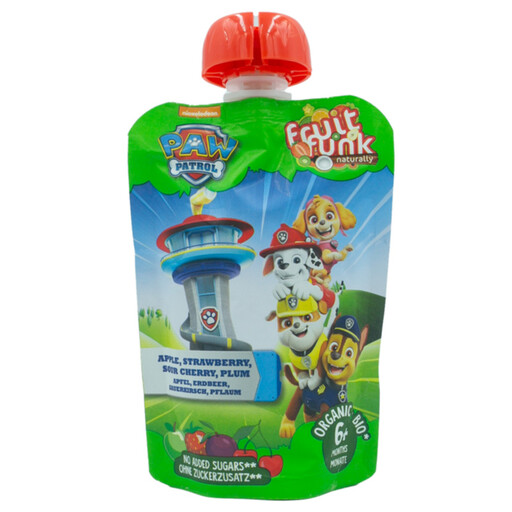
Why it's a good match: Ideal for parents who are starting to introduce solids and want to get their baby used to simple, pure fruit flavours. The recipe is stripped back to the essentials and is suitable for babies from 6 months.
According to the manufacturer, the product is made from 100% organic fruit. The sugar content of 10g per 100g comes exclusively from the fruit itself; there is no added sugar.
Carries the EU organic logo. The ingredient list is short and transparent: Apple puree 70%, Strawberry puree 10%, Cherry puree 10%, Plum puree 10%.
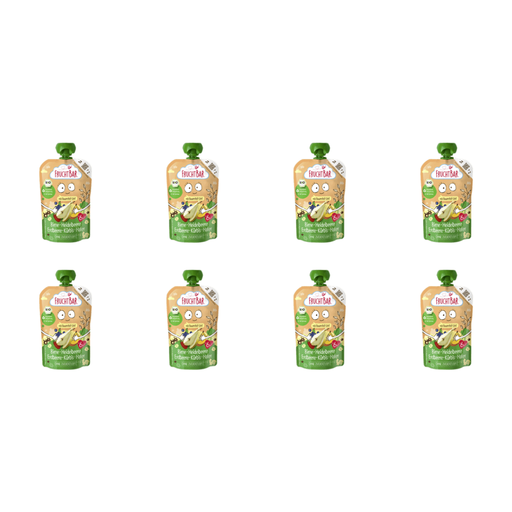
Why it's a good match: For parents who want to offer their child a wider variety of flavours. The combination of fruit, vegetables (pumpkin), and gluten-free oats provides a broader nutrient profile than a simple fruit puree.
By adding vegetables and oats, the relative fruit content is reduced, leading to a moderate sugar content of 9g per 100g. The ingredient list is transparent and has no added sugar.
Combines organic-quality fruit, vegetables, and grains. The recipe is suitable for babies from 6 months and helps encourage acceptance of different flavours.
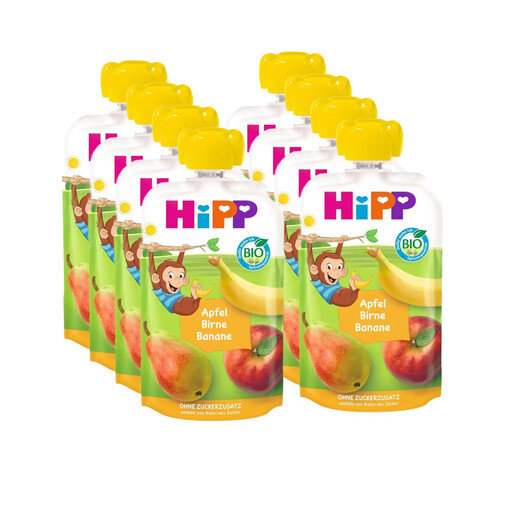
Why it's a good match: Specifically designed for toddlers from one year of age. This pure fruit blend serves as a quick and easy snack for on the go or as a fruity dessert, suiting the energy needs of active children.
The clear '1+ years' age recommendation ensures the product is used for the correct developmental stage. According to the manufacturer, it consists of 100% organic fruit with no other additives.
Proven organic quality from Hipp. The recipe is simple and focuses on popular fruits, which increases acceptance among toddlers.
We've compiled a complete, up-to-date list of products that fully meet these strict selection criteria and all relevant regulations.
The surest way is to check the ingredient list. Terms like sugar, glucose syrup, fructose, or sweetening fruit juice concentrates indicate added sugar. If the list says "100% fruit" or only lists fruits and vegetables, the product generally contains only naturally occurring sugar. The "of which sugars" value in the nutritional table combines both and is useful for comparison.
Most manufacturers recommend their products from 6 months onwards, i.e., after you've started weaning. It's important to follow the specific age recommendation on the packaging. Initially, it's advisable to squeeze the squeezable baby puree onto a spoon to help your child learn the proper eating technique and to minimise the risk of tooth decay from constant sucking.
Once opened, a food pouch should always be resealed tightly and stored in the refrigerator. Most manufacturers recommend consuming the contents within 24 to 48 hours. Check the packaging for the manufacturer's specific instructions. If the pouch is bloated or damaged, its contents should not be used.