
Lieferung heute & morgen

Qualitätsgarantie

Willkommens-Angebote freischalten: KOSTENLOSE Lieferung | Bis zu 80 % RABATT | Kostenlose 30-Tage-JoyPlus-Testphase
App herunterladen
An outdoor LED string light can transform gardens, balconies, and fa?ades into atmospheric oases. But the selection is vast, and not every product lives up to its advertising promises. Misleading claims about weather resistance or an impractical design often render the lights useless after a short time. This guide will show you which critical features to look for to make an informed decision and avoid a bad investment.
Many buyers are drawn in by appealing product photos, but they overlook the technical details that determine longevity and functionality. Three problems are particularly common:
battery-powered string light offers flexibility, but with daily use, it can quickly become costly due to frequent battery changes and may lose its brightness. Mains-powered models often have a lead cable that is too short, forcing the use of unsightly and potentially unsafe extension cords outdoors.To avoid these problems, you should check three core parameters before buying. These define the real-world usability and safety of your new outdoor Christmas lights or year-round decoration.
The IP (Ingress Protection) rating is the most important indicator of weather resistance. For outdoor use, two levels are relevant:
waterproof string light that will be hung under an eave or on a sheltered balcony wall. The power plug or battery compartment must always be placed in a dry location.Always check the IP rating for the string light AND the power adapter/battery compartment separately.
The choice of power source and string light type depends directly on your intended location.
battery-powered string light is ideal for places without a power source, like trees in the garden or table decorations. A decorative string light with a timer is particularly useful here to extend battery life.outdoor rope light is ideal for tracing the contours of buildings or railings. A garden net light provides even illumination for hedges and shrubs. A curtain light for a balcony creates an expansive, atmospheric wall of light.The light colour significantly influences the atmosphere. A warm white string light (approx. 2500–3300 Kelvin) creates a cosy, inviting glow. Cool white light (over 5300 Kelvin) appears modern and crisp, making it well-suited for bright, festive illumination. Additional features like various lighting modes (blinking, dimming, waves) or a memory function that saves the last setting enhance user convenience.
Here are a few models tailored to specific needs that meet the quality criteria mentioned.
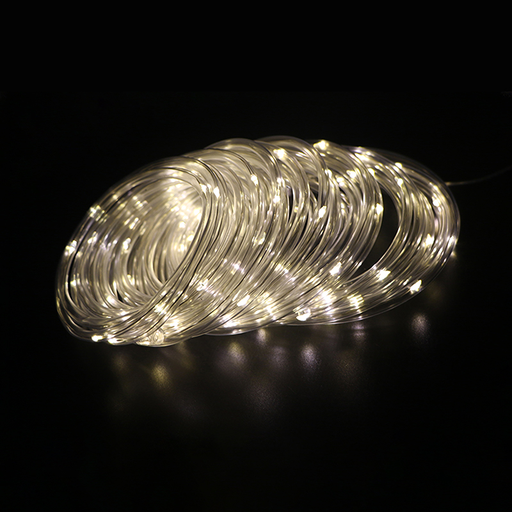
Why This Fits Their Persona: Ideal for users who want to illuminate railings, columns, or garden features without a nearby power outlet. The flexible tube is easy to shape and install.
Solves the impractical power supply problem by being purely battery-operated. The IP44 specification for the tube is clearly stated, so no false expectations are set regarding the waterproofness of the battery compartment.
Advantage: Maximum placement flexibility. Pro: 8 lighting modes with memory function and a robust tube design that protects the LEDs.
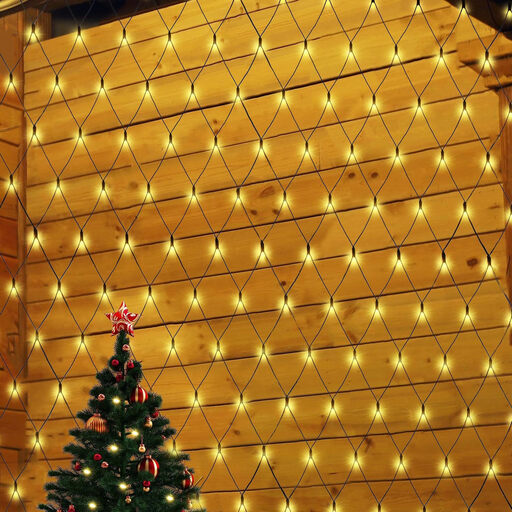
Why This Fits Their Persona: Perfect for easy and uniform decoration of large, flat surfaces like hedges, fences, or house walls. The net design saves the tedious effort of draping individual string lights.
The product description explicitly states that the power adapter must be kept dry, thus countering the trap of misleading waterproof claims. The rust-proof construction aims for greater durability.
Advantage: Quick installation and even light distribution. Pro: 9 lighting modes, a long 3-metre lead cable, and a unique, true-to-life boxwood look.
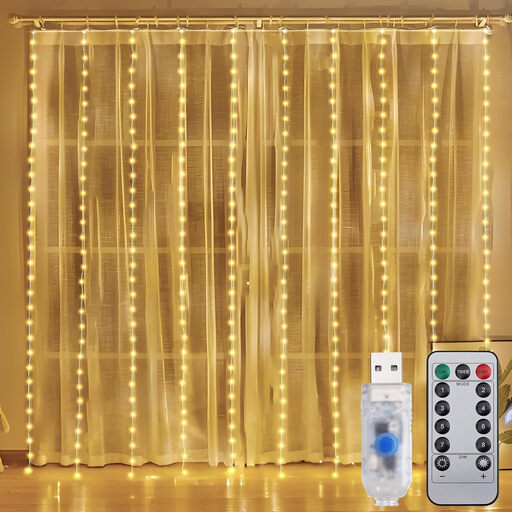
Why This Fits Their Persona: Specifically for renters or homeowners looking for impressive, large-area lighting for balconies, patio windows, or as a party backdrop. The curtain shape is optimal for this purpose.
The USB power supply bypasses the problem of short power cables, as the curtain can also be operated with a power bank. The remote control with a timer function prevents unnecessary power consumption and manual operation.
Advantage: Flexible USB power and convenient control. Pro: Includes 10 hooks for easy installation, 8 lighting modes, and an automatic 6h/18h timer function.
We have compiled a complete, up-to-date list of products that fully meet these strict selection criteria and all relevant safety regulations.
1. What does the IP44 rating on an outdoor LED string light really mean? The IP44 rating means the string light is protected against splashing water from all directions. It can withstand light rain but is not designed for heavy, continuous downpours or submersion in water. Crucially, the power plug or battery compartment must be kept in a dry, sheltered location, as these parts often do not have the same level of protection.
2. How much electricity does an LED string light use? The power consumption is very low. A typical 200-LED string light consumes about 3 to 6 watts. If operated for 6 hours daily over a month (30 days) at an electricity price of 30 pence per kilowatt-hour, the cost would only be around 30 to 60 pence. LED technology is therefore a very energy-efficient choice for decorative lighting.
3. Can I leave a battery-powered string light outside all winter? Yes, as long as the string light and the battery compartment have at least an IP44 rating. The battery compartment should also be protected from direct moisture and snow, for example, with a small cover or by placing it in a sheltered spot. Note that battery performance can decrease in very low temperatures, leading to a shorter runtime. Using a timer function is highly recommended in this case.