
Lieferung heute & morgen

Qualitätsgarantie

Willkommens-Angebote freischalten: KOSTENLOSE Lieferung | Bis zu 80 % RABATT | Kostenlose 30-Tage-JoyPlus-Testphase
App herunterladen
Anyone looking to buy peanut sweets online will find a wide range of peanut bars, chocolate bars with peanuts, peanut butter snacks and international specialities. The differences are not limited to taste; they also include peanut content, consistency, allergens, pack size and storage requirements.
To avoid ending up with an unsuitable multipack or a product that melts quickly, it is worth considering a few practical selection criteria.
A large number of pieces may initially seem like good value. However, the crucial factors are the total weight per pack and the size of each individual piece. For example, 24 bars weighing 42 or 49 g each are suitable for offices, family households or events. For occasional snacking, a 90-g or 150-g pack may be more practical.
You should also check whether the product description refers to an individual portion or the entire pack. Details such as “36 pieces” reveal little about the actual pack size without a weight in grams.
“With peanut” does not mean the same thing for every sweet. A product may contain whole roasted peanuts, peanut butter, peanut cream or simply a smaller proportion of peanuts. Anyone expecting crunchy caramelised peanuts could be disappointed by a soft peanut mochi. Conversely, a hard bar is not the right choice if you are looking for a creamy filling.
The ingredients list shows the actual role played by the peanut. For example, M&M’s Peanut lists 24% peanuts. According to the product information, Cadbury Wunderbar contains 22% peanuts, while Mr. Tom contains at least 62% peanuts.
Peanuts are one of the allergens that must be declared. Depending on the recipe, milk, soya, gluten, sesame or tree nuts may also be present or listed as possible traces. If you have a peanut allergy, the complete labelling on the packaging delivered to you should always be the deciding factor.
Storage also affects product quality. Chocolate and caramel should be kept in a dry place and protected from heat. Mochi usually needs additional protection from moisture, direct sunlight and high temperatures.
The type of product determines its flavour and mouthfeel:
Confectionery is primarily intended to be enjoyed. The nutritional table helps you compare packs objectively. Pay particular attention to the values per 100 g and, where available, per individual piece. Sugar, fat, saturated fatty acids and salt can vary considerably depending on the recipe.
For example, according to the product information, a KitKat Chunky Peanut Butter contains 226 kcal per 42-g bar. A 40-g Mr. Tom Caramelized Peanut Candy Bar is listed as containing 219 kcal per bar. These figures provide a better indication of portion size, but do not replace individual dietary advice.
For home use and occasional enjoyment, smaller bags or packs are easier to manage. For an office, celebration or snack supply, multipacks with individually wrapped bars are more practical. Individual wrapping also helps prevent the sweets from drying out quickly or different flavours from mixing.
Before placing your order, check:
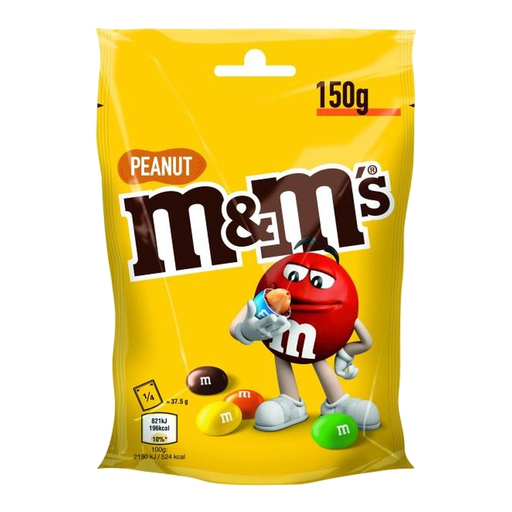
Why this product suits the profile: The 150-g bag is a manageable size for anyone trying peanut sweets for the first time and can be shared at home or during a games evening.
The pack size is clearly stated; peanuts at 24%, as well as milk and soya, are also listed as included allergens.
A crunchy peanut centre, milk chocolate and individually portionable chocolate sweets in a compact bag.
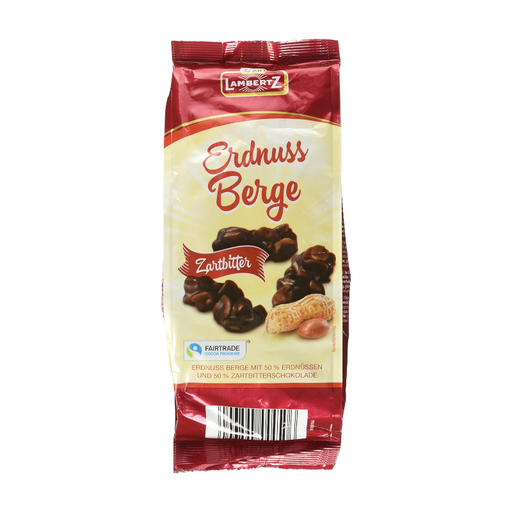
Why this product suits the profile: Dark chocolate, whole roasted peanuts and a 250-g pack appeal to buyers who prefer pronounced cocoa notes and plenty of crunch.
The stated peanut content of 50% makes the recipe more transparent than a simple flavour description.
Dark chocolate, whole roasted peanuts and Fairtrade-certified cocoa according to the product description.

Why this product suits the profile: The large pack of 36 individually wrapped 40-g bars is designed for keeping in stock, offices, vending machines or events.
The product information states a total weight of 1.440 g and at least 62% peanuts. This makes it easier to assess the large pack realistically before buying.
Caramelised roasted peanuts, 20.6 g of protein per 100 g according to the nutritional information, and individual wrapping.
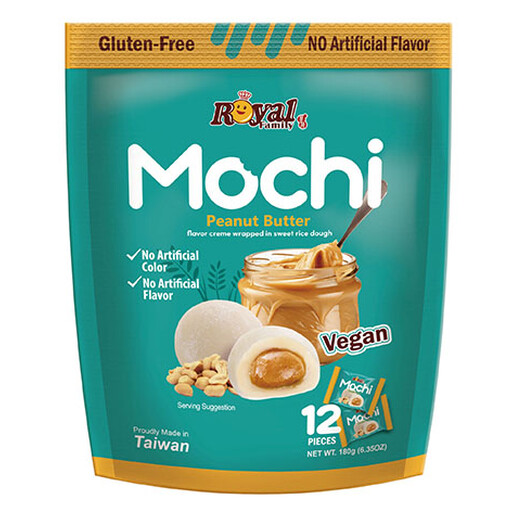
Why this product suits the profile: The soft, chewy mochi casing with peanut butter filling offers a different texture from classic chocolate bars and comes in ready-to-eat portions.
The product page highlights peanuts as an allergen, the 180-g quantity and storage away from sunlight, heat and moisture.
Creamy peanut butter filling, soft rice-cake texture and ready-to-eat individual portions.
Other options include Cadbury Wunderbar Peanut Caramel Bars in a 5-pack or 24-pack, KitKat Chunky Peanut Butter Wafer Bars and Reese’s Peanut Butter Cups Minis. Taiwan Royal Peanut Mochi is also worth considering for anyone who enjoys a traditional, softer filling. The relevant ingredients, allergens and weight details should be checked on the product page before ordering.
We have compiled a complete, regularly updated list of products that fully meet these strict selection criteria and the safety regulations applicable in the EU.
For offices, parties and families, individually wrapped bars with a clearly stated number of pieces are practical. Examples include Mr. Tom with 36 × 40 g, Cadbury Wunderbar with 24 × 49 g or KitKat Chunky Peanut Butter with 24 × 42 g. Store these packs in a dry place and protect them from heat.
The best-before date is shown on the relevant packaging. Unopened products should be stored according to the manufacturer’s instructions. Once opened, moisture, heat and air can alter the consistency. With mochi, it is advisable to use the pack soon after opening.
Always check the current ingredients and allergen information on the packaging. Peanuts, milk, soya, gluten, sesame and possible traces of tree nuts are particularly relevant. If you have a known allergy, do not rely solely on the product name; consider only the complete labelling.