
Lieferung heute & morgen

Qualitätsgarantie

Willkommens-Angebote freischalten: KOSTENLOSE Lieferung | Bis zu 80 % RABATT | Kostenlose 30-Tage-JoyPlus-Testphase
App herunterladen
The search for the right pencil can be surprisingly complex. Whether for quick notes in the office, technical drawings, or artistic sketches, the selection is vast. But not every pencil lives up to its promise. Many buyers invest in expensive sets, only to use a fraction of them, or choose a pencil that is unsuitable for their purpose. This guide will help you avoid common pitfalls and make an informed decision.
Before you decide on a model, you should be aware of the typical issues that lead to purchase mistakes.
pencil sets with a wide range of hardness grades from 9H to 9B seem tempting. In practice, however, most users only need two or three specific grades. The rest of the set remains unused, making the investment inefficient.HB pencil for the office has different properties than an artist's pencil with a high carbon content for matte, deep black tones. Those who don't know the difference often end up with shiny rather than rich, dark areas, or a lead that is difficult to erase.To find the right pencil, focus on three crucial features that directly influence its intended use.
The marking on a pencil indicates the ratio of graphite to clay in the lead, and thus its hardness.
drawing pencils. Popular grades for artists are 2B, 4B, and 6B.Besides the hardness grade, the composition of the lead is crucial for the final result.
watercolour pencils have a water-soluble lead. The dry drawing can be painted over with a wet brush to create soft transitions and wash effects.mechanical pencil is the tool of choice for precision. It delivers a consistent line width, does not need to be sharpened, and is ideal for technical drawings, detailed illustrations, and clean lettering.Here are some recommendations tailored to specific user profiles and their requirements.
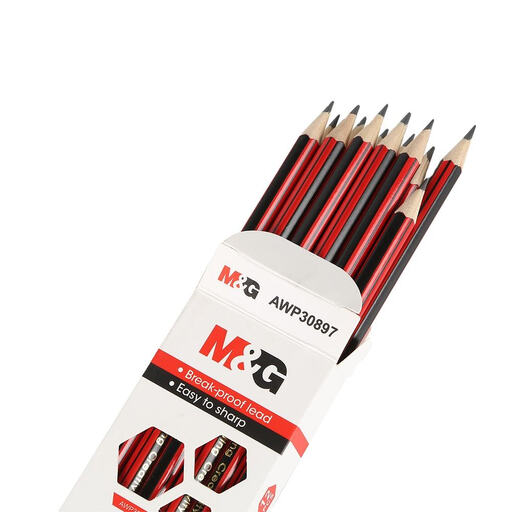
Why This Fits Their Persona: Ideal for school, university, and the office. This set provides a supply of reliable pencils for daily use without having to worry about special requirements. The hexagonal barrel provides a comfortable grip and prevents it from rolling off the desk.
You get exclusively the universally applicable HB grade. This helps you avoid buying an expensive set with specialty grades you don't need for everyday tasks.
The break-resistant lead ensures consistent performance when writing and sharpening. The 12-pack offers excellent value for money.
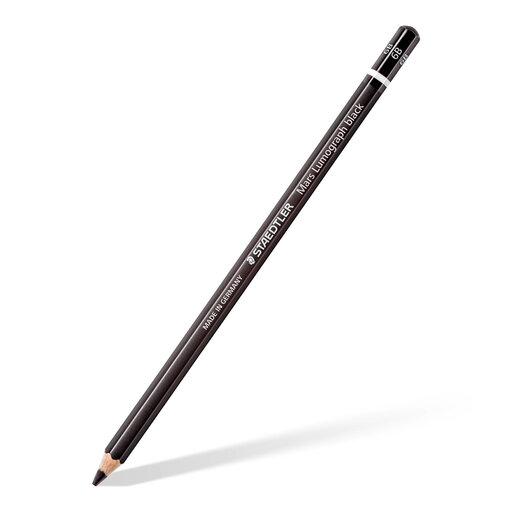
Why This Fits Their Persona: This pencil is designed for artists seeking maximum depth and expression. The soft 6B grade is ideal for intense shading, portraits, and drawings that require a rich, non-shiny black.
You are specifically choosing a specialty pencil for a particular effect. The high-carbon lead delivers a matte finish that avoids the typical graphite sheen, making it better for digitisation.
Produces an exceptionally deep, opaque black. According to the manufacturer STAEDTLER, the special lead bonding ensures high break-resistance, even with soft grades.
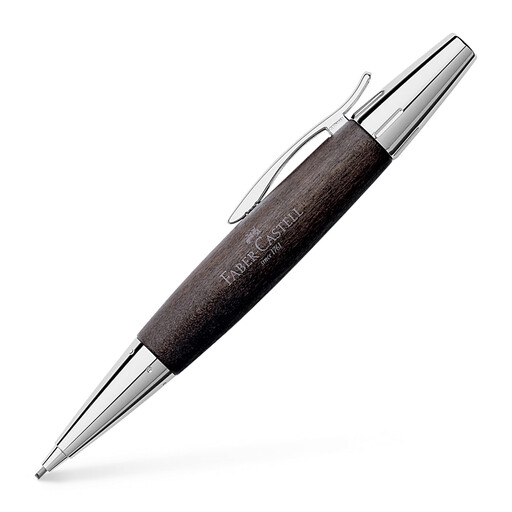
Why This Fits Their Persona: This mechanical pencil is an excellent choice for architects, designers, and anyone who values consistent precision. The 1.4 mm lead is sturdy and ideal for sketches and notes, while the twist mechanism ensures easy handling.
It eliminates the problem of fluctuating line width that occurs when sharpening wood-cased pencils. You get a consistently uniform line, which is essential for technical work.
The pearwood body gives the pencil a premium feel and a comfortable balance. The lead is refillable, making the pencil a durable tool.
We have compiled a complete, up-to-date list of products that fully meet these strict selection criteria and German safety regulations.
1. Which pencil hardness grade is suitable for drawing portraits? A combination of hardness grades is often used for portraits. A hard pencil like 2H is suitable for the initial, light sketch of the proportions. For developing skin tones and soft shadows, medium to soft grades like HB, 2B, and 4B are appropriate. For very dark areas such as pupils or deep shadows in the hair, a 6B or 8B pencil can be used, ideally one with a high carbon content for a matte finish.
2. How can I prevent my pencil lead from constantly breaking? Frequent lead breakage can have several causes. Look for a high-quality pencil; manufacturers like Staedtler or Faber-Castell often use a special bonding process that makes the lead more resistant. Also, use a sharp sharpener that shaves the wood cleanly instead of splitting it. With very soft leads (4B and up), you should reduce the pressure when drawing and sharpening.
3. Can you draw with any pencil on any type of paper? Technically yes, but the result varies greatly. Soft, carbon-rich artist's pencils work best on paper with a slight texture (tooth), as the particles can adhere better to the paper. On very smooth paper, they can smudge easily. Hard pencils (H-grades) are well-suited for smooth paper as they allow for precise lines without deep abrasion. For watercolour pencils, special watercolour paper with a higher weight (grammage) is required to prevent it from buckling when it comes into contact with water.