
Lieferung heute & morgen

Qualitätsgarantie

Willkommens-Angebote freischalten: KOSTENLOSE Lieferung | Bis zu 80 % RABATT | Kostenlose 30-Tage-JoyPlus-Testphase
App herunterladen
The market for PLA Filament is vast and can be challenging for beginners and experienced users alike. However, choosing the right material is crucial for the quality, aesthetics, and functionality of the final printed object. This guide is designed to help you understand the different types of PLA filaments and make an informed choice for your next project, whether it's a quick prototype or an artistic decorative piece.
As your Joybuy Product Recommendation Officer, I have compiled information on various filament types to offer you objective guidance.
Before you add a 1kg spool to your cart, there are a few fundamental properties to consider that will significantly impact your printing success.
For many projects, aesthetics are a top priority. There are clear differences here:
When efficiency and durability are the focus, special PLA variants become relevant:
Ensure the filament is compatible with your printer. The most common diameter for desktop 3D printers is 1.75mm 3D printer filament. Also, check the recommended printing temperature and make sure your printer can reach it. Most PLA filaments can be processed in a temperature range of 190°C to 220°C.
Based on the criteria mentioned, we have put together a selection of filaments that cover different areas of application.
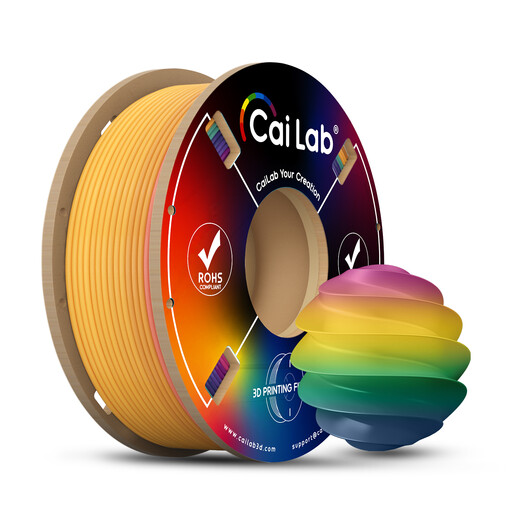
Why It Stands Out This Rainbow PLA Filament is distinguished by its long and smooth colour gradient. The transitions between colours are seamless, which truly shines on larger printed objects like vases, lampshades, or sculptures. This makes every printed piece a one-of-a-kind item.
Objective Features
Who Is It For? This filament is aimed at hobbyists and creators who want to produce decorative objects with a striking visual effect. It is less suited for small, functional parts, as the colour gradient would be barely visible.
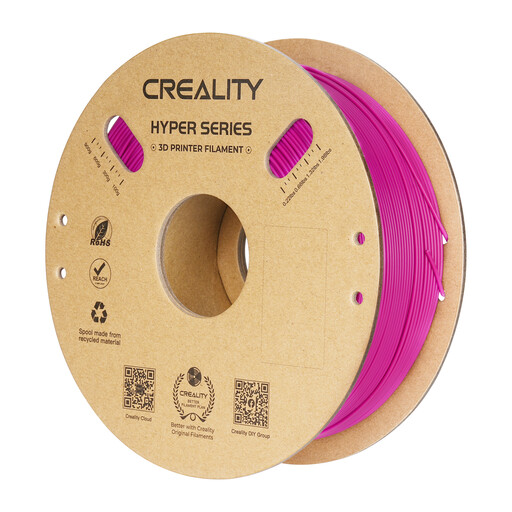
Why It Stands Out Creality Hyper PLA was specifically developed for high-speed printing. According to Creality, its high fluidity and rapid cooling formulation enables stable extrusion processes at speeds of up to 600 mm/s. This can significantly reduce printing time for large models or small-batch productions.
Objective Features
Who Is It For? Users with high-speed 3D printers (e.g., CoreXY models) who need to produce prototypes, functional parts, or large objects in a short amount of time. It's a great choice for professional users and ambitious hobbyists looking to increase their production efficiency.
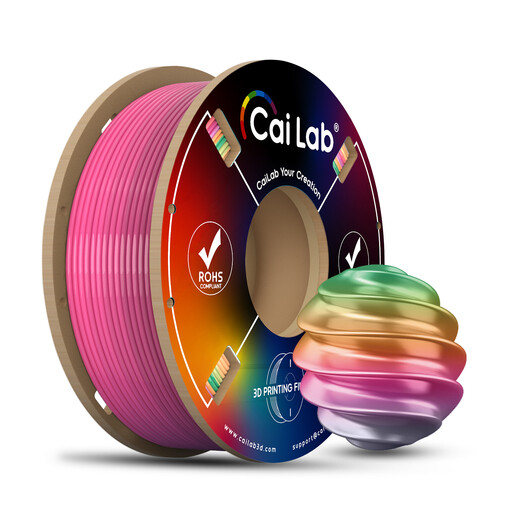
Why It Stands Out This filament combines two popular aesthetic properties: a rainbow colour gradient and a high-gloss silk finish. The result is prints that not only change colour but also have an intense shine and shimmer depending on the light. The "Candy" colour palette ensures particularly vibrant and rich tones.
Objective Features
Who Is It For? Perfect for printing toys, jewellery, gift items, and other decorative objects that are meant to be immediately eye-catching. The glossy surface can highlight small details and gives the objects a premium look.
The products featured here cover specific use cases. If you are looking for other colours, materials, or properties, you may find the right product in our broader selection.
Entdecken Sie unser gesamtes Sortiment an Filament mit PLA
1. What is the difference between PLA and High-Speed PLA? High-Speed PLA is an evolution of standard PLA. It is formulated to have a lower viscosity (higher fluidity) at higher temperatures and to solidify more quickly. This allows the 3D printer to extrude the material at significantly higher speeds without causing stringing or inadequate cooling, which are common issues with standard PLA under these conditions.
2. How do I store PLA filament correctly? PLA is hygroscopic, meaning it absorbs moisture from the air. Damp filament becomes brittle and leads to poor print quality (e.g., bubbling, poor layer adhesion). Therefore, always store your 1kg spool in a cool, dry place. It's best to keep it in a resealable bag along with the included desiccant (silica gel).
3. Is PLA filament suitable for food contact? Standard PLA filament is generally not certified for direct contact with food. Even though the base material, polylactic acid, is bio-based, the added colour pigments and additives may not be food-safe. Furthermore, the porous surface of 3D prints creates a breeding ground for bacteria. For food-contact applications, only use filaments that are explicitly designated as "food-safe" by the manufacturer and follow the corresponding processing instructions. The products presented here are not intended for food contact.