
Lieferung heute & morgen

Qualitätsgarantie

Willkommens-Angebote freischalten: KOSTENLOSE Lieferung | Bis zu 80 % RABATT | Kostenlose 30-Tage-JoyPlus-Testphase
App herunterladen
If you want to buy Red Bull Energy Drink, you’ll find plenty of options online, with different can sizes and multipacks. The price per can isn’t always easy to compare at first glance. What’s more, the classic varieties, sugar-free products and Red Bull Editions all differ in ingredients, nutritional values and flavour.
This buying guide is designed to help adult shoppers in the UK choose the right option for working from home, the office, gaming, events or long drives.
A 24-pack might look cheaper than smaller packs at first. What really matters, though, is the price per 0.25 litre, or per can. A Red Bull 24-pack with 0.25-litre cans contains 6 litres in total. A 24-pack with 0.355-litre cans, on the other hand, holds 8.52 litres.
To make a fair comparison, you should always check:
According to the product information, Red Bull Sugarfree, Red Bull Zero and the sugar-free Editions all contain caffeine too. Several varieties list 32 mg of caffeine per 100 ml. That means a 0.25-litre can works out at 80 mg of caffeine.
So sugar-free and low-calorie are not the same as having less caffeine. If you’re sensitive to caffeine, make sure you check the details on the product page and the can.
Names like Red Bull Juneberry, Pink Edition or Lilac Edition mainly describe the flavour. They don’t automatically tell you about the sugar, sweeteners or caffeine content.
When choosing a Red Bull Edition, you should pay particular attention to the following:
Red Bull 0.25 l is a good choice if you prefer a standard single serving and want to split your stock flexibly. Four cans, for example, are manageable for a small household or occasional use. A 24-pack, on the other hand, is designed as an energy drink bulk pack for the office, working from home, gaming nights or events.
For daily use, a 24-pack can make logistical sense. However, before you order, check the dimensions and total weight of the delivery. A pack of 24 cans at 0.473 litres each, for instance, weighs in at more than 11 litres of drink and needs plenty of storage space.
According to the product information, the classic variety contains around 11 g of sugar per 100 ml. In a 0.25-litre can, that’s roughly 27.5 g of sugar. Sugar-free varieties, by contrast, contain around 0 to less than 0.5 g of sugar per 100 ml, depending on the product.
Red Bull Sugarfree and Red Bull Zero use sweeteners. Red Bull Zero’s product description also notes that it contains a source of phenylalanine. Anyone with phenylketonuria should check the ingredients list very carefully.
A caffeinated energy drink isn’t suitable for everyone. The product information for the Red Bull varieties mentioned here indicates a high caffeine content. They are not recommended for children, or for women who are pregnant or breastfeeding. People who are sensitive to caffeine should think carefully about how they consume caffeinated drinks.
Energy drinks should also not be mixed with alcohol. Always refer to the current information on the packaging. The product information recommends a balanced diet and a healthy lifestyle.
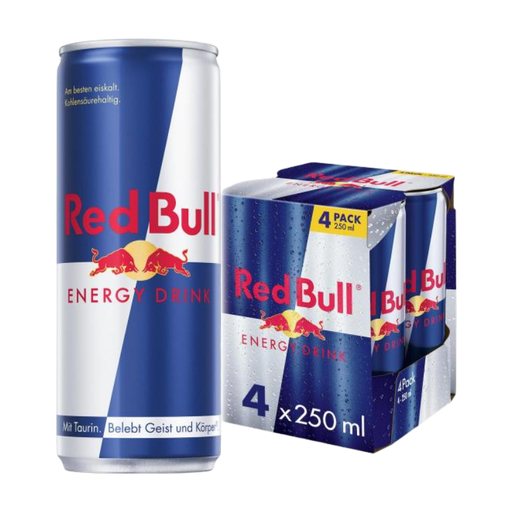
Why this product fits the profile: The 4-pack offers a manageable introduction to the classic variety, without having to order a large stock straight away.
The small pack size reduces the risk of buying a large quantity of a flavour or format that doesn’t suit you.
Four 0.25-litre cans, classic recipe and easy to store.
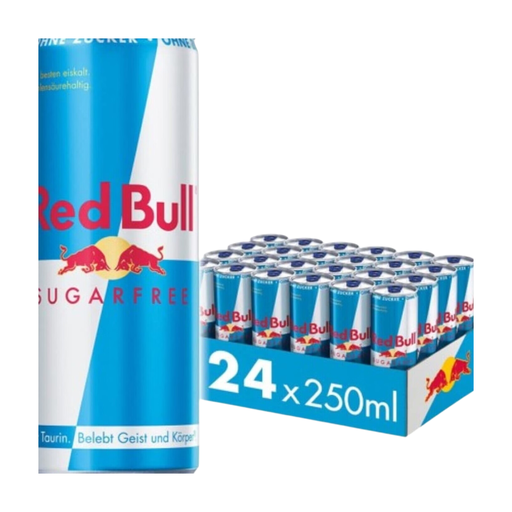
Why this product fits the profile: The sugar-free recipe suits shoppers who check the nutritional information and want a consistent serving size when buying in bulk.
The product data shows 0 g of sugar per 100 ml and around 3 kcal per 100 ml. This makes it easy to distinguish from the classic recipe.
24 cans at 0.25 litres each, sugar-free recipe and a shelf-stable multipack.
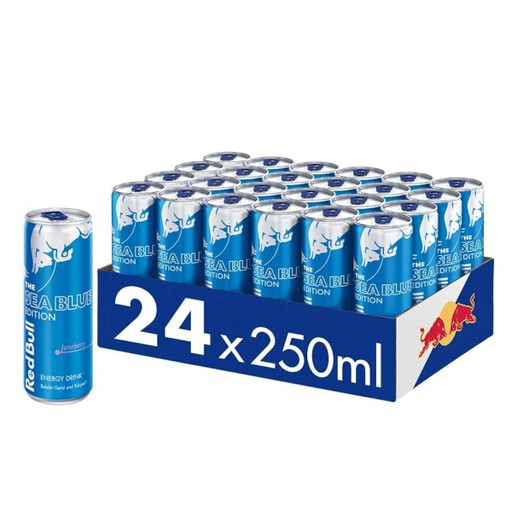
Why this product fits the profile: The Juneberry flavour is aimed at heavy users who want a fruity Red Bull Edition alongside the classic recipe for the office, gaming or events.
The information clearly states 11 g of sugar and 32 mg of caffeine per 100 ml. This means the Edition can be assessed using measurable values, rather than just the flavour name.
24 cans at 0.25 litres each, Juneberry flavour and clear nutritional information.
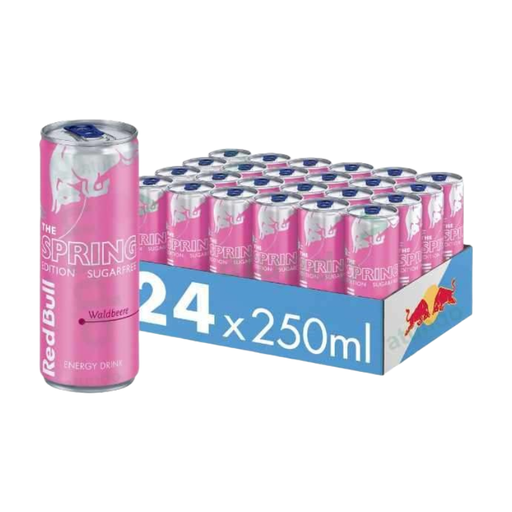
Why this product fits the profile: This sugar-free Pink Edition combines a flavoured profile with a bulk pack for regular use.
The “Sugarfree” label is backed up by the nutritional information showing 0 g of sugar per 100 ml. The caffeine content still needs to be checked, though.
24 cans at 0.25 litres each, 0 g of sugar per 100 ml and a fruity flavour.
Other varieties, such as Red Bull Lilac Edition or a classic Red Bull 24-pack with 0.355 or 0.473 litres, might be interesting for events or larger households. Always check the specific product page, as the recipe, nutritional values and availability can vary depending on the variant.
We’ve put together a full, regularly updated list of products that meet these strict selection criteria and comply fully with EU safety regulations.
For the products mentioned here, 32 mg of caffeine per 100 ml is stated. That means a 0.25-litre can works out at around 80 mg of caffeine. Always refer to the information on the packaging itself.
A 24-pack can be a good choice for regular users, offices or events, because the cans are delivered and stored together. Before you buy, compare the price per litre, the storage space you have available and the best-before date. For occasional use, a 4-pack might be more suitable.
The shelf life depends on the specific product and batch. The product information refers to the best-before date on the can or packaging. Unopened cans should be stored in a cool, dry place, away from direct sunlight and extreme temperature changes. Once opened, cans should be consumed promptly.