
Lieferung heute & morgen

Qualitätsgarantie

Willkommens-Angebote freischalten: KOSTENLOSE Lieferung | Bis zu 80 % RABATT | Kostenlose 30-Tage-JoyPlus-Testphase
App herunterladen
Anyone looking to buy red wine online will find an extensive selection from Germany, Italy, Spain, France and other wine regions. At first glance, terms such as Primitivo, Reserva, organic or “fruity” may seem self-explanatory. In reality, each refers to something different, such as the grape variety, ageing process, origin or flavour profile.
As a Joybuy Product Recommendation Officer, I provide an objective guide to the most important details. This makes it easier to avoid common purchasing mistakes—whether you are looking for a dry red wine to serve with dinner, a red wine as a gift or a 6-bottle red wine pack for social occasions.
A grape variety such as Primitivo, Tempranillo, Pinotage or Carmenère describes the grapes used to make the wine. It does not automatically indicate whether the wine is dry, medium-dry or sweet. For example, a Primitivo may be made in a medium-dry style, while Tempranillo is often offered as a dry wine.
“Fruity” does not necessarily mean “sweet”, either. Fruit aromas such as cherry, plum or berries can be present in dry wines without a high level of residual sugar.
The designation Rioja Reserva refers to a defined category with a prescribed ageing period within the Rioja region of origin. However, it does not replace checking the vintage, grape varieties, alcohol content, ageing method and your personal taste preferences.
According to the product information, Torres Sangre de Toro Reserva is aged for approximately one year in European oak barrels. Barón de Ley Reserva Rioja DOCa is described as being aged for 20 months in new American oak barrels, followed by a further 24 months in the bottle. These details help put the wine into context, but they do not automatically indicate whether you will enjoy its flavour.
A 6-bottle red wine pack can be practical for celebrations and may offer a lower price per bottle. For occasional wine drinkers, however, a single 0.75-litre bottle is often the more sensible choice. You should also check the storage conditions, closure type and whether opened bottles can be consumed promptly.
Flavour designations follow established categories in Germany and the EU. As a practical guide:
The information on the label is more meaningful than marketing terms such as “smooth” or “fruity”. If you are looking for a dry red wine to serve with beef, lamb or robust pasta dishes, filter specifically for “dry”. For desserts, mild cheeses or an approachable introduction to red wine, a medium-sweet red wine or sweet red wine may be a better fit.
Before you order red wine online, check the following:
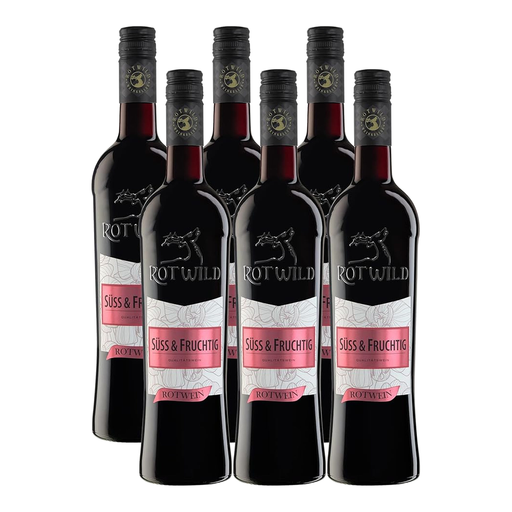
Why This Fits Their Persona: This German red wine in a 6-bottle pack is well suited to shoppers looking for a sweet, fruity style for a range of occasions.
The product description explicitly states “Sweet & Fruity”, identifies Germany as the origin and recommends a serving temperature of 8–10 °C.
Six 0.75-litre bottles; according to the description, it pairs well with mature cheese and can also be enjoyed lightly chilled.
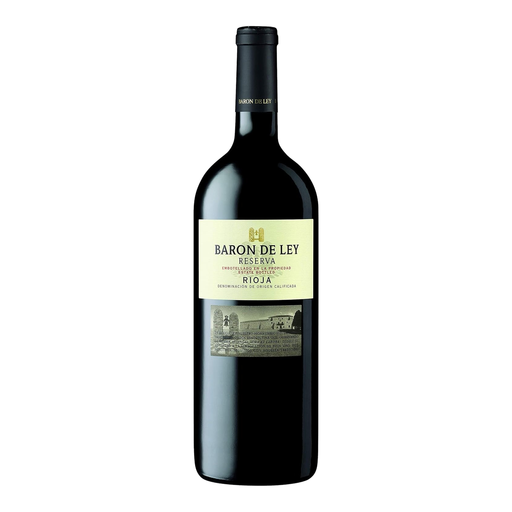
Why This Fits Their Persona: A single 0.75-litre bottle of dry red wine for roasts, game, pasta or gifting.
The product data specifies the grape varieties, sweetness level, origin and ageing period rather than relying solely on broad marketing language.
Tempranillo, Graciano and Maturana; 20 months of barrel ageing and 24 months of bottle ageing according to the product information.
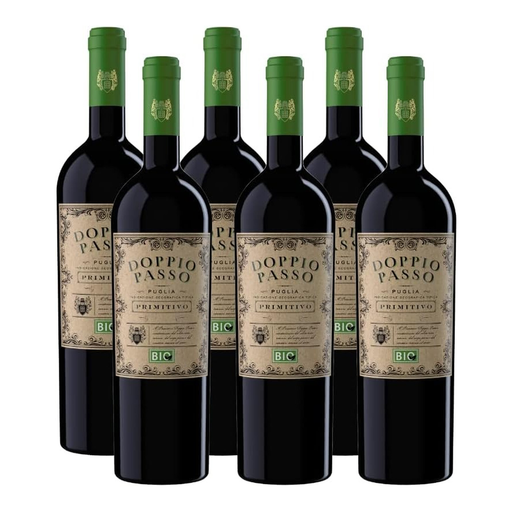
Why This Fits Their Persona: This Italian red wine from Apulia combines a medium-dry style with a six-bottle supply.
The product information identifies it as an EU-certified organic wine and clearly states the sweetness level as “semi-dry”.
Primitivo from Puglia; six 0.75-litre bottles and 13% vol. according to the product information.
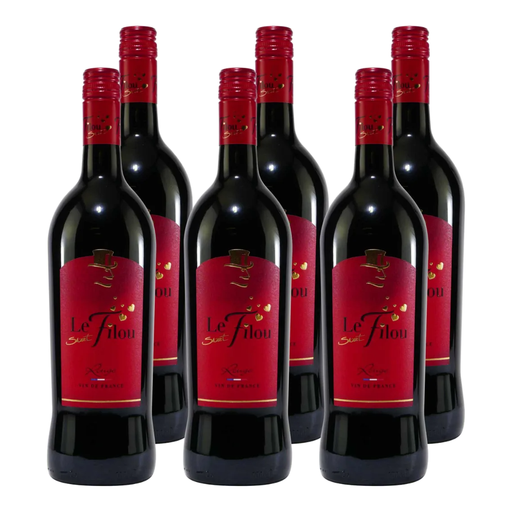
Why This Fits Their Persona: A sweet French blend for desserts, mild cheese platters or serving to several guests.
The wine is explicitly listed as “Sweet Red Wine” with 12% vol. and six bottles; its sweetness is not inferred from the name alone.
Origin: France; according to the nutritional information, 4.6 g of sugar per 100 ml, pairing well with desserts and mild cheese.
Explore the full selection of red wines organised by sweetness level, origin and pack size. If you are looking for a sweet option to serve with dessert, our category is also worth exploring.
For red wine with meat and cheese, dry, structured wines are often a natural choice. Tempranillo from Spain can pair well with beef, lamb and slow-cooked dishes. Product descriptions frequently recommend Italian Primitivo with pasta, dark meat and full-flavoured cheese.
Medium-dry and medium-sweet wines often feel more approachable with spicy dishes, mild cheese or fruit-based desserts thanks to their noticeable residual sweetness. A sweet red wine can also be an easy, versatile gift option, provided you know the recipient’s preferences.
Pay attention to serving temperature, too: Rotwild Dornfelder is recommended at 8–10 °C, while Torres Sangre de Toro Reserva is listed at 14–18 °C and Doppio Passo Primitivo at 16–18 °C. These differences show that “red wine should always be served at room temperature” is not a reliable universal rule.
Start with your preferred sweetness level. Those with limited wine experience often enjoy a medium-dry, medium-sweet or sweet red wine. For a more targeted choice, compare the origin, grape variety and recommended food pairings. The product description alone cannot replace an individual taste decision.
That depends on the specific offer. A multipack may reduce the price per bottle and is well suited to regular consumption or events. Before buying, check the total price, bottle size, delivery costs and available storage space.
Unopened bottles should be stored in a cool, dark place at a stable temperature wherever possible, in accordance with the manufacturer’s instructions. Once opened, the recommended consumption window varies by product; some product information advises finishing the bottle within a few days, while the organic Primitivo should be consumed within 24 hours. In Germany, alcoholic beverages may only be sold to adults and should be consumed responsibly.