
Lieferung heute & morgen

Qualitätsgarantie

Willkommens-Angebote freischalten: KOSTENLOSE Lieferung | Bis zu 80 % RABATT | Kostenlose 30-Tage-JoyPlus-Testphase
App herunterladen
Purchasing a new refrigerator is a decision that will shape your daily kitchen life for years to come. But the market is flooded with marketing promises and technical specs that often confuse more than they clarify. Hasty decisions frequently lead to appliances that disappoint in daily use—whether due to unexpected noises, excessive power consumption, or an impractical interior. This guide will help you identify the essential criteria and avoid common pitfalls.
Before we dive into the technical details, let's highlight three common problems that often only become apparent after the purchase:
To make an informed decision, focus on three objective core parameters. These form the foundation for selecting the right appliance.
The first question is: built-in refrigerator or freestanding refrigerator?
Since 2021, the new EU energy label with classes from A (very efficient) to G (less efficient) has been in effect. A refrigerator with energy efficiency class C or D currently represents a good balance between purchase price and long-term electricity costs. The crucial value is the annual energy consumption, stated in kilowatt-hours per year (kWh/year). An appliance with a better energy class can save several hundred euros in electricity costs over its lifespan.
The actual storage space you need depends on your household size. A common rule of thumb is:
Modern technologies can significantly extend the shelf life of food. A No Frost refrigerator function prevents ice build-up in the freezer compartment, saving you from manual defrosting. High-quality systems like 0-degree zones (often called "BioFresh," "hyperFresh," or "HarvestFresh") create ideal storage conditions for fruit, vegetables, meat, and fish by precisely regulating temperature and humidity.
Instead of presenting an overwhelming list, we have selected models for three typical user profiles.
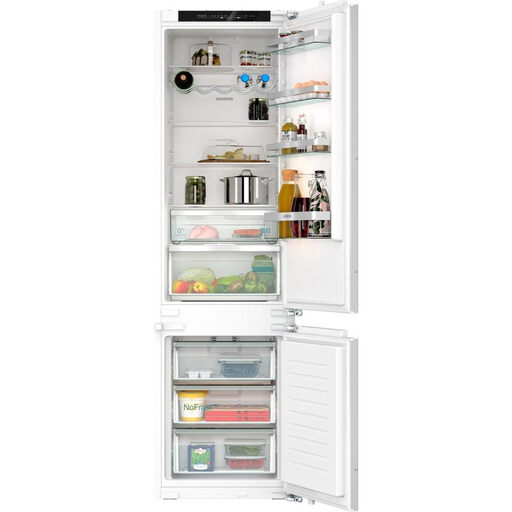
Why This Fits Their Persona: Ideal for seamless integration into high-end kitchen units. The appliance combines a large capacity with advanced freshness technologies and very quiet operation, making it perfect for open-plan kitchens.
At just 34 dB, this Siemens refrigerator is one of the quietest models on the market, neatly avoiding the noise trap. The hyperFresh 0° zone offers demonstrably better food preservation than standard cooling systems.
noFrost technology prevents ice build-up. The hyperFresh <0°> drawer keeps fish and meat fresh for up to twice as long, according to the manufacturer.
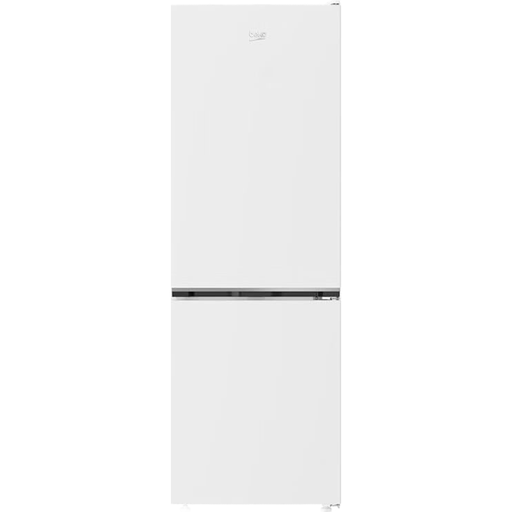
Why This Fits Their Persona: This freestanding fridge-freezer offers 301 litres of space, plenty for a family's weekly shop, and combines it with very low running costs thanks to its C energy efficiency class.
This appliance directly addresses the hidden costs trap with its Energy Efficiency Class C. The AeroFlow technology ensures even air distribution and prevents food from drying out—a common problem with basic no-frost systems.
The HarvestFresh drawer simulates the natural cycle of the day with a 3-colour light system to preserve vitamins in fruits and vegetables for longer, according to Beko. At 35 dB, its operation is very quiet.
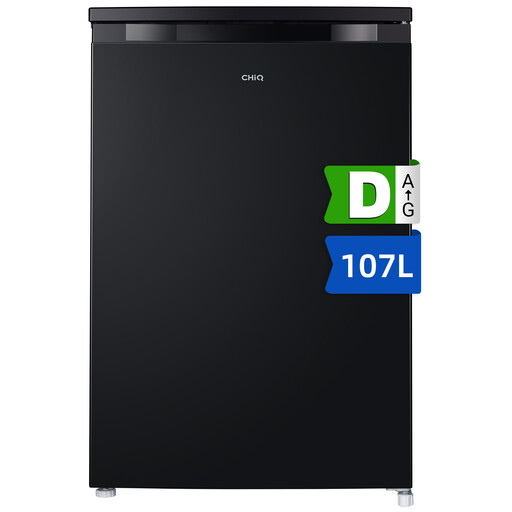
Why This Fits Their Persona: Perfect for small kitchens, apartments, or as a second appliance. With a footprint of just 0.3 m? and 107 litres of total volume, this refrigerator offers enough space for a one-person household without consuming unnecessary space or energy.
This model avoids the trap of an oversized purchase. It provides exactly the capacity that makes sense for a small household, thus avoiding unnecessary purchase and electricity costs. The usable capacity is efficiently designed thanks to its clear layout.
Compact design with an integrated 13-litre freezer compartment. The Energy Efficiency Class D ensures a low annual consumption of just 108 kWh/year.
Choosing the exact right model is crucial, especially for built-in appliances. We have compiled a comprehensive list of products that meet strict selection criteria.
The noise level of a refrigerator is measured in decibels (dB). For an open-plan kitchen, a value of 35 dB or less is recommended, as this is barely audible. Models between 36 and 39 dB are considered quiet and are unobtrusive in most households. Values from 40 dB upwards can be perceived as a distracting hum in quiet environments.
The exact consumption depends on the size, type, and usage. A typical fridge-freezer with energy efficiency class C consumes about 150 to 200 kWh annually. The Beko model from our selection, with its 301-litre capacity, falls within this class's range as specified by the manufacturer. You can always find the exact figure on the EU energy label of the respective product.
After transport, a refrigerator should stand upright in its final location for at least 2 to 4 hours before being connected to the power supply. This allows the refrigerant and the oil in the compressor to settle. Some manufacturers recommend longer waiting times. A look at the user manual for the specific model will provide the definitive information. If you book an installation service, the technician will take care of this.