
Same-day & Next-day Delivery

Quality Guaranteed

Unlock Your Welcome Offers: FREE Delivery | Up to 80% OFF | Free 30-day JoyPlus trial
Download the APP
If you’re looking to buy rice flour, you’ll find a wide range of products online from Thailand, Vietnam and other countries. The packaging often looks similar, even though the flours can differ considerably in texture, uses and ingredients. For example, you’ll need a different product for mochi than for a light gluten-free cake or thickening a soup.
The following tips will help you avoid common buying mistakes and choose a rice product that suits the way you plan to use it.
The term “glutinous rice flour” doesn’t mean the product contains gluten. It’s made from glutinous rice and develops an elastic, chewy texture when heated. This is exactly what you need for rice flour for mochi, tangyuan, glutinous rice cakes and certain Asian desserts.
By contrast, regular rice flour is milled from ordinary rice. It’s better suited to Bánh Xèo, Bánh Cuốn, rice cakes, batters, baked goods and thickening liquids. If you use regular rice flour for mochi, you generally won’t get the stretchy texture you’re looking for.
Rice is naturally gluten-free. However, a product may be processed in a facility that also handles wheat or other cereals containing gluten. If you have diagnosed coeliac disease or a high sensitivity, check the information on the specific product packaging.
Some products explicitly warn that traces may be present. For example, Mikko Rice Flour states that it may be processed in a facility that handles other allergens. So a general statement about suitability is no substitute for checking the current label.
Rice flour from Thailand or rice flour from Vietnam may be a good choice for traditional recipes, but the country of origin alone doesn’t tell you how finely it’s milled or whether it’s right for your recipe. Similarly, a larger pack isn’t automatically better value if you only use the flour occasionally and it absorbs moisture once opened.
For occasional baking, 250 to 400 g is often enough. If you regularly make Asian desserts, rice cakes or gluten-free batters, you may benefit from 500 g or 1 kg packs.
For pure rice flour, the ingredients list should ideally contain only “rice flour”, “rice” or similar wording. If you’re looking to buy glutinous rice flour, check that the label specifically says “glutinous rice flour”, “Klebreismehl” or “glutinous rice”.
Don’t confuse rice flour with rice starch. Rice starch is better suited to fine thickening and creating a smooth texture. It can work well in sauces, soups, creams and some batters, but it won’t replace flour milled from whole rice grains in every recipe.
A fine, even powder is easier to mix with liquid and helps reduce lumps. A fine texture is especially useful for rice flour for thickening. The flour is often mixed with cold liquid first, then heated.
When choosing rice flour for baking, bear in mind that it doesn’t form gluten. In many recipes, combining it with other gluten-free flours or starches improves the binding and crumb. Follow the quantities in the recipe rather than automatically replacing wheat flour on a one-to-one basis.
Rice flour consists mainly of carbohydrates. Nutritional values vary by brand and processing method, so check the details on the packaging. The ingredients list is particularly important for products containing additives, flavourings or milk ingredients.
Once opened, the powder should be stored in a cool, dry place away from light. An airtight container helps protect it from moisture and kitchen odours. Be sure to check the best-before date too.
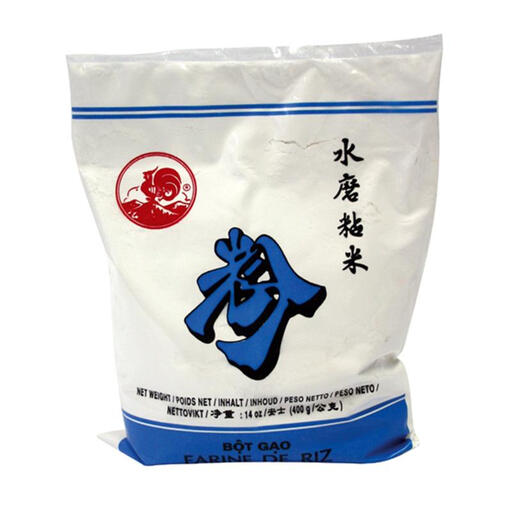
Why this product suits this type of shopper: This 400 g product, made from 100% Thai rice, is ideal for trying out Asian recipes, gluten-free baking and sauces.
The product description clearly states the type of rice, pack size and recommended uses, making it easier to distinguish from glutinous rice flour.
A neutral flavour and fine texture, with no added salt or sugar according to the product information.
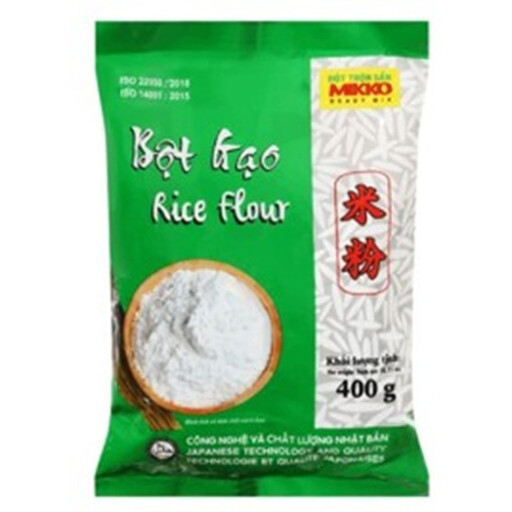
Why this product suits this type of shopper: If you want to make Vietnamese classics such as Bánh Xèo, Bánh Cuốn or Bánh Khọt, this finely milled product is made with those dishes in mind.
The ingredients list contains rice flour only. However, you should still check the warning about possible traces of other allergens before buying.
Finely milled, from Vietnam, and available in a 400 g pack for a range of cooking and baking uses.
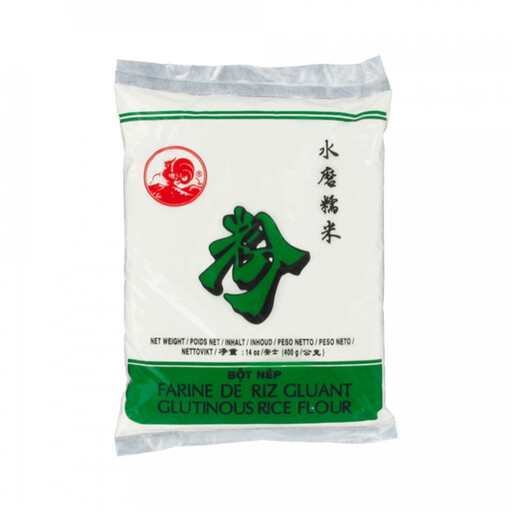
Why this product suits this type of shopper: For mochi, dumplings, rice cakes and other Asian desserts, the sticky texture of glutinous rice flour is essential.
The product name explicitly identifies it as glutinous rice flour, helping you avoid confusing it with regular rice flour for light batters.
According to the product information, it’s made from 100% glutinous rice from Thailand and is suitable for an elastic, chewy texture.
We’ve put together a comprehensive, regularly updated list of products that meet these strict selection criteria and fully comply with the safety regulations in force in the EU.
Not every rice product in the range is a traditional flour. For a classic rice pudding, a ready-made powder such as RUF Classic Milk Rice Pudding Powder may be a good choice. According to the product information, stir the sachet into 500 ml of hot milk and leave it to stand for about ten minutes.
The recipes vary considerably for shoppers looking for a higher-protein or vegan option. According to the product information, Dr. Oetker High Protein Rice Pudding Powder contains milk ingredients. nutri+ Protein Rice Pudding Powder, on the other hand, is described as a product made from 100% rice flour and can be prepared with water. Compare the ingredients, protein content and preparation instructions directly on the packaging before buying.
Rice contains no gluten naturally. However, with processed products, possible traces and information about the production environment are also relevant. If you need to shop strictly gluten-free, check the current allergen labelling on the packaging.
This isn’t suitable for every recipe. Rice flour doesn’t form a gluten network, so it can produce a different structure, crumb and moisture level. Gluten-free baking often uses blends with starch or other gluten-free flours.
The best-before date applies to the unopened pack stored as directed. Once opened, rice flour should be kept in an airtight container in a cool, dry place. Don’t use it if it has been exposed to moisture, has an unusual smell or shows visible changes.