
Lieferung heute & morgen

Qualitätsgarantie

Willkommens-Angebote freischalten: KOSTENLOSE Lieferung | Bis zu 80 % RABATT | Kostenlose 30-Tage-JoyPlus-Testphase
App herunterladen
If you’re looking to buy salt, you’ll find far more online than classic table salt. Options include sea salt, rock salt, iodised salt, salt with fluoride, coarse sea salt, seasoned salt and blends such as salt with pepper. The differences aren’t just about taste and origin: grain size, ingredients, pack size and intended use all matter too.
Even with seemingly simple products, unclear descriptions can easily lead to the wrong purchase. Fine salt for a salt shaker behaves differently from coarse crystals for a salt mill. Seasoned salt may also contain other ingredients and allergy information. The criteria below can help you narrow down your options for the home, barbecues, Asian cooking and food service.
Names such as Himalayan salt, sea salt and rock salt initially describe the salt’s origin or how it is produced. They don’t automatically guarantee a particular flavour, suitability for a specific use or health benefit. What matters is the ingredients list, grain size and intended use.
For example, coarse sea salt may be suitable for a salt mill, while fine table salt dissolves more quickly in liquids. If you buy based on origin alone, you could overlook how practical it is for your needs.
For iodised salt, salt with fluoride or blends with folic acid, check the ingredients and nutritional information. Common additives include potassium iodate, potassium fluoride or an anti-caking agent. For fortified products, also note that according to the product information, additional fluoride-containing supplements should only be taken following medical advice.
Whatever the variety, salt is a food that should be used sparingly. Fortification alone is no basis for health claims.
A 500 g pack of table salt is often suitable for households. For food service or regular barbecuing, 1 kg packs or larger shakers may be more economical. Conversely, a large jar of seasoned salt can be impractical if you only use a particular blend occasionally.
The closure matters too: fine salt needs to be stored somewhere dry, while a salt mill should be protected from moisture and looked after according to the manufacturer’s instructions.
For seasoning blends, it’s worth checking for any ‘may contain’ warnings. This is particularly important for products intended for Asian dishes, which may contain other spices or additives as well as salt and pepper.
Fine salt spreads evenly in a salt shaker and dissolves quickly in soups, sauces and dough. Coarse crystals are suitable for salt mills, rubbing together with spices, salt crusts or finishing a dish.
For salt for meat and vegetables, you can choose from both coarse varieties and ready-made blends. A mill lets you season directly at the table, while seasoned salt with pepper or herbs combines several ingredients. For delicate dishes, start with a small amount, as seasoned salts often have a high salt content.
Check the following:
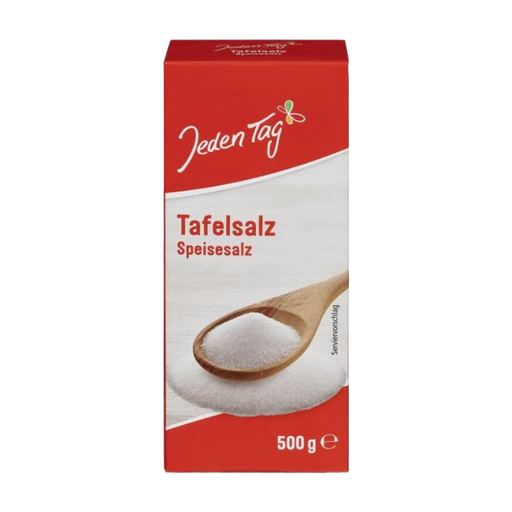
Why this product suits you: The 500 g pack is designed for everyday use and can be used for cooking, baking and seasoning.
Its fine grain and clearly stated quantity make it easy to choose, without the need for specialist equipment.
Fine table salt, 500 g pack, suitable for cooking, baking and seasoning.
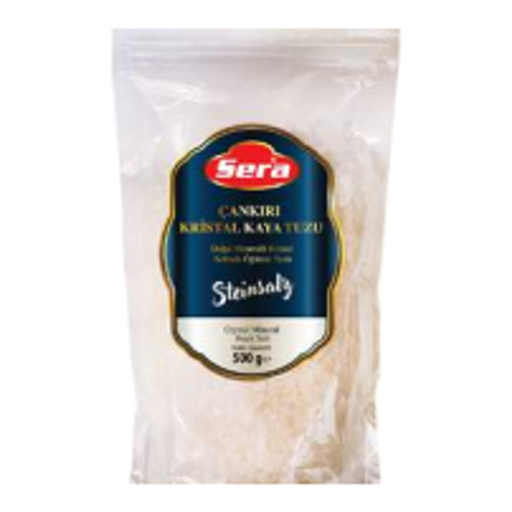
Why this product suits you: Described as rock salt, this product is intended for cooking and seasoning, and the product information also says it can be used in salt mills.
The product description states that it contains no other ingredients and should be stored in a dry place, making it easier to check the ingredients and storage requirements before you buy.
500 g pack of rock salt, described as containing no additives.
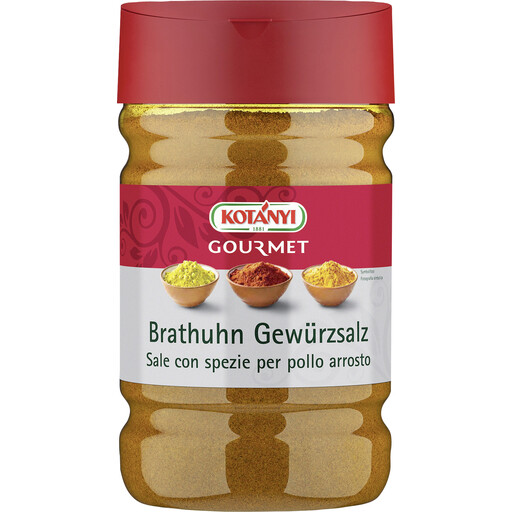
Why this product suits you: The large pack is aimed at frequent users, barbecue fans and kitchens looking for a ready-made blend to season meat and vegetables.
The ingredients list includes iodised salt, paprika, garlic, pepper and herbs. So you can see before buying that this isn’t pure salt.
1,248 g pack and a clearly labelled blend for meat, vegetables, barbecues and stews.
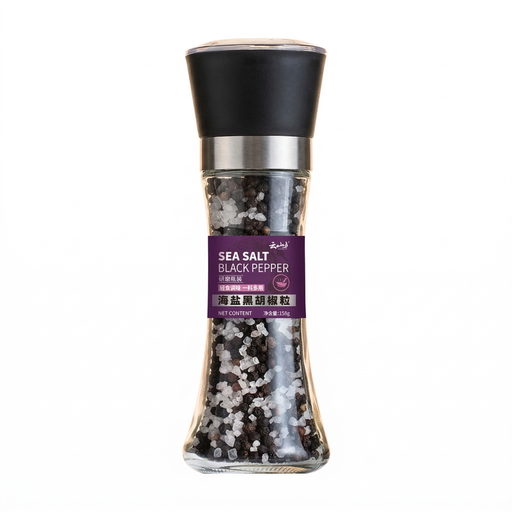
Why this product suits you: The blend of sea salt and black pepper is intended for seasoning and as a dip ingredient for Chinese dishes.
The ingredients are limited to salt and black pepper, making this blend easier to assess than seasoned salt with lots of extra ingredients.
158 g pack, resealable jar according to the product description, suitable for seasoning or as a dip.
We’ve put together a complete, regularly updated list of products that meet these strict selection criteria and fully comply with the safety regulations in force in the EU.
For households specifically looking for fortified salt, options include iodised salt or salt with fluoride. “Jeden Tag Iodized Table Salt with Fluoride 500g” is listed as a fine-grained product with added iodine and fluoride. If you prefer iodine alone, you could choose a pure iodised salt such as Bad Reichenhaller Pure Alpine Table Salt with Iodine 500g.
Coarse crystals are needed for a salt mill. Kotányi Coarse Sea Salt 100g is described as coarse sea salt for mills, brining, baking and finishing. A ready-made alternative is Qixian Black Pepper with Sea Salt 132g, which comes with an integrated mill. Before buying, check whether the grind can be adjusted and the container refilled.
Fine table salt or fine iodised salt can be used in a salt shaker and dissolves quickly during cooking. The key things to consider are the ingredients list, any additives you want and how you plan to use it. 500 g packs are a common size for everyday supplies.
Pure, dry salt can be used for a very long time if stored correctly. For seasoned salts, iodised salt and blends, check the best-before date and packaging instructions. Moisture can cause clumping and affect the flavour of any added spices.
Your usage will depend on the size of your household, your cooking habits and the type of product. Classic table salt is usually available in larger packs, while seasoned salt, mills and speciality varieties are often priced differently per gram. So compare the price per 100 g and consider whether the product already includes additional spices.