
Same-day & Next-day Delivery

Quality Guaranteed

Unlock Your Welcome Offers: FREE Delivery | Up to 80% OFF | Free 30-day JoyPlus trial
Download the APP
Anyone looking to buy salt online will quickly find a wide selection: iodised salt, table salt, sea salt, Himalayan salt, herb salt, as well as varieties with fluoride or folic acid. However, the differences are not limited to the brand name. Ingredients, grain size, pack size and intended use all determine whether a product is suitable for your household.
“Alpine”, “sea” or “unrefined” initially describe the origin or marketing of a product. For practical use, however, the ingredients list and additives are what matter. Sea salt, for example, may contain iodine if potassium iodate has been added. An unrefined product is not automatically free from anti-caking agents or added iodine.
Himalayan salt is also no substitute for checking the nutritional and ingredient information carefully. The colour or origin says little about the appropriate grain size or how the salt should be used in the kitchen.
Fine salt distributes evenly when cooking, baking and seasoning food directly. Coarse crystals are more suitable for a salt mill, pickling, salt crusts or as a visible finishing touch on dishes. If you use coarse sea salt in an unsuitable salt shaker, you may encounter uneven dosing or blockages.
When choosing iodised salt, salt with fluoride or salt with folic acid, it is worth checking the full product labelling. A combination of several added nutrients is not necessary for every household. Anyone already using fluoride-containing supplements should follow the information on the packaging. According to the product information for the relevant item, additional fluoride-containing supplements should only be taken following medical advice.
Check the following before buying:
For herb salt, you should also check the proportion of herbs. According to the product information, Bad Reichenhaller Alpine Herb Salt 90 g contains 17.5% herbs and spices. The blend includes parsley, celery, onion, basil and rosemary, among other ingredients. This information is particularly important for people with a celery allergy.
Fine table salt can be added directly to cooking water, dough and sauces. Coarse sea salt, on the other hand, is often used in a mill, for pickling or as a finishing touch. A salt mill with a ceramic grinder is practical if you want to adjust the crystal size just before seasoning. Check whether the mill can be refilled. Some models are expressly intended only for the filling supplied.
A salt shaker is suitable for dry, fine crystals. In humid kitchens, the container should close as tightly as possible and be stored in a dry place.
500 g of salt is a common household size and is suitable for regular cooking. Multipacks may be useful for frequent users, but they require a dry storage space. Salt clumps when exposed to moisture, so the pack should be sealed properly after opening.
For fortified products, the product labelling is also decisive. According to the relevant manufacturer’s product information, the recipe, best-before date or packaging may change. You should therefore read the information on the delivered pack before consuming the product.
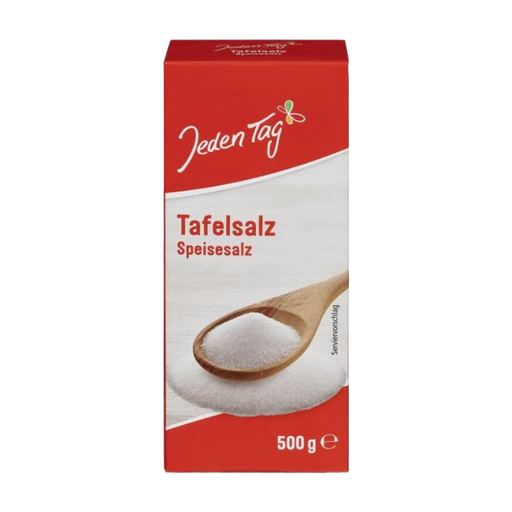
Why this product suits the profile: According to the product information, the fine evaporated salt in the 500 g pack is intended for everyday cooking, baking and seasoning, making the choice straightforward.
The ingredients list identifies evaporated salt and sodium ferrocyanide as an anti-caking agent. This allows you to check the recipe before buying instead of relying solely on terms describing the origin.
The fine grain size, 500 g contents and dry storage in a cardboard carton are intended for everyday kitchen use, according to the product information.
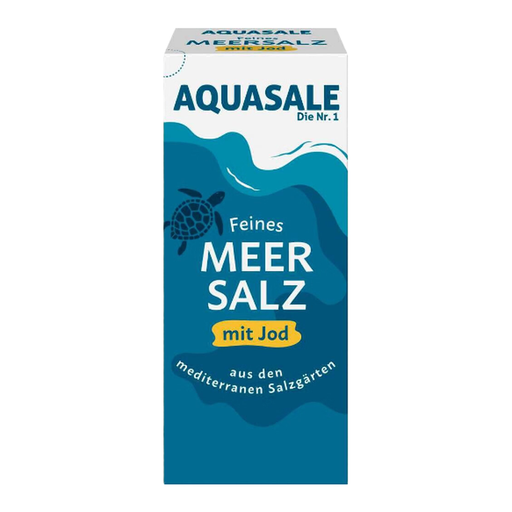
Why this product suits the profile: According to the product information, this fine sea salt is produced by naturally drying seawater and is fortified with iodine.
The labelling explicitly lists sea salt, potassium iodate and sodium ferrocyanide. This makes it clear that it is not an unrefined salt without additives.
The 500 g contents, fine grain size and resealable packaging for dry storage support regular use in the kitchen.
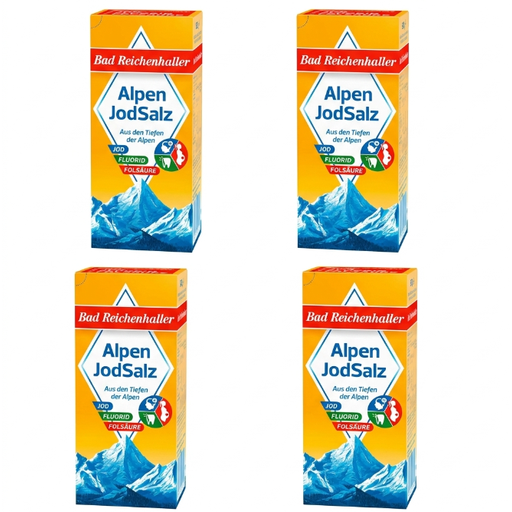
Why this product suits the profile: This multipack contains four units of 500 g each. It is aimed at households that use salt regularly and shoppers looking for iodine, fluoride and folic acid in one product.
The three added nutrients are listed in the product name and product information. Before buying, check whether this combination suits your personal needs and is compatible with any other supplements you use.
Four 500 g packs, free-flowing properties in dry conditions according to the product description, and paper-based outer packaging make it easier to stock up.
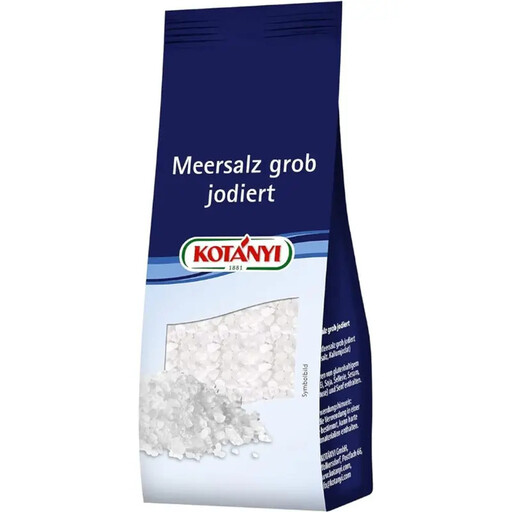
Why this product suits the profile: According to the product information, the coarse sea salt crystals are suitable for cooking, pickling, baking, finishing dishes and use in a salt mill.
The grain size is clearly stated as coarse. This lets you see before buying that a fine salt shaker is not the product’s primary intended use.
According to the product information, the product consists of 100% sea salt and contains no additives or anti-caking agents. The pack contains 100 g.
A set containing salt shakers, a napkin holder and a spice rack can be useful on the dining table. According to the product information, the MyGift set includes a napkin holder, three glass shakers and a storage basket made from wood, metal and glass. The dimensions are approximately 20.8 × 14 × 14.9 cm. Before buying, check that the dimensions will fit on the intended table or kitchen worktop.
If you prefer a pre-filled mill, the Kotányi Iodized Sea Salt Mill 92g is a model with a glass container and ceramic grinder. According to the product description, the mill cannot be refilled and is not suitable for cleaning in the dishwasher. These details are more important for ongoing use than a decorative product name.
We have put together a complete, regularly updated list of products that fully meet these strict selection criteria and the safety regulations applicable in the EU.
For most kitchens, fine table salt or iodised salt is practical because it distributes quickly through food and liquids. The key considerations are the ingredients list, the desired additive and your preferred pack size. If you do not want a fortified product, choose one without iodine, fluoride or folic acid.
Dry salt can generally be used for a long time when stored correctly. The specific best-before date and information about additives can be found on the packaging. Once opened, salt should be stored in a dry, sealed container and not directly above steam. Coarse salt intended for a mill should also be protected from moisture.
A salt mill is particularly useful for coarse crystals and allows you to grind the salt immediately before seasoning. A salt shaker is more practical for fine salt and quick, even dispensing. Your decision should therefore take into account the grain size, the desired dosage, ease of cleaning and whether the model can be refilled.