
Lieferung heute & morgen

Qualitätsgarantie

Willkommens-Angebote freischalten: KOSTENLOSE Lieferung | Bis zu 80 % RABATT | Kostenlose 30-Tage-JoyPlus-Testphase
App herunterladen
A shoe rack should keep your shoes tidy, take up minimal floor space and suit the room it’s in. In British hallways, compact flats, bedrooms or wardrobes, it’s not just about the number of shelves. What really matters are dimensions, weight capacity, stability and how you’ll actually use it.
As Joybuy Product Recommendation Officer, I’ve filtered the key product details and highlighted the features that matter before you buy a shoe stand or shoe cabinet.
Manufacturer claims like “holds 16 or 36 pairs of shoes” are just a guide. The real capacity depends on shoe size, shape and how you arrange them. High-top trainers, walking boots and wellies need more room than flat slippers. With a multi-tier shoe rack, you should check the gap between the shelves.
A slim shoe rack works well in tight hallways, but if it’s tall it can be a tipping hazard when not positioned or secured properly. This is especially true for lightweight, open designs where a level floor is essential. Models with anti-tip protection should be fixed to the wall following the instructions.
Click-together systems are quick to put together, but they need correctly fitted connectors and metal tubes. Before first use, make sure every shelf is fully clicked into place. You should also check the maximum weight per shelf. Decorative boxes or heavy items shouldn’t be placed on a shoe shelf without checking first.
Measure the available space in your hallway, by the front door or inside your wardrobe, including skirting boards and door swing. A model that’s 28 to 30 cm deep could work in a narrow corridor, while the width has a bigger impact on access.
For small entryways, a tall shoe rack is a good option. The WOLTU model with eight tiers measures 41 × 28 × 140 cm according to the product specs. It makes use of the room’s height and can be split into two smaller racks, the manufacturer says. A low shoe stand with three or four tiers, on the other hand, is more flexible under a coat rack or bench.
With a metal shoe rack, the tube thickness, coating and joints are key. Metal tubes with plastic connectors can be lightweight and easy to assemble. But for daily use, what counts is whether the stated load suits your own shoe collection.
According to WOLTU’s product specs, each shelf of the eight-tier model holds up to 5 kg. The three-tier WOLTU shoe rack also states 5 kg per shelf. The JOYFURNOS models, however, claim 10 kg per shelf. These limits shouldn’t be exceeded. A higher nominal load capacity isn’t a free pass for uneven loading or use on an uneven floor.
If you store different types of shoes, you’ll benefit from removable or adjustable shelves. With the WOLTU rack, individual fabric shelves can be removed to make room for boots or storage boxes, according to the product description. The Halupeit shoe cabinet features adjustable and removable internal shelves and can hold up to 12 pairs of shoes, the supplier states.
An open rack makes it easier to access your shoes and allows them to air. A closed shoe cabinet, on the other hand, keeps things out of sight and can blend in better with living or sleeping areas. Shoes should be dry and clean before you put them away, regardless of the model you choose.
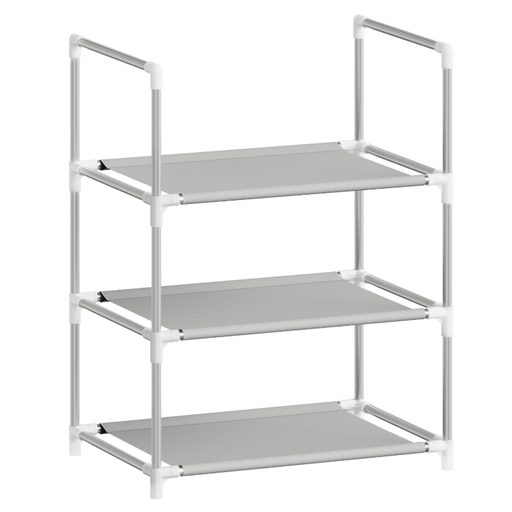
Why this product fits the profile: The compact dimensions of 41 × 28 × 55 cm make it ideal for smaller households, a narrow hallway or your first flat. According to the product specs, the rack holds up to six pairs of shoes.
The stated load of 5 kg per shelf and the removable tray make the usage clearer than a vague capacity claim.
Metal frame, three tiers, tool-free click assembly and wipe-clean shelves.
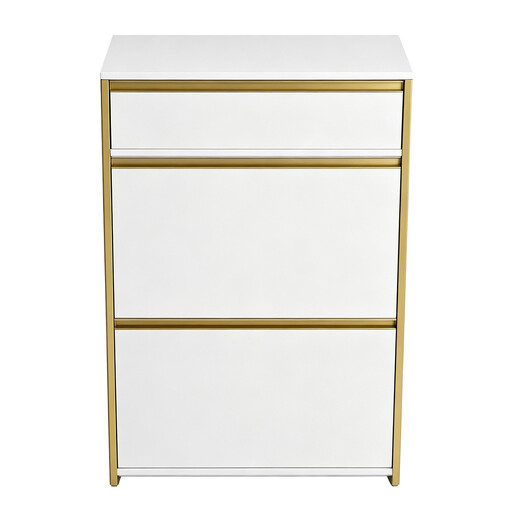
Why this product fits the profile: This closed piece of furniture measures 60 × 24 × 104.5 cm and combines shoe storage with a drawer and shelf space. It suits households that prefer a tidy entryway.
Adjustable internal shelves help avoid fixed compartment heights. The anti-tip device should be used according to the assembly instructions.
Closed front, adjustable shelves and extra surface for small items or decoration.
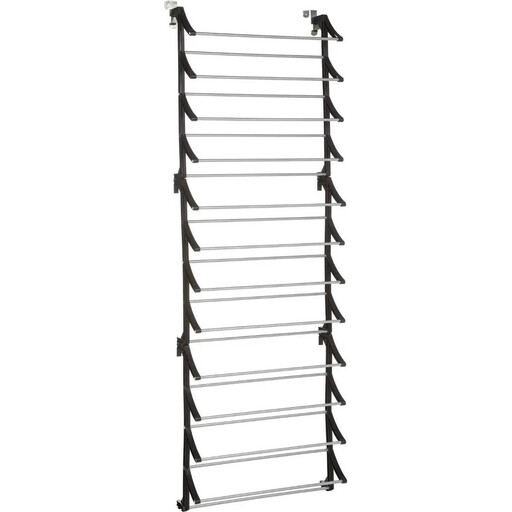
Why this product fits the profile: This 60 × 19 × 181 cm over-door rack makes use of unused space behind a door and is designed for bedrooms, dressing rooms or storage cupboards.
The adjustable hooks are designed for door thicknesses of 3 to 5 cm, according to the product specs. This measurement should be checked before buying.
Very shallow depth of 19 cm, steel shelves and a stated capacity of up to 36 pairs.
We’ve put together a full, regularly updated list of products that fully meet these strict selection criteria and the safety regulations in force in the EU.
Before buying a shoe rack, tick off these points:
For many hallways, around 25 to 30 cm depth is a practical starting point. What really matters is your shoe size. In front of doors, radiators and walkways, also check whether the rack restricts the space you need to move around.
It depends on your collection and how you use it. Three tiers are often enough for a single-person household or everyday shoes. Families usually need more storage space or several modules. An eight-tier model makes use of the room’s height, while several low shoe stands can be positioned more flexibly.
Stick to the weight limits and don’t put damp shoes away for long periods. The rack should stand on a level floor and be checked regularly for loose connections. With a metal model, a slightly damp cloth is usually enough for cleaning; harsh cleaning products aren’t necessary.