
Lieferung heute & morgen

Qualitätsgarantie

Willkommens-Angebote freischalten: KOSTENLOSE Lieferung | Bis zu 80 % RABATT | Kostenlose 30-Tage-JoyPlus-Testphase
App herunterladen
If you want to buy snack bars online, you’ll quickly find a huge range to choose from. Muesli bars, protein bars, vegan bars, organic bars, fruit bars and chocolate bars can vary considerably in their ingredients, nutritional values and pack sizes. So a low price per bar or eye-catching slogan isn’t enough to tell you whether a product is right for you.
A bar with no added table sugar can still contain a lot of naturally occurring sugars or sugars from fruit. For example, Eat Natural Apple Ginger & Dark Chocolate Bar lists 55 g of sugar per 100 g. The product contains dates, apple purée and dried apple pieces. So if you’re looking specifically for low-sugar bars, check the nutrition table rather than relying on the front of the pack.
Sweeteners aren’t a free pass either: products containing maltitol, sorbitol or similar sugar substitutes can have a laxative effect if eaten in excess. You’ll find this warning on various protein and low-sugar bars.
A protein bar may provide a certain amount of protein per serving, but it can also contain a chocolate coating, sweeteners and plenty of other ingredients. It’s important to check:
According to the product information, Nutri+ Whey Protein Bar Chocolate Caramel Crisp contains 13 g of plant protein per 50 g bar. Nutri+ Whey Protein Bar Peanut Caramel contains 11 g per bar. Both figures are for an individual serving, making them easier to put into context in everyday life.
An organic bar isn’t automatically vegan or gluten-free. Likewise, a vegan bar isn’t necessarily made with organic ingredients. Products can also contain traces of milk, nuts or soya, even if the recipe is vegan. If you have an allergy or intolerance, check the full ingredients list, including any ‘May contain’ warnings.
In the EU, ingredients are generally listed in descending order by weight. If syrup, sugar or dates appear near the top, they make up a correspondingly large part of the recipe. Nut bars should state the proportion of each type of nut. According to the product information, Share Organic Dark Chocolate & Sea Salt Nut Bar contains 41% almonds and 20% hazelnuts.
For vegan bars, look for clear labelling such as ‘vegan’ and check the ingredients list. Barebells Vegan Protein Bar Peanut Caramel is described as vegan and, according to the label, contains ingredients including wheat protein, soya protein and peanuts. It’s therefore not suitable for anyone who needs to avoid these allergens.
Values per 100 g make it easier to compare different products. For a practical choice, it’s also important to check the serving size:
Corny Haferkraft Banana Oat Bar weighs 50 g and provides 193 kcal per bar, according to the product details. Alnatura Organic Maple & Date Muesli Bar weighs 25 g, and the pack contains six individually wrapped bars. These differences matter more when choosing a snack for the office, travelling or your gym bag than the product name alone.
Common allergens in snack bars include milk, soya, peanuts, tree nuts and cereals containing gluten. The Share nut bar contains almonds, hazelnuts and wheat. Eat Natural fruit bars, on the other hand, are described as gluten-free, although some varieties contain almonds or peanuts.
Individually wrapped bars are handy when you’re out and about. If you’re buying a multipack of bars, check that the best-before date fits the amount you plan to eat. Most products should be stored in a cool, dry place; chocolate coatings can soften in warm conditions. Corny Haferkraft Banana has no chocolate coating and, according to the product description, is suitable for warmer conditions and outdoor activities.
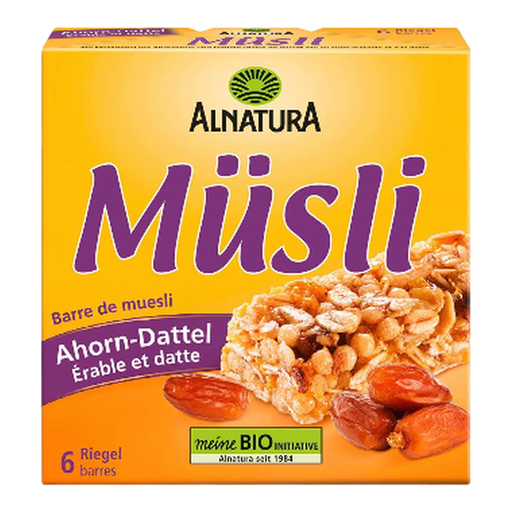
Why it suits this shopper: The six individually wrapped 25 g bars are ideal for short breaks, the office and family cupboards. According to the product information, selected ingredients come from organic farming.
The serving size and pack quantity are clearly stated. The nutrition information also shows that the bar shouldn’t be considered low in sugar.
25 g portions, oats as the main ingredient and individually wrapped bars.
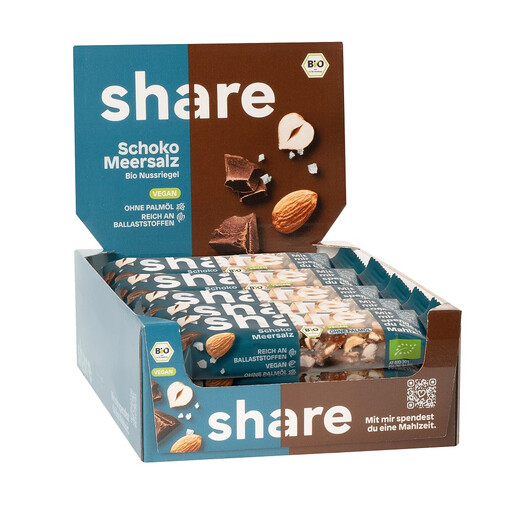
Why it suits this shopper: The combination of 41% almonds, 20% hazelnuts and chocolate is ideal for shoppers who want to compare ingredient proportions and organic labelling carefully.
The proportions of each type of nut are clearly stated. Almonds, hazelnuts and wheat are also transparently listed as allergens.
EU organic labelling according to the product information, 15 portions of 35 g each and 8.9 g of fibre per 100 g.
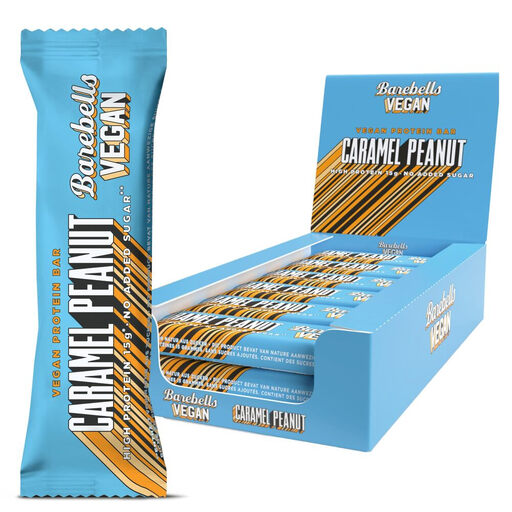
Why it suits this shopper: This 12-pack is aimed at vegans, sports enthusiasts and anyone who regularly needs a protein-focused snack for work, travelling or training.
The pack lists 15 g of protein per 55 g bar and also flags sweeteners, peanuts and soya.
Labelled vegan, 12-pack, 15 g of protein per bar and no added sugar according to the product description.

Why it suits this shopper: The 40 g bar is described as vegan, gluten-free and lactose-free. Individually wrapped portions make it a handy snack to take with you.
The labelling clearly states the relevant dietary characteristics. Peanuts and possible traces of other allergens still need to be taken into account.
12-pack, 40 g portions, 18% peanuts and 20% dark chocolate according to the ingredients list.
We’ve put together a complete, regularly updated list of products that meet these strict selection criteria and fully comply with the safety regulations in force in the EU.
Individually wrapped bars with sturdy packaging are handy for the office, train journeys and travelling. In warm weather, bars without a chocolate coating, such as Corny Haferkraft Banana, may be easier to carry. For chocolate bars, follow the storage instructions on the packaging.
The best-before date is shown on each pack. Unopened bars should be stored in a cool, dry place, away from direct sunlight. If you’re buying a multipack, check the pack size against how quickly you’re likely to use it, so the bars don’t end up being stored for longer than necessary.
No. Sugar, fat and calories are different nutritional values. A bar with little sugar can still be high in energy because of its fat, nuts or sweeteners. When comparing bars, always consider energy, sugar, fat, protein and serving size together.