
Lieferung heute & morgen

Qualitätsgarantie

Willkommens-Angebote freischalten: KOSTENLOSE Lieferung | Bis zu 80 % RABATT | Kostenlose 30-Tage-JoyPlus-Testphase
App herunterladen
A sofa is often a long-term investment. Yet many buying decisions focus on colour and price, while dimensions, upholstery construction and what’s included in the delivery receive too little attention. If you’re planning to buy a sofa, check for a few common pitfalls before you place your order.
A sofa may look compact in photos but still take up a lot of space in your room. As well as width, depth and height, consider the armrests, backrest and pull-out mechanism. With a corner sofa, you’ll also need to check which way it faces. So be sure to measure:
A soft surface doesn’t automatically mean suitable support when you sit down. Look for details about foam density, frame material, springs and seat height. A frameless sofa made with moulded foam feels different from one with a wooden frame and sprung interior. If you’ll be sitting for long periods, the seat shouldn’t sag excessively or restrict your movement.
A pull-out sofa, a bed function or a movable ottoman can be useful. But they also take up more room when opened out. Fabrics vary too: chenille and cord have a textured, cosy look, but depending on the finish, dust and pet hair may show up more. Check the care instructions, whether the covers are removable and whether the sofa is suitable for your household.
A 2-seater sofa around 140 to 170 cm wide is often a good choice for couples, individuals or smaller homes. A 3-seater sofa offers more seating, but naturally needs more room. If you’re looking for a sofa for a small room, a shallower design, narrow armrests or modular elements can make all the difference.
A lounge sofa, floor sofa or beanbag sofa may sit lower than a traditional living-room model. So check the seat height, especially if you plan to use it regularly at the dining table or in your home office.
Compare more than just the fabric name. Check how the sofa is constructed too:
Depending on the product, weight limits may apply to the whole sofa, individual seats or specific components. Read the full product description and safety information.
Vacuum-packed furniture often needs time to fully expand after unpacking. For several of the models featured here, the recommended time is around 24 to 72 hours. During this time, leave the sofa in a well-ventilated room and avoid putting it under sustained pressure.
Also check whether the sofa will arrive in one parcel or several. With a modular sofa or large corner sofa, parcels may arrive at different times. Compact packaging is a practical advantage in rented homes and narrow hallways.
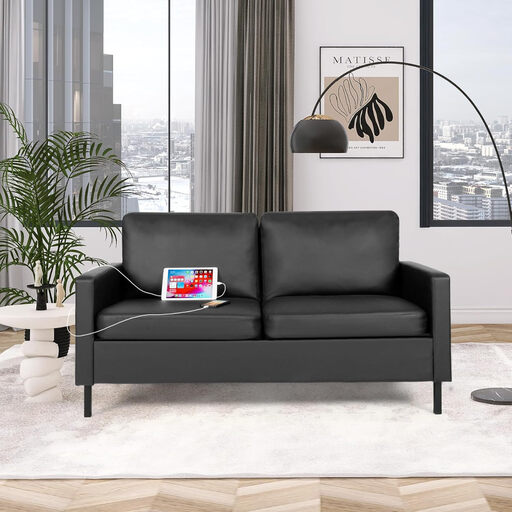
Why this product suits this profile: At 143 cm wide, this mini sofa is designed for flats, teenagers’ bedrooms and offices, according to the product details. It seats two and takes up relatively little floor space.
The precise width makes it easier to plan your space. The seat height, seat depth and maximum weight capacity are also specified.
Compact dimensions, USB and USB-C charging ports, and a solid wood frame with slats.
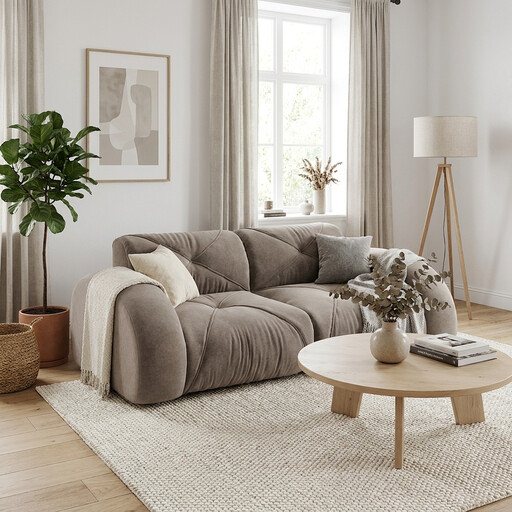
Why this product suits this profile: According to the product details, this 204 cm-wide model has a single block of 32D foam and a chenille cover. It’s aimed at households looking for an even, frameless seat.
Details about the foam block and the absence of gaps give you more information than a simple claim about softness.
Can be combined modularly, with rounded corners and a stated weight capacity of up to 200 kg per seat, according to the product details.
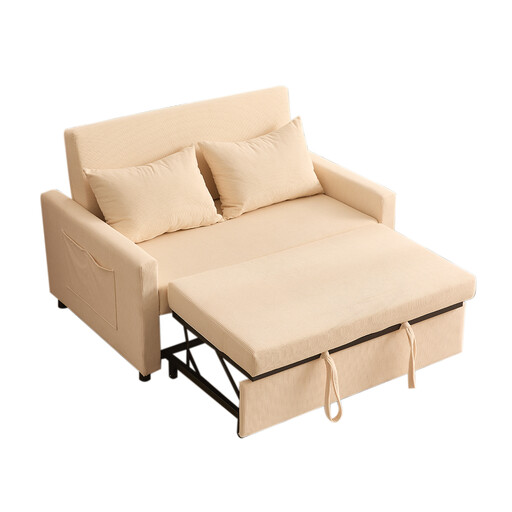
Why this product suits this profile: This model combines seating with a guest bed. It’s suitable for flats, guest rooms or bedrooms where you don’t want a separate bed taking up space all the time.
The 184 × 132 cm sleeping area and pull-out dimensions are clearly stated, making it easier to plan how you’ll use it before you buy.
Adjustable backrest, pull-out bed function, steel frame and side pockets.
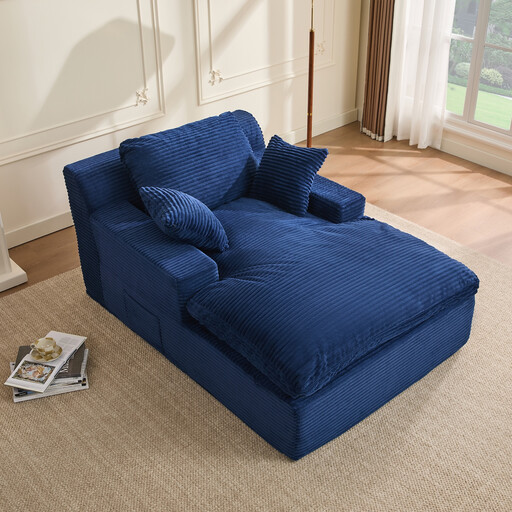
Why this product suits this profile: According to the product description, this floor sofa can be used as lounge seating, a place to lie down or a temporary guest bed, and requires no assembly.
Its unfolded dimensions of 160 × 110 × 40 cm make it easy to see how much space you’ll need when it’s set up as a bed.
Cord cover, side pockets and high-density foam; delivered without assembly required.
We’ve put together a complete, regularly updated list of products that meet these strict selection criteria and fully comply with the safety regulations in force in the EU.
Keep walkways and doorways clear in front of your sofa. If you’re buying a pull-out sofa or sofa bed, remember to allow for the extra sleeping area. The minimum clearance depends on the room layout and how you’ll use the sofa, so measure the fully extended position in the room.
A sofa’s lifespan depends on its construction, how much it’s used each day, how well it’s maintained and how often it’s used. A sturdy frame, suitable upholstery, regular vacuuming and staying within the weight limit can all help it last longer. There’s no single number of years that can be applied fairly to every model.
A traditional sofa doesn’t use electricity. A recliner or sofa with a USB or USB-C port only uses extra electricity when you charge devices. Other ongoing costs may include cleaning, replacement covers or, if needed, assembly.