
Lieferung heute & morgen

Qualitätsgarantie

Willkommens-Angebote freischalten: KOSTENLOSE Lieferung | Bis zu 80 % RABATT | Kostenlose 30-Tage-JoyPlus-Testphase
App herunterladen
If you want to buy soft drinks online, you will quickly find a huge selection of fruit drinks, flavoured sparkling water and Korean ade. The price per bottle often looks attractive, but a cheap multipack does not automatically suit your needs. What really matters includes ingredients, bottle size, sugar content, carbonation and storage.
Flavoured sparkling water and mineral water with flavour can contain significantly less sugar than classic fizzy drinks. Even so, it is worth checking the nutritional information. A drink with 4.8 g of sugar per 100 ml works out at 48 g of sugar in a 1-litre bottle. With small 230 ml portions, the individual amount is lower, but several portions soon add up.
Products containing sweeteners should also be clearly labelled. If you want to cut down on sugar, don’t just rely on words like “fruity”, “light” or “refreshing” – compare the ingredients list and energy content instead.
Six 1.5-litre bottles are ideal for families, offices or regular stock. For smaller households, though, they can take up unnecessary storage space. Korean ade in 230 ml portions is handy, but often less economical per litre.
Before ordering, it is worth doing a simple calculation:
This will show you whether a multipack of drinks actually fits your daily routine.
“With mineral water”, “natural flavour” or “with fruit” don’t automatically mean a high fruit content. With Vilsa H2Obst Apple-Cherry, for example, 20 % fruit is stated. With other products, the ingredients list mainly mentions flavouring instead. Both varieties can taste interesting, but they are not made the same way.
With imported drinks such as Korean ade, you should also check the sweeteners, colourings and the German-language mandatory information on the packaging. For children, particular attention is advisable with certain colourings. The information on the current label is always what counts.
The information per 100 ml allows you to compare different products directly. The most relevant factors are:
With low-calorie drinks, the energy content can be very low. According to the product information, Vitamin Well Zero Raspberry has 1 kcal and 0 g sugar per 100 ml. However, the product contains sweeteners such as acesulfame K and sucralose. If you want to avoid sweeteners, you shouldn’t just check the calorie count.
Lightly carbonated drinks go well with meals and can serve as an alternative to heavily sweetened fizzy drinks. Still varieties are interesting for people who don’t like carbonation or who are looking for drinks to take on the go.
The flavour also affects how suitable a drink is for everyday use. A lemon drink often tastes tangy and fresh, whereas a cherry drink tends to be fruity and sweet. Raspberry, apple and peach drinks also differ noticeably in sugar, fruit content and flavour. With Korean ade such as Lemon, Watermelon or Pineapple, an intense fruit taste is usually the main focus.
0.5-litre bottles are practical for individuals and for taking out and about. 0.75-litre bottles are suitable for the office, sport and the home. 1-litre or 1.5-litre bottles offer a lower price per litre, but need to be stored properly after opening and consumed promptly.
Unopened products should be kept cool, dry and away from direct sunlight, as stated on the packaging. After opening, many drinks need to be refrigerated. With PET multipacks, buyers should also factor in the deposit information and the return option in Germany.
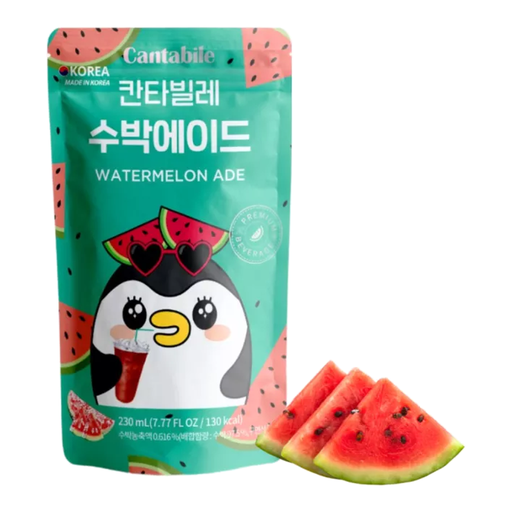
Why this product fits the profile: The small portion is ideal for trying a Korean ade without ordering a large stock straight away.
The nutritional values are stated as 3.94 kcal and 0.70 g sugar per 100 ml. At the same time, the presence of sweeteners and the colouring E129 is indicated.
230 ml portion, watermelon concentrate and very low energy content according to the product information.
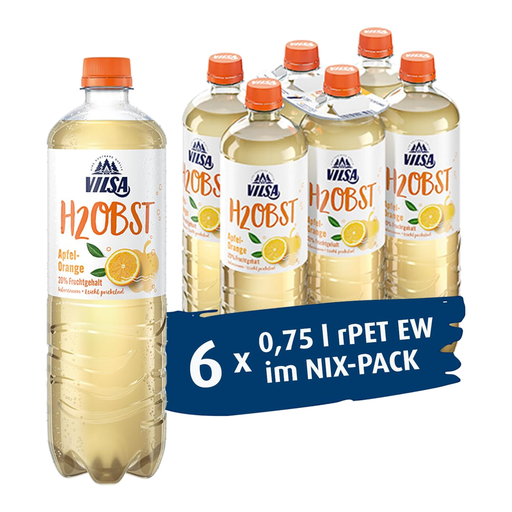
Why this product fits the profile: The combination of mineral water, fruit components and light carbonation is suitable for meals, the office and the home.
The stated fruit content is 20 %. With 19 kcal per 100 ml and 4.5 g sugar per 100 ml, the values can be assessed transparently.
6 × 0.75 l, 20 % fruit content according to the product data, plus information on vegan, lactose-free and gluten-free composition.
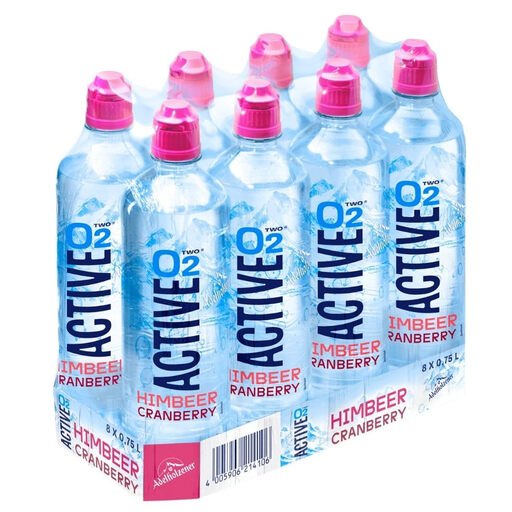
Why this product fits the profile: The pack of 8 with 0.75-litre bottles is designed for the office, sport and regular household consumption.
The energy content is stated as 15 kcal per 100 ml. However, the ingredients list mentions sugar or fructose syrup as well as cyclamate, saccharin and acesulfame K.
4.5 litres total volume, raspberry-cranberry flavour and mineral water as a base according to the product description.
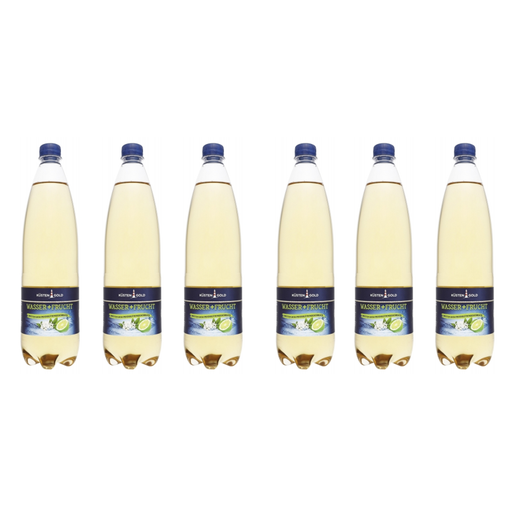
Why this product fits the profile: Six 1-litre bottles provide a sensible stock for several people and various occasions.
The product data states 20 kcal and 4.8 g sugar per 100 ml, and lists sugar in the ingredients. So it should not be equated with sugar-free drinks.
Lime-elderflower flavour, 6 litres total volume, natural mineral water base and vegan product information.
We have put together a complete, regularly updated list of products that fully meet these strict selection criteria and the safety regulations in force in the EU.
That depends on the nutritional values per 100 ml. In our selection, for example, Vitamin Well Zero Raspberry with 1 kcal, CTB Watermelon Ade with 3.94 kcal and Active O2 Iced Berry with 13.62 kcal per 100 ml are in the low range. However, the ingredients may still contain sweeteners. That is why calories, sugar and ingredients should be considered together.
For sport, the office and on the go, 0.5-litre to 0.75-litre bottles are usually more convenient. Active O2 Raspberry-Cranberry is available in an 8-pack with 0.75-litre bottles. If you need larger quantities for the household, you can go for 1-litre or 1.5-litre bottles. Drinks with sugar or sweeteners do not replace individual dietary planning.
After opening, many soft drinks should be refrigerated and consumed promptly. The specific recommendation varies depending on the product. Information on the label always takes precedence. Unopened bottles are best stored in a cool, dry place away from direct sunlight.