
Lieferung heute & morgen

Qualitätsgarantie

Willkommens-Angebote freischalten: KOSTENLOSE Lieferung | Bis zu 80 % RABATT | Kostenlose 30-Tage-JoyPlus-Testphase
App herunterladen
Anyone looking to buy soft drinks online will quickly find a wide selection, including fruit drinks, fruit juice, apple spritzers, flavoured mineral water, vitamin drinks and sugar-free drinks. However, product pages can differ considerably in terms of fruit content, sweeteners, calorie values, bottle size and packaging. Making an informed choice helps prevent a multipack from becoming impractical at home, in the office or during sporting activities.
A drink with a berry, apple or cherry flavour does not have to be a fruit juice. Terms such as “fruity” or “Red Fruits” initially describe the flavour profile. The ingredients and stated fruit content are what really matter. Nectar, fruit drinks and spritzers can therefore differ considerably in their sugar and calorie values.
Fruit juice naturally contains sugar. This means that the carbohydrate content of an apple spritzer or juice with no added sugar can still be significant. If you are specifically looking for sugar-free drinks, check the nutritional table and ingredients list. Sweeteners such as sucralose, acesulfame-K, saccharin and cyclamate are different ingredients from sugar.
A bulk drinks pack often saves you from placing several individual orders, but it requires enough storage space. Six 1.5-litre bottles or eight 0.75-litre bottles also add up to a considerable total weight. Before buying, check the bottle size, total volume, single-use or returnable packaging, and whether a possible deposit applies.
Three details are particularly helpful when assessing a product:
The ingredients list also shows whether the drink contains sugar, glucose-fructose syrup, sweeteners, preservatives or colourings. If you have allergies or specific dietary requirements, always refer to the labelling on the current packaging.
Comparing products per 100 millilitres makes drinks in different bottle sizes easier to assess side by side. The most relevant details include:
“Low calorie” is not a universal everyday recommendation for everyone. It is a comparative value within the selection. A drink containing 1 kcal per 100 millilitres has a clearly different energy density from a juice containing around 55 kcal per 100 millilitres. For an accurate assessment, always consider the portion that you actually drink.
For families and offices, multipack drinks are useful when the same variety is needed regularly. Smaller bottles are more practical for drinking on the go or as individual portions. With larger PET packs, it is worth checking:
Opened drinks should be refrigerated in accordance with the manufacturer’s instructions and consumed within the stated period.
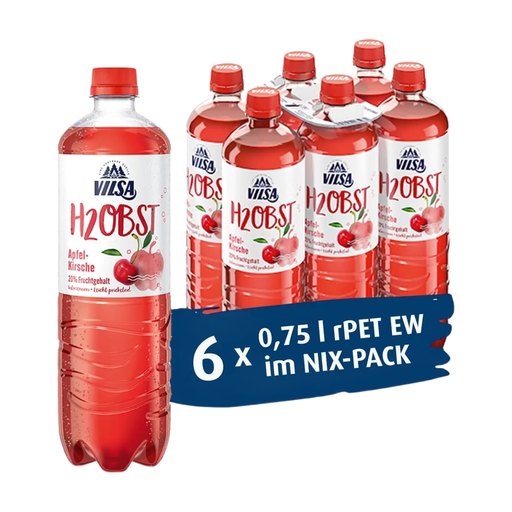
Why this product suits the profile: The combination of apple and cherry flavours makes this a practical everyday drink to keep in stock. The six-pack of 0.75-litre bottles is a manageable size for the fridge, family home or office.
The stated fruit content of 20% and nutritional value of 18 kcal per 100 ml make it easier to compare with heavily sweetened fruit drinks.
6 × 0.75 litres, an apple and cherry flavour profile, and 18 kcal per 100 ml according to the product details.
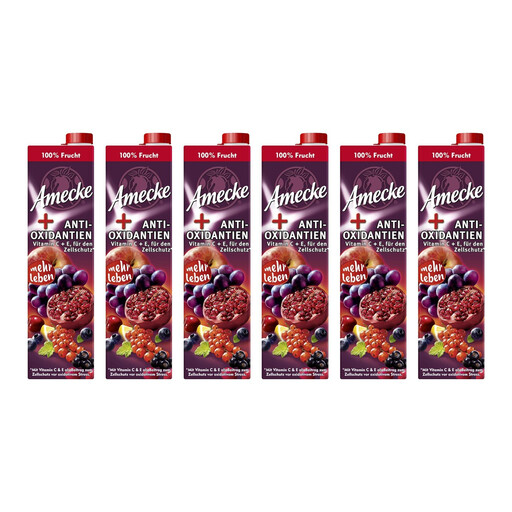
Why this product suits the profile: This juice combines several red and dark fruits and comes in a six-pack of 1-litre cartons, making it suitable for regular juice portions.
The product details state 100% fruit content with no added sugar. At 55.93 kcal and 12.3 g of sugar per 100 ml, the naturally occurring sugar remains clearly visible.
A multi-fruit recipe, 6 litres of total volume and stated vitamin C in the product data.
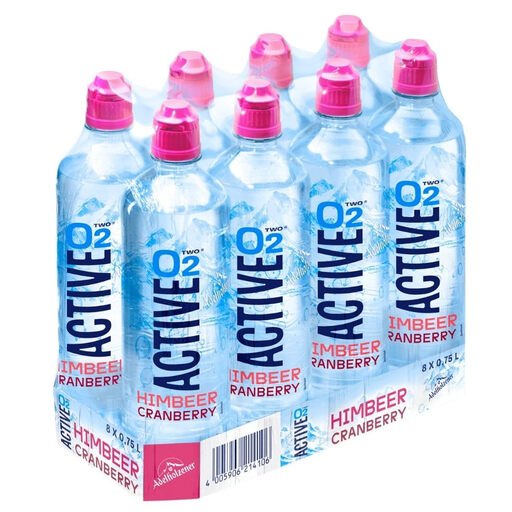
Why this product suits the profile: The eight-pack of 0.75-litre bottles is suitable for offices, homes with regular consumption and chilled individual servings.
With 15 kcal and 3.5 g of sugar per 100 ml, this drink can be classified as a lower-calorie option. However, it does contain sugar as well as added sweeteners.
A berry flavour profile, 6 litres of total volume and a low stated energy content.
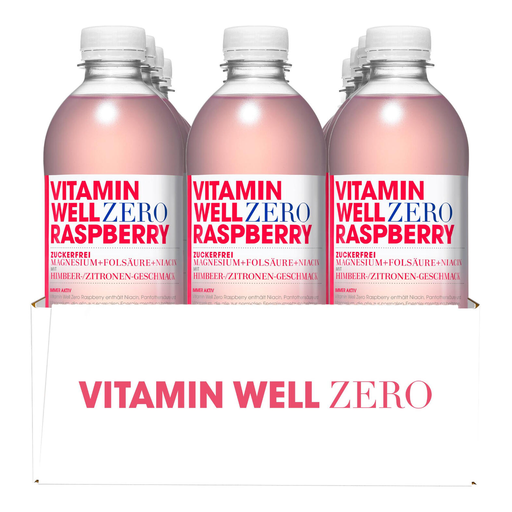
Why this product suits the profile: The 0.5-litre bottles fit easily into bags, fridges and offices. The 12-pack provides a larger supply of a vitamin drink with clearly stated nutritional details.
The nutritional information states 1 kcal and 0 g of sugar per 100 ml. At the same time, the ingredients list identifies sweeteners and added vitamins.
12 × 0.5 litres, raspberry flavouring, 0 g of sugar and 1 kcal per 100 ml according to the product details.
We have put together a complete, regularly updated list of products that fully meet these strict selection criteria and the safety regulations applicable in the EU.
That depends on the nutritional table. Products containing sweeteners can provide considerably less energy than classic juices or sweetened fruit drinks. However, when comparing products, you should also consider ingredients such as sugar, sweeteners and carbohydrates. Unflavoured water remains a separate category and should not be equated with a flavoured drink.
The specific time limit is stated on the product packaging or in the manufacturer’s instructions. Opened drinks often need to be refrigerated and consumed within a few days. For juice, nectar and drinks containing fruit ingredients, keeping them refrigerated continuously after opening is particularly important. Smell, appearance and taste do not replace the manufacturer’s instructions.
A multipack can be useful if the variety, bottle size and consumption suit your household. For families or offices, a bulk pack reduces the frequency of individual orders. With lower consumption, however, storage space, weight and the best-before date may be more important than the pack price. Before buying, it is therefore worth calculating total price divided by total volume, as well as checking the deposit and type of packaging.