
Lieferung heute & morgen

Qualitätsgarantie

Willkommens-Angebote freischalten: KOSTENLOSE Lieferung | Bis zu 80 % RABATT | Kostenlose 30-Tage-JoyPlus-Testphase
App herunterladen
Outdoor solar lights promise a simple and cost-effective way to illuminate your garden, balcony, or patio. With no wiring and no additional electricity costs, they offer flexibility for creating atmospheric accents and ensuring functional security. However, the market is flooded with products whose real-world performance often falls short of their marketing claims. Many buyers are left disappointed when the lights fail after a short time or can't withstand local weather conditions.
This guide will walk you through the crucial criteria to consider before making a purchase and help you avoid the three most common and costly pitfalls.
A common promise is a runtime of "8 to 12 hours." In reality, this figure is often only achievable under ideal conditions in the peak of summer. The cause is usually a combination of a low-performance solar panel and a battery with insufficient capacity. After just a few overcast days or during the darker seasons, the light will fail to work or will only stay lit for one to two hours.
The term "weatherproof" is often misleading. A light with an IP44 rating is only protected against splashing water, not against heavy rain or water jets. For unprotected outdoor use where the light is directly exposed to the elements, this quickly leads to corrosion and failure. Water ingress will irreparably damage the electronics and the battery.
Many buyers choose a light that is unsuitable for their intended purpose. A decorative outdoor solar string light with low brightness cannot illuminate a home's entrance. Conversely, a harsh solar spotlight with a motion sensor can be disruptive on a small balcony. The specifications for lumens (brightness) and Kelvin (light colour) are often ignored, resulting in an inappropriate lighting atmosphere or inadequate functionality.
To avoid buyer's remorse, focus on three technical specifications that determine the longevity and functionality of your solar garden lighting.
The IP (Ingress Protection) rating indicates how well an electrical device is protected against the ingress of foreign objects and water.
A higher IP rating signifies a more robust design and a longer lifespan under typical local weather conditions.
The performance of a solar light depends directly on the interplay between the battery and the solar panel.
These two values determine the character and function of the light.
Instead of a one-size-fits-all recommendation, we present models tailored to specific needs and locations.
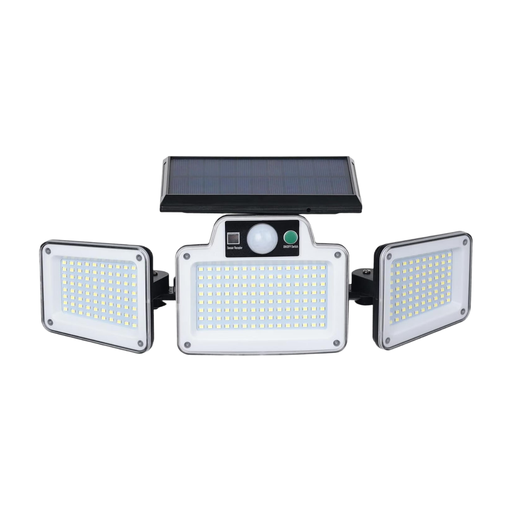
Why it's a great fit: Ideal for illuminating driveways, garages, and dark corners of your property. The three adjustable heads allow for wide and targeted coverage, while the motion sensor provides on-demand brightness.
The IP65 certification ensures the light can withstand heavy rain. The separate solar panel with a long cable solves the runtime issue, as it can be optimally positioned for sun exposure, regardless of where the light is mounted.
Three adjustable lighting modes (including constant-on and sensor mode) controlled via remote. The 2400 mAh battery provides a solid capacity foundation.
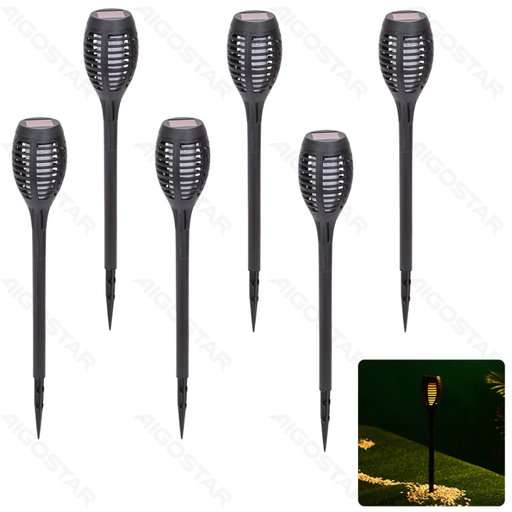
Why it's a great fit: Perfect for users who want to create a warm and inviting atmosphere. The realistic flame effect is excellent for accenting garden paths, flowerbeds, or for parties on the patio.
This model avoids the pitfall of inappropriate brightness because it is explicitly designed as a decorative light with a warm white 2700K colour temperature. The expectation for brightness is set for ambience from the outset, not functional illumination.
Delivered in a 6-pack, allowing for cost-effective and uniform design across larger areas. Installation is tool-free by simply staking them into the ground.
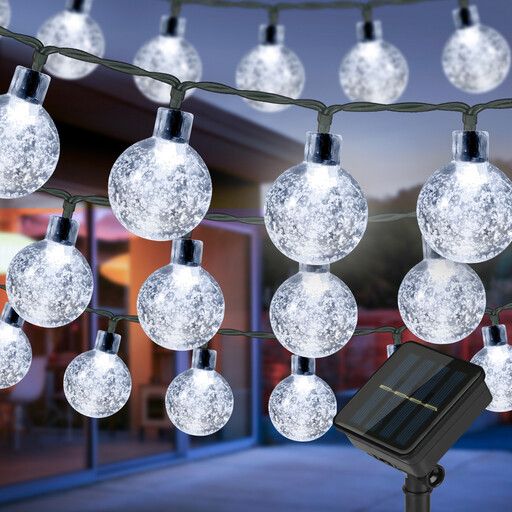
Why it's a great fit: A solar string light is extremely versatile. It can be draped around balcony railings, on fences, in trees, or along a pergola. The 11-metre length offers plenty of scope for creative decorations.
With an IP65 rating, this string light is significantly more robust than many competing products that only offer IP44. It is therefore suitable for unprotected outdoor use in rain and snow, avoiding the pitfall of poor weather resistance.
Eight different lighting modes (from steady-on to flashing) offer variety for different occasions. The memory function saves the last selected setting.
We have compiled a complete, up-to-date list of products that fully meet these strict selection criteria and rigorous safety standards.
Yes, but with limitations. The shorter days and lower intensity of sunlight mean the battery won't fully charge. This results in a significantly shorter runtime at night. Models with high-efficiency (monocrystalline) solar panels and large batteries have an advantage here. For reliable operation in winter, solar spotlights with a pure motion-sensor mode are a good choice, as they only consume energy when needed.
The lifespan is determined by two main components: the LED and the battery. The LED solar lights themselves have a very long lifespan, often 15,000 hours or more. The battery is typically the component that loses performance first. Depending on quality and usage, a battery usually lasts 1 to 3 years. You can extend its life by keeping the solar panel clean and ensuring it receives maximum sun exposure.
The most important factor is the orientation of the solar panel. It needs several hours of direct, unfiltered sunlight each day. Avoid locations under roof overhangs, trees, or on north-facing walls. Also, ensure that the light's dusk-to-dawn sensor is not illuminated by other artificial light sources at night (e.g., streetlights), as this can prevent it from turning on automatically.