
Lieferung heute & morgen

Qualitätsgarantie

Willkommens-Angebote freischalten: KOSTENLOSE Lieferung | Bis zu 80 % RABATT | Kostenlose 30-Tage-JoyPlus-Testphase
App herunterladen
Purchasing new stainless steel cutlery seems straightforward. Yet, disappointment often sets in after just a few wash cycles: surface rust, bent tines, or knives that stay dull. A high price is no guarantee of quality. Many buying decisions are based on marketing promises that prove baseless in everyday use. This guide shows you what to look for to make a durable and functional choice that meets your needs.
Before we dive into the features of good products, it's important to know the most common traps. These three points often lead to unnecessary expense and frustration in the kitchen.
To avoid the problems mentioned above, you should base your selection on objective criteria. The following three aspects are crucial for the quality and longevity of your cutlery.
The quality of stainless steel cutlery is largely determined by its alloy. Look for these labels:
A typical cutlery set for a household is designed for 4, 6, or 12 people and standardly includes dinner knives, dinner forks, dinner spoons, and teaspoons. Consider whether you need additional specialty pieces. For barbecues, a dedicated barbecue set with a long meat fork is useful for working safely over a hot grill. For the little ones, there is special children's cutlery, with its size and shape adapted for small hands. Those who are often on the go will benefit from a travel cutlery set in a case.
Especially with knives, there are two manufacturing methods that affect durability:
Instead of making blanket recommendations, we have identified products that meet specific user profiles and adhere to the quality criteria mentioned.
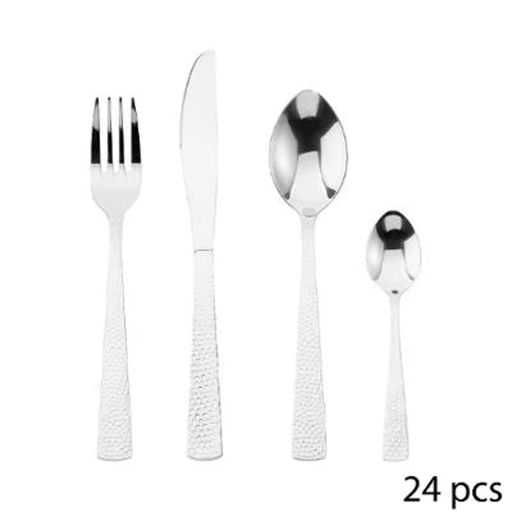
Why This Fits Their Persona: This set is designed for daily use in a household of up to six people. It covers all the basics, combining functionality with a modern, understated design.
Crafted from high-quality stainless steel, it offers high resistance to rust and wear, thus avoiding the "dishwasher-safe" trap with solid materials.
A complete cutlery set for 6 people. The ergonomic design ensures comfortable handling for both adults and children.
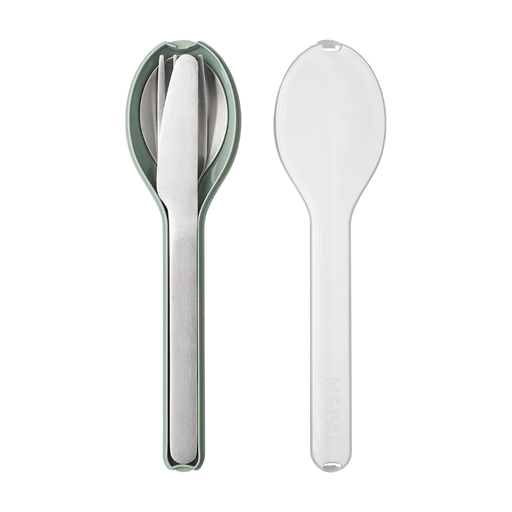
Why This Fits Their Persona: Ideal for people who eat their meals at the office, university, or while traveling. It provides a hygienic and reusable alternative to disposable cutlery.
The sturdy case protects the cutlery and keeps your bag clean. The stainless steel material is durable, solving the problem of impractical or fragile travel cutlery.
A compact, complete knife, fork, and spoon set. Hygienically packed in a reusable plastic case and is dishwasher-safe.
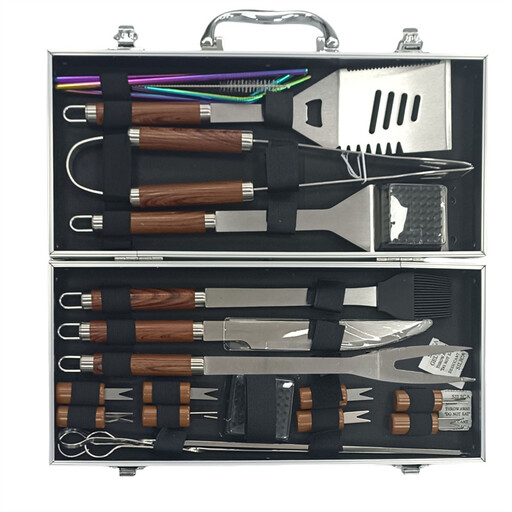
Why This Fits Their Persona: For anyone who takes grilling seriously and wants a complete kit for use in the garden or while camping. This set bundles all the necessary tools in one place.
The tools are made from professional-grade stainless steel designed for repeated use at high temperatures. This prevents you from buying flimsy individual pieces that bend easily.
A comprehensive 23-piece barbecue set, including tongs, a spatula, and forks. Everything is neatly stored in a durable fabric bag for transport and storage.
We have compiled a complete, up-to-date list of products that fully meet these strict selection criteria and German safety regulations.
What is the difference between 18/10 and 18/0 stainless steel in cutlery? The main difference is the nickel content. 18/10 stainless steel contains 10% nickel, which makes it extremely resistant to rust and acids and gives it a fine lustre. 18/0 stainless steel is nickel-free, making it slightly more prone to corrosion, but it is also suitable for those with nickel allergies and is generally less expensive.
How can I tell if a cutlery set is truly dishwasher-safe? Look at the material specification (18/10 is a good choice) and the construction. Monobloc knives are generally less problematic than hollow-handle knives. For coloured or coated cutlery, it is advisable to read the manufacturer's instructions carefully, as durability can vary greatly. Hand washing is often the gentler method for such models.
Can you resharpen stainless steel cutlery? Yes, the blades of stainless steel knives can be resharpened. The quality of the blade steel determines how well and how long the edge holds. Cheaper knives may need to be sharpened more frequently. Fork tines that have bent are often difficult to restore to their original shape, which is an indicator of a softer material.