
Lieferung heute & morgen

Qualitätsgarantie

Willkommens-Angebote freischalten: KOSTENLOSE Lieferung | Bis zu 80 % RABATT | Kostenlose 30-Tage-JoyPlus-Testphase
App herunterladen
If you’re looking to buy table salt, you’ll find much more online than classic table salt: iodised salt, sea salt, Alpine salt, herb salt, barbecue seasoning salt, and coarse or fine salt are all available. The differences aren’t just about taste. They also include grain size, ingredients, fortification, pack size and intended use.
An eye-catching pack or a label saying “natural” isn’t enough to make an informed choice. What matters is whether the salt suits your day-to-day needs and the product information is clear.
Sea salt or Alpine salt may sound like something special. But origin alone tells you little about whether a product is right for the way you want to use it. Check these details too:
For example, pure sea salt may be sold without any additives, while iodised salt is specifically fortified with potassium iodate.
The nutritional information for table salt often consists almost entirely of salt. That doesn’t mean every variety is the same. The ingredients list will show whether it contains potassium iodate, potassium fluoride, folic acid, herbs or an anti-caking agent.
If you already take food supplements or fluoride-containing products, consider your total daily intake. Product information may explicitly state that additional fluoride supplements should only be used following medical advice.
A multipack of salt can make sense for families, frequent users or households that like to stock up. Smaller speciality products, such as coarse sea salt or herb salt, often come in much smaller quantities. So compare the price per 100 g or kilogram, not just the total price.
Storage also affects how practical salt is for everyday use: keep it dry, sealed and protected from moisture.
Fine salt dissolves quickly, making it suitable for soups, sauces, cooking water, baked goods and everyday use in a salt shaker. Coarse salt is handy for a salt mill, rubbing into food before barbecuing, making a salt crust or adding a visible seasoning to dishes.
Herb salt and barbecue seasoning salt contain ingredients other than salt. Herb salt, for example, may contain parsley, celery, onion, basil or rosemary. If you have allergies, read the full ingredients and allergen information.
Iodised salt contains added iodine, usually in the form of potassium iodate. The exact amount varies by product, so check the packaging. Some products combine iodine with fluoride and folic acid.
According to the manufacturer’s product description, Bad Reichenhaller salt with iodine, fluoride and folic acid contains all three additives. However, this doesn’t mean it offers an individual health benefit for everyone. If you’re pregnant, planning a pregnancy or breastfeeding, discuss the right nutrient levels for you with a doctor, midwife or other healthcare professional, and check the product’s actual labelling.
Pure salt may contain only salt and, in some cases, an anti-caking agent. According to the product description, Kotányi coarse sea salt is listed as “sea salt (100%)” and contains no additives or anti-caking agents. Herb salt and seasoned salt contain additional ingredients.
Also check:
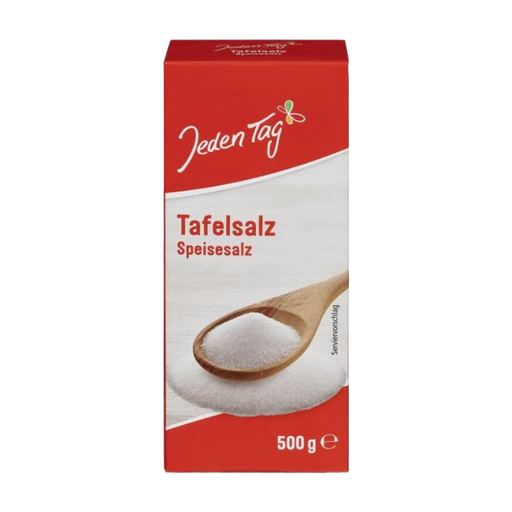
Why this product suits this shopper: Fine table salt in a 500-g pack for cooking, baking and everyday seasoning. The manageable pack size makes it a good way to try a classic household option.
The fine grain size is clearly stated, so you’re less likely to buy coarse salt by mistake for uses where it needs to dissolve quickly.
500 g of fine salt, described as suitable for cooking, baking and seasoning.
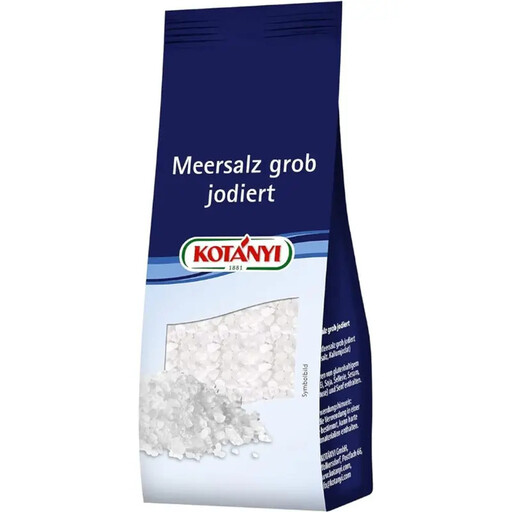
Why this product suits this shopper: Coarse sea salt crystals for salt mills, brining, baking or finishing dishes. The product description says it consists of sea salt and contains no additives or anti-caking agents.
The grain size and ingredients are clearly described, making it easier to choose between pure sea salt and fortified iodised salt.
100 g of coarse sea salt, described as additive-free and suitable for salt mills.
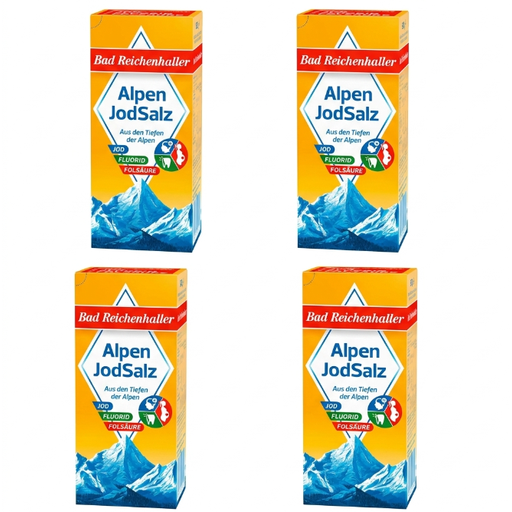
Why this product suits this shopper: Four 500-g packs for households that regularly use fine fortified salt and want to plan their supplies.
The product name lists all three added ingredients, so it’s clear that this isn’t pure salt.
A value pack containing 2 kg in total; the product description states that it contains iodine, fluoride and folic acid.
We’ve put together a complete, regularly updated list of products that meet these strict selection criteria and fully comply with the safety regulations in force across the EU.
Fine table salt is practical for everyday use as it distributes easily and is suitable for cooking, baking and use in a salt shaker. Whether you want a product to contain iodine, fluoride or folic acid depends on your personal diet and other sources of these nutrients. Always check the ingredients list and the information on the packaging.
When stored correctly, dry salt can be kept for a long time. However, moisture can cause it to clump, and may affect the quality of herb or seasoned salts. Keep salt sealed and dry, and don’t store it directly above the hob. The best-before date on the pack and the manufacturer’s instructions remain important.
A salt shaker works well with fine salt and makes it easy to season food evenly at the table. A salt mill is suited to coarse crystals and lets you season food just before serving. Before buying, check that the grinding mechanism is designed for coarse salt and that the container can be kept protected from moisture.