
Lieferung heute & morgen

Qualitätsgarantie

Willkommens-Angebote freischalten: KOSTENLOSE Lieferung | Bis zu 80 % RABATT | Kostenlose 30-Tage-JoyPlus-Testphase
App herunterladen
If you’re looking to buy a thermometer, you’ll find devices for a wide range of uses: measuring body temperature, monitoring your indoor climate, checking humidity or reading the temperature in your garden. Some devices look similar, but they use different measuring methods and aren’t interchangeable.
A digital display may look precise, but on its own it tells you little about whether a device is suitable for your needs. A room thermometer isn’t automatically suitable for measuring body temperature. Similarly, a fever thermometer may be designed for taking body temperature, but won’t necessarily give reliable readings for a room, water or objects.
The key factors are the measuring range, tolerance, where you take the reading and what the device is designed for. For medical use, you should also follow the instructions. Readings from household devices should not automatically be treated as a substitute for medical advice.
A Bluetooth thermometer or app-connected sensor often needs a compatible smartphone, a specific app or an additional hub. For example, the Tapo T310 requires a Tapo H100 or H200 for wireless connectivity. Without this extra kit, its functionality is limited.
Before you buy, check:
A garden thermometer isn’t necessarily fully waterproof. Weather-resistant housing may be suitable for outdoor conditions, but the device might not be designed to stay in water for long periods. A solar thermometer also needs a spot in direct sunlight to charge its battery sufficiently.
The opposite applies to indoor sensors: devices such as the Tapo T310 or a Xiaomi thermo-hygrometer are designed for dry indoor spaces and should be protected from direct sunlight, heat sources and moisture.
For measuring body temperature, you can choose between traditional digital thermometers and infrared thermometers. Depending on the instructions, a digital model with a flexible tip can be used orally or under the arm. An infrared device takes a contactless reading at the forehead, and some models can also measure the temperature of objects.
Room climate devices typically have measuring ranges such as 0 to 60 °C or -20 to 60 °C. For most homes in Germany, a range around normal room temperature is sufficient. A wider range may be useful for cellars, conservatories or outdoor areas.
Tolerance indicates how far a reading may differ from the actual value. According to the product specifications, the Xiaomi Mi Temperature and Humidity Monitor 3 Mini has a temperature tolerance of ±0.10 °C and a humidity tolerance of ±1 %. The Tapo T310 is specified at ±0.3 °C and ±3 % relative humidity.
These figures apply only within the intended measuring range and when the device is positioned correctly. Don’t place a sensor right next to radiators, windows or air vents, or in direct sunlight.
A temperature and humidity meter, also known as a hygrometer, is suitable for rooms where the climate fluctuates. This includes bedrooms, children’s rooms, cellars and home offices, for example. If you only need to check the temperature, you don’t necessarily need a combined device.
For consistent readings, the device should:
For smart sensors, wireless range, app features and data storage are also important.
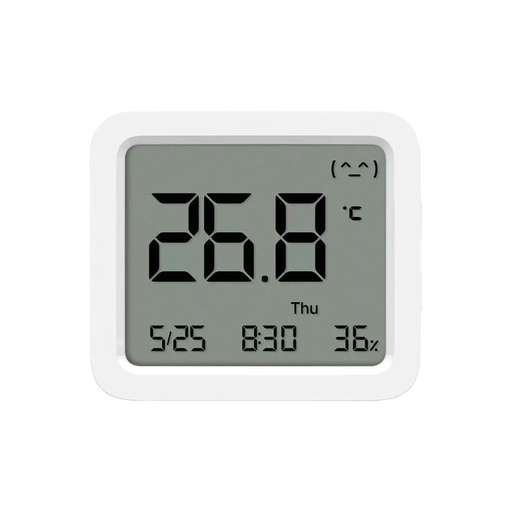
Why it suits this profile: This compact device displays temperature and humidity on its digital screen and is suitable for dry indoor spaces.
The stated measuring ranges and tolerances are clearly listed. You can also check device compatibility in advance if you plan to use Bluetooth.
Digital display, temperature readings from 0 to 60 °C, humidity display up to 99 % and CR2450 battery power.

Why it suits this profile: This sensor is designed for continuous indoor monitoring, with app connectivity, data logging and automation features.
The required Tapo H100 or H200 hub is clearly stated, so you can factor in the extra hardware before buying.
Temperature range of -20 to 60 °C, stated tolerance of ±0.3 °C and historical data logging through the Tapo app.
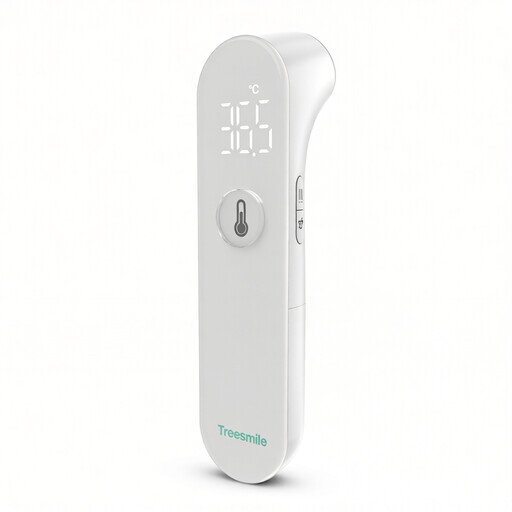
Why it suits this profile: This device combines forehead and object modes, making it suitable for families, travel and occasional temperature checks on objects.
The two measuring modes are listed separately, making it clear that measuring an object is not the same as measuring body temperature.
Contactless readings, LED display, 35 memory slots, mute function and power from two AAA batteries.

Why it suits this profile: This traditional digital thermometer has a flexible tip, an LCD display and a memory function for the last reading.
The measuring range, battery type and cleaning instructions are provided. The tip can be rinsed, but the body must not be fully submerged.
Flexible tip, LCD display, audible signal, last-reading memory and protective case.
We’ve put together a complete, regularly updated list of products that meet these strict selection criteria and fully comply with the safety regulations in force in the EU.
It depends on where you want to take the reading and how you plan to use the thermometer. A digital thermometer with a flexible tip may be suitable for traditional measuring methods. An infrared thermometer allows you to take a contactless reading at the forehead. Always follow the instructions; if you’re unsure or symptoms are concerning, seek medical advice.
Its lifespan depends on the battery, storage, cleaning and how much mechanical wear it experiences. Replace the battery if the display is dim or the device isn’t working reliably. Keep button batteries out of children’s reach and dispose of them separately from household waste. Store the thermometer in a dry, protected place and follow the manufacturer’s instructions.
Many room climate sensors use coin-cell batteries and are designed to consume little energy. However, battery life is affected by wireless transmission, the display, measuring intervals and app use. If you’re considering a device with a hub or Bluetooth, check which connection stays active and what type of battery it needs before buying.