
Lieferung heute & morgen

Qualitätsgarantie

Willkommens-Angebote freischalten: KOSTENLOSE Lieferung | Bis zu 80 % RABATT | Kostenlose 30-Tage-JoyPlus-Testphase
App herunterladen
If you want to buy tinned fish online, you’ll quickly find a wide selection of tuna, herring and mackerel. However, products differ in more than just price. The type of fish, drained weight, sauce, oil, ingredients, allergens and storage requirements all determine whether a tin is actually suitable for its intended use.
A 185 g tin does not automatically contain 185 g of fish. For products in brine, sauce or oil, the drained weight is what matters. For example, the Followfood MSC Tuna Fillets in Natural Brine 185 g has a drained weight of 130 g. So, when comparing products for salads or pasta, you should look not only at the stated net weight but also at the actual amount of fish inside.
Ready-made tuna salads often contain vegetables, pasta, oil, sugar or sauces. As a result, their energy, carbohydrate and salt content can differ considerably from that of plain tuna fillets. According to the product details, the Saupiquet MSC Primavera Tuna Salad contains 162 kcal and 8.6 g of protein per 100 g, while plain Saupiquet Tuna Fillets in Sunflower Oil are listed as containing 24 g of protein per 100 g. The two options are therefore suited to different purposes.
MSC-certified fish can be an important selection criterion, but it does not automatically tell you anything about the sauce, salt content, portion size or allergens. The label should be considered alongside the fish species, catch area and ingredients list. For products without an MSC reference, pay particularly close attention to the stated origin or catch area.
Oil gives the fish a different texture and a higher fat content than water or natural brine. Saupiquet Tuna Fillets in Olive Oil and Sunflower Oil are listed as containing 195 kcal, 11 g of fat and 24 g of protein per 100 g. According to the product details, Followfood Tuna Fillets in Natural Brine contain 115 kcal, 0.7 g of fat and 27 g of protein per 100 g.
Sauces may contain sugar, starch, thickeners or milk ingredients. This applies, for example, to herring in tomato cream or pepper sauce. If you prefer a short ingredients list, look specifically for products containing fish, water or brine and salt.
Nutritional information usually refers to 100 g and not always to the full weight of the tin or pack. When stocking tinned fish in your cupboard, it is particularly worth checking:
The legally binding information is shown on the packaging. Product details can change, so anyone with allergies should always check the current label.
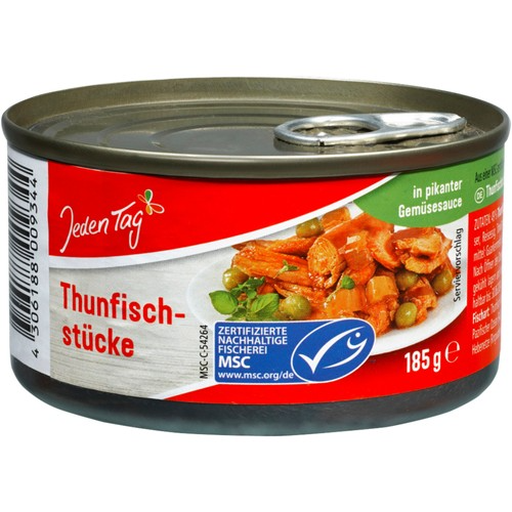
Why this product suits this profile: A single 185 g tin of tuna chunks in spicy vegetable sauce is ideal for shoppers looking for a straightforward option that is ready to eat.
The ingredients list and nutritional values show that the product contains vegetables, sauce, sugar and salt alongside the fish. This lets you assess the recipe before buying.
100 kcal and 11 g of protein per 100 g according to the product details; can be eaten without any additional preparation.
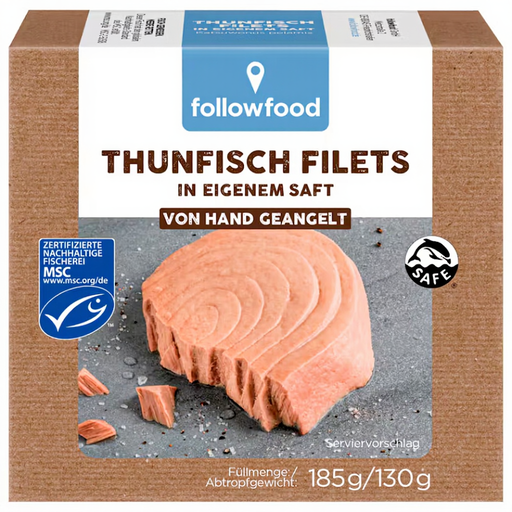
Why this product suits this profile: According to the product description, the recipe is limited to tuna, water and sea salt. The MSC label and stated fishing method provide additional guidance.
The stated drained weight of 130 g prevents the total contents of the tin from being mistaken for the amount of fish.
27 g of protein and 0.7 g of fat per 100 g according to the product details; fish from an MSC-certified fishery according to the product description.
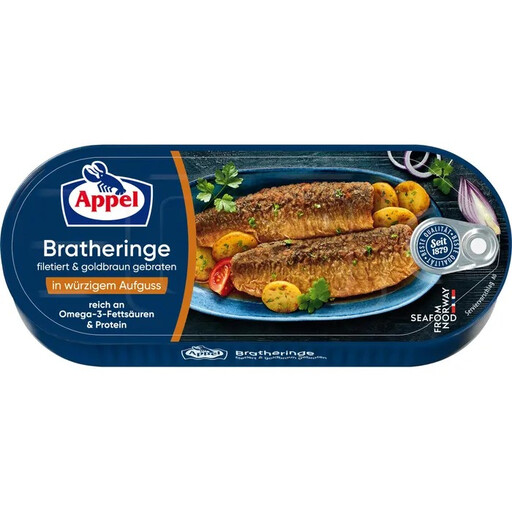
Why this product suits this profile: The larger tin is suitable for households planning to use marinated fried herring as a bread topping, snack or side dish.
The product states both the net weight and drained weight: 325 g and 200 g respectively. This makes portion planning easier to judge.
MSC labelling according to the product details; 16.4 g of protein per 100 g and made in Germany according to the description.
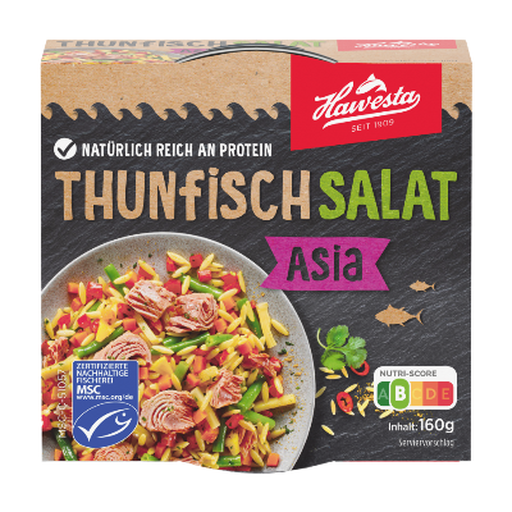
Why this product suits this profile: The pack of nine is designed for regular individual portions and can be planned for breaks, outings or quick meals.
The ingredients include vegetables, pasta, mango chutney and spices. Shoppers can therefore check in advance whether egg and gluten-containing wheat fit their diet.
160 g individual portions in a pack of 9; 108 kcal and 7.8 g of protein per 100 g according to the product details.
We’ve put together a complete, regularly updated list of products that fully meet these strict selection criteria and the safety regulations applicable in the EU.
Unopened tins should be kept in a cool, dry place away from direct sunlight. Damaged, leaking or swollen packaging should not be used. Depending on the product, the best-before date can be found on the lid, base or label.
After opening, transfer any leftovers from the metal tin to a suitable non-metallic container and refrigerate them. The recommended time for consumption varies by product and is often 24 to 48 hours, or up to two days. Always follow the instructions on the individual packaging.
The shelf life is stated on the packaging and varies by product. When stored correctly in a dry place, tinned foods can be kept in the cupboard for an extended period. Before opening, the tin, lid and seams should be undamaged.
Look at the fish species, catch area, MSC label, drained weight, liquid and salt content. Plain fillets in brine or oil are versatile for salads and pasta. Ready-made tuna salads save preparation time, but contain additional ingredients such as vegetables, pasta or dressing.
Many products can be eaten straight from the tin. Products in sauce, herring fillets and ready-made salads can be served cold. However, once opened, you should follow the manufacturer’s storage and consumption instructions. This helps you keep track of the flavour, quality and safe handling of the product.