
Lieferung heute & morgen

Qualitätsgarantie

Willkommens-Angebote freischalten: KOSTENLOSE Lieferung | Bis zu 80 % RABATT | Kostenlose 30-Tage-JoyPlus-Testphase
App herunterladen
A tinned stew is ideal for households, working people, students, campers and anyone who wants to put a hot meal on the table without lengthy preparation. The selection ranges from classic pea stew and lentil stew to vegetarian or organic ready meals.
Many products look similar in product images and packaging. However, the key factors are ingredient percentages, pack size, allergens, nutritional values and the intended use. As a Joybuy Product Recommendation Officer, I assess the available information objectively and show you which purchasing criteria can help avoid common mistakes.
A pack containing 800 g or 850 ml may initially appear good value. For a fair comparison, check the price per kilogram or litre. With multipacks, the total price per 400 g tin is also important. Smaller portions can be practical for individuals, while large tins are better suited to two people or stocking up.
Descriptions such as “hearty stew”, “with bacon” or “vegetarian stew” do not always describe the full composition. The ingredients list shows which components are included and the order in which they are listed. For example, a product containing meat ingredients is not vegetarian, even if the product description says otherwise.
Buyers should also check the ingredients of any product described as chickpea stew: the available information lists 42% lentils, as well as peppers and aubergine. This illustrates why the labelling on the product page and the tin remains decisive.
Unopened tinned food is generally easy to store. Nevertheless, always follow the information on the relevant packaging. Store tins in a cool, dry place away from heat. After opening, transfer the contents to a non-metallic container, refrigerate and consume within the stated period. For the products presented here, this is usually one to three days.
The percentage of the main ingredient makes comparison easier. Examples from the selection include:
Nutritional values are usually provided per 100 g. For comparing quantities, energy, fat, carbohydrates, protein and salt are relevant. These values should not be assessed in isolation, but should suit your own diet and the planned portion size.
If you shop for vegetarian products, do not look only at the front of the tin. Meat, bacon, sausage or stock may rule out a product. Allergen information is equally important. Depending on the product, celery, mustard, wheat or gluten, milk, egg or soya may be listed, either as ingredients or as possible traces.
According to the ingredients information, Alnatura lentil stew is vegetarian and made from organically farmed ingredients; celery is listed as an allergen. By contrast, Sonnen Bassermann Hearty Lentil Stew 6x400g lists sausages and bacon, as well as mustard, among its ingredients. Always compare the information on the label with your personal requirements before eating.
400 g tins are often suitable as an individual portion or as part of a meal. 800 g and 850 ml packs may be useful for several people or for stocking up. Preparation options are also important for the office, camping and outdoor activities: several products can be heated in a saucepan, while some can also be heated in a microwave-safe bowl. The tin itself must not be placed in the microwave.

Why this product suits the profile: The 800 g tin provides a generous quantity for lunch or dinner and contains 40% peas and 6% bacon according to the product information.
The ingredients list clearly states the pea and bacon percentages. Wheat and possible traces of other allergens are also indicated.
800 g net quantity, 84 kcal and 3.6 g of fibre per 100 g according to the product data.
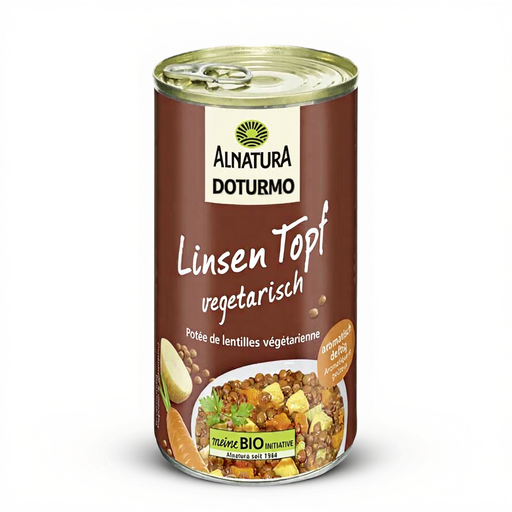
Why this product suits the profile: This vegetarian organic stew is made with organically farmed ingredients and comes in a 400 g size designed as an individual portion.
The product information states 24% lentils, 9% potatoes and 8% carrots. Celery is listed as an allergen.
Organic ingredients, a vegetarian recipe and 67 kcal per 100 g according to the product information.
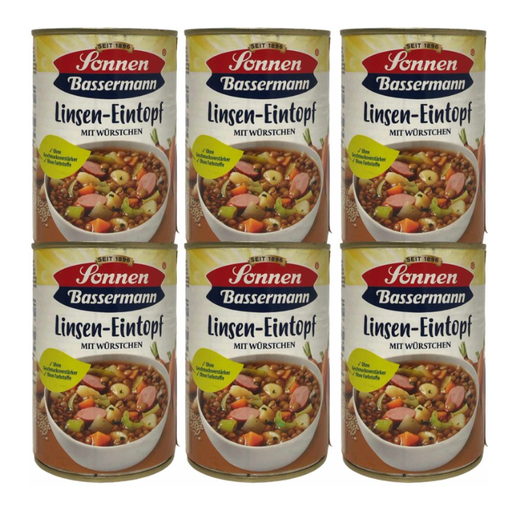
Why this product suits the profile: The six-pack of 400 g tins is ideal for kitchen cupboards, shared flats and regular quick meals.
The ingredients include 30% lentils, but also sausage, bacon and mustard. This makes it easy to check whether it is suitable for a vegetarian diet.
Six individual portions, 105 kcal and 5.5 g of protein per 100 g according to the product data.

Why this product suits the profile: The 400 g tin is easy to take along for camping, work or days out, and can be heated in a saucepan or bowl.
The portion is smaller than that of the 800 g tins. The ingredients list 52% peas, and possible traces of several allergens are also indicated.
400 g net quantity, 52% peas and 0.76 g of salt per 100 g according to the product information.
We have put together a complete, regularly updated list of products that fully meet these strict selection criteria and the safety regulations applicable in the EU.
Before buying stew online, check the following points:
When unopened, its shelf life is determined by the best-before date on the tin. Tins stored in a cool, dry place are suitable for keeping in stock. Once opened, the stew should be refrigerated and consumed within the period stated by the manufacturer, often within two to three days.
No, the tin must not be placed in the microwave. For microwave heating, transfer the contents to a suitable container. Alternatively, heat the stew in a saucepan over a medium temperature, stirring occasionally. Follow the specific heating times provided by the relevant manufacturer.
Products whose ingredients list contains no meat, bacon or sausage ingredients are suitable. According to the product information available, Alnatura Organic Hearty Lentil Stew and Alnatura Organic Hearty Pea Stew are vegetarian. If you are unsure, always check the current packaging and the complete ingredients list.