
Lieferung heute & morgen

Qualitätsgarantie

Willkommens-Angebote freischalten: KOSTENLOSE Lieferung | Bis zu 80 % RABATT | Kostenlose 30-Tage-JoyPlus-Testphase
App herunterladen
Educational toys for children should do more than keep them occupied. They should encourage building, experimenting, storytelling or playing together. But when choosing a gift for a birthday, Christmas or another occasion, colourful packaging and lengthy product descriptions aren’t the only things that matter. Age recommendations, materials, how the toy works and the level of supervision it requires are all important.
A set with several hundred pieces may sound impressive, but a large number of parts can be overwhelming for younger children. Check whether it comes with clear instructions, a storage box or specific model ideas. With magnetic building blocks, it should also be clear which pieces fit together and whether the set contains small magnets.
A toy recommended for children aged 3 and over won’t necessarily suit every three-year-old. Fine motor skills, attention spans and experience with rules can vary considerably. Small parts, magnets, button batteries and battery compartments require particular care. Always consider the child’s individual development alongside the age recommendation on the packaging and product page.
Electronic effects can grab a child’s attention, but they also use batteries and aren’t right for every family. With a children’s experiment kit, it’s more important that the circuits are explained clearly. For a role-play toy, accessories, sturdy connections and open-ended play possibilities matter more.
Read all the safety information carefully. Toys with small parts or magnets must be kept out of the reach of children under three if this is expressly stated. Direct supervision may also be sensible for older children, particularly when using experiment kits, electronic components or toys with a water feature.
A CE mark indicates that the manufacturer declares the product has been designed with the relevant EU requirements in mind. It is not a general quality mark, however. Also check the manufacturer’s details, the responsible person in the EU, any warnings and whether the instructions are clear and easy to follow.
With wooden toys, smooth surfaces, rounded edges and well-fitting joints are important features. For plastic parts, look for sturdy connections, a secure battery compartment and easy-to-read care instructions. Don’t take claims such as ‘non-toxic’ or ‘safe’ at face value; specific material details and safety information are more reliable.
A multi-storey car park with a play area measuring 78 × 58 cm needs considerably more floor space than a small figure or peg toy. A box makes it easier to keep everything tidy and reduces the risk of accessories going missing. For 3D puzzles or large construction toys, also check that you’ll have enough room to store them once they’re assembled.
The selection below groups different products by typical everyday situations. Details about age, contents, batteries and warnings are based on the relevant product descriptions.
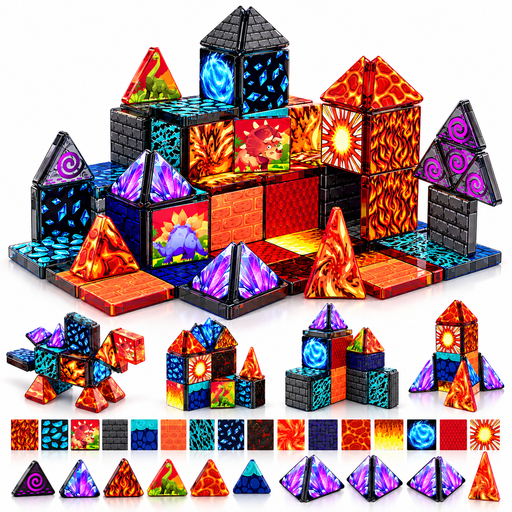
Why this product suits this profile: This 60-piece set is designed for children aged 3 and over, offering a manageable introduction to magnetic building. Squares, triangles and pieces featuring animals and nature themes are ideal for making simple buildings and telling stories.
There are fewer pieces than in very large sets. The storage box helps keep everything sorted; because the set contains magnets, it’s important to follow the age recommendation and supervision guidance.
60 magnetic building pieces, a storage box and the option to build alone or together.
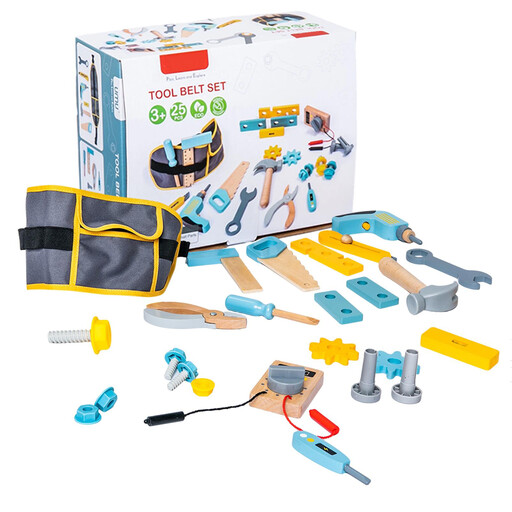
Why this product suits this profile: Designed for children aged 3 to 6, this role-play set includes wooden tools such as a hammer, screwdriver, pliers, spanner and saw. The portable toolbox encourages children to play together and makes tidying up afterwards easier.
Play doesn’t depend on batteries, lights or sounds. The product description mentions smooth edges suited to children’s hands, as well as a storage option.
25 pieces, wooden construction, a toolbox and an adjustable belt for role-play wherever you go.
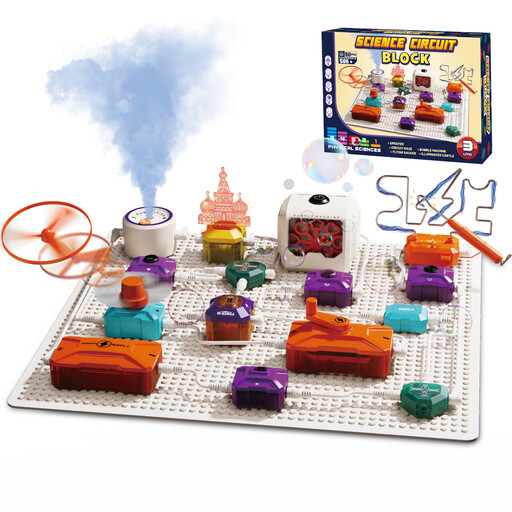
Why this product suits this profile: Designed for children aged 6 and over, the kit contains 50 pieces, a 37-page instruction booklet and cards showing 118 circuit variations. Projects such as a fan, bubble maker and RGB lamp offer a hands-on introduction to series and parallel circuits.
The instructions explain what you can make, so the set feels less like a random collection of parts. AA batteries are not included; small parts, button batteries and flashing lights mean supervision is needed.
A tool-free plug-in system, 37-page instruction booklet and a wide range of documented circuit variations.
We’ve put together a complete, regularly updated list of products that meet these strict selection criteria and fully comply with the safety regulations in force in the EU.
For children who love stories, role-play toys, a fire-fighter costume or a multi-storey car park with a lift and town map are all worth considering. Dinosaur fans can choose from a simple pull-back vehicle, a remote-controlled dinosaur or a take-apart DIY dinosaur. For electronic versions, always check the battery type, sound level and supervision guidance.
A gift for a child aged 3 and over should suit their attention span as far as possible. For creative family activities with children aged 8 and over, a wooden 3D dinosaur puzzle could be a good choice; it assembles without glue and includes four models. A more complex marble run is designed for older teenagers aged 14 and over, so it’s not comparable to a preschool toy.
These are toys that encourage a specific activity as well as play, such as building, sorting, experimenting, storytelling or role-play. Calling a toy educational doesn’t replace the need to check its age recommendation, materials, safety and play value.
Battery-powered products come with extra costs for AA batteries or button batteries. Check whether batteries are included before you buy. Plug-in systems without electronics, wooden toys and pull-back vehicles generally don’t need batteries. For rechargeable products, follow the charging instructions and keep them away from water.
How long a toy lasts depends on its materials, connections, storage and how often it’s played with. Sorting boxes help prevent pieces from going missing. Check wooden and plastic parts regularly for cracks, sharp edges and loose small parts. Damaged components should no longer be used by children.