
Lieferung heute & morgen

Qualitätsgarantie

Willkommens-Angebote freischalten: KOSTENLOSE Lieferung | Bis zu 80 % RABATT | Kostenlose 30-Tage-JoyPlus-Testphase
App herunterladen
Anyone looking to buy toys online will quickly find a huge selection: LEGO sets, board games, construction toys, action figures, collectible figures and plush keyrings are available for different age groups and interests. The challenge is less about finding a product and more about choosing the right one. Product images do not always show the actual size, blind-box items contain a random design, and extensive building sets require more space and time than their packaging might suggest.
As a Joybuy Product Recommendation Officer, I therefore focus primarily on clear, verifiable information: recommended age, number of pieces, dimensions, game mechanics, material details and what is included.
An age recommendation is an important starting point, but it does not replace considering how the toy is played with. A set for toys for ages 4 and up may contain large, easy-to-understand building pieces, while a complex set for older children may involve many small elements and longer building sessions. For children under three, small parts are always a significant safety risk.
For building sets, parents should also check:
A model can quickly appear larger in a product image than it really is. Buyers should therefore compare the product dimensions with the space available at home. A LEGO model might be displayed on a shelf, whereas a large vehicle or play world may require clear floor space.
The size of the packaging should not be confused with the size of the completed model either. For online listings, both measurements are useful when they are shown separately.
With a blind box, you cannot choose the design when buying an individual item. For example, the 52TOYS Bob-Tim-Minions series includes six designs plus one secret design. A random individual item will be delivered. If you are looking for a particular figure, you should therefore expect possible duplicates and read the product description carefully before buying. A plush keyring measuring around 15 centimetres is suitable for a rucksack or keyring, but is not automatically intended to be a classic cuddly toy.
Pay attention to the age category specified by the manufacturer and to the warning notices. The CE marking indicates that the manufacturer has taken the applicable EU requirements for the product into account; however, it is not a quality mark or a guarantee of a specific service life. For toys with small parts, the age limit remains particularly important.
The EN 71 series of standards covers, among other things, the mechanical and physical properties of toys, flammability and certain chemical requirements. When buying online, the information on the product page and the packaging should match.
Many building pieces are made from ABS plastic. Material names are not the only important consideration; the construction matters too. Are the joints movable? Are there delicate connections? Does the product need to be cleaned without water? With collectible figures and models, careful, regular dusting can help preserve their appearance.
Electronic board games also require batteries. The Hasbro Simon Classic requires three AAA batteries at 1.5 volts; according to the product information, test batteries are included. Before buying, check whether replacement batteries are readily available and whether the volume and pace of play suit the intended setting.
A large number of pieces alone says little about a product’s actual play value. For creative building sets, alternative building ideas, movable elements and combinable models are all relevant, for example. For board games, the number of players, playing time and complexity matter.
Anyone looking for board games for children should check the minimum number of players. A game for two people will not automatically suit a larger family. For toys for adults, such as an extensive LEGO model, the number of pieces, display space and building time are important selection criteria.
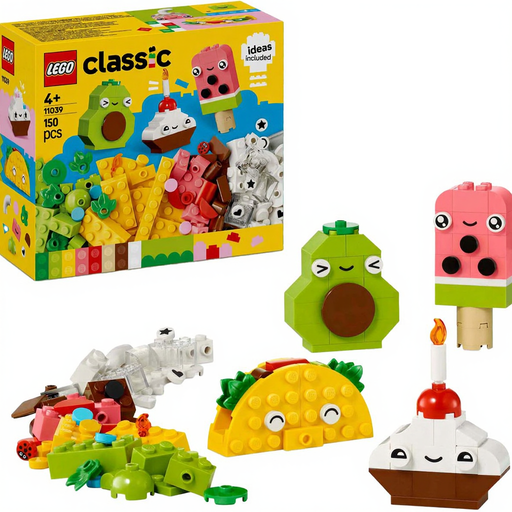
Why this product suits this profile: This set is aimed at children aged 4 and over and contains 150 pieces for creating different food models. It offers an accessible introduction to construction toys.
The age category and number of pieces are clearly stated. Buyers can get a better idea of the set’s scope in advance instead of relying solely on the image on the packaging.
150 pieces, several design options and an accessible introduction tailored to younger builders.
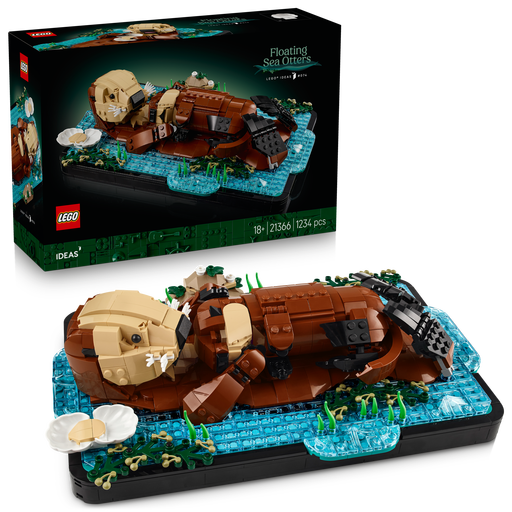
Why this product suits this profile: This set for fans aged 18 and over contains 1,234 pieces and is designed as a building and display model featuring two otters.
The product details include the number of pieces and the completed dimensions of approximately 8 × 30 × 19 centimetres. This makes it easier to plan the required space realistically.
A substantial building experience, details that can be positioned in different ways and a design aimed at adult LEGO fans.
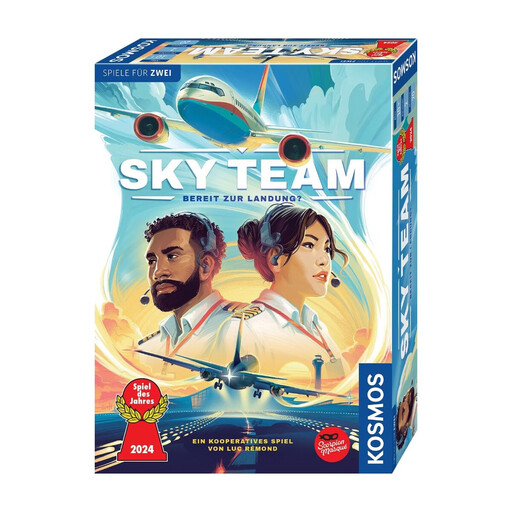
Why this product suits this profile: This co-operative board game is designed for two players aged 10 and over and offers 21 different airport missions.
The number of players and age category are clearly stated. This reduces the risk of buying a family game that is unsuitable for your group size.
A co-operative game mechanic, no batteries required and several scenarios for repeat play.
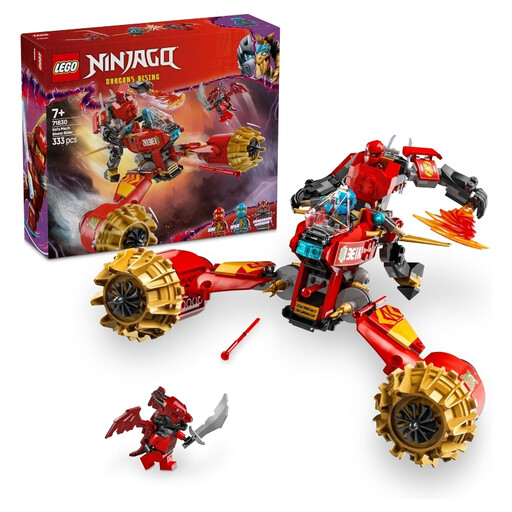
Why this product suits this profile: For children aged 7 and over, this LEGO NINJAGO set combines a mech, a flying motorbike, three minifigures and 333 building pieces.
The contents list describes not only the main model, but also the second model and the included figures. This makes the actual scope of play more transparent.
The mech can be split into two models, while several movable elements support different play scenarios.
We have put together a complete, regularly updated list of products that fully meet these strict selection criteria and the safety regulations applicable in the EU.
First check the recommended age, warning notices, contents and dimensions. For building sets, the number of pieces and completed model size are useful. For board games, consider the number of players, language and whether batteries are required. For fan merchandise such as LEGO Marvel, LEGO ONE PIECE or LEGO Friends, it is also important to know whether the item is mainly intended for playing, collecting or displaying.
There is no reliable one-size-fits-all answer. It depends on the materials, construction, frequency of use and storage conditions. Moving parts, connecting pieces and electronic components may experience more wear than purely decorative models. Keeping toys in a dry, dust-free place and following the care instructions can help preserve their condition.
For younger children aged 4 and over, manageable LEGO sets with large pieces and clear building ideas are a good option. From around age 6 or 7, LEGO NINJAGO, action figures and movable models offer even more ways to play. For older children and adults, consider more complex building sets, board games with a suitable player count or collectible figures. With a blind box, make sure the surprise element is intentional, as the design may be supplied at random.