
Lieferung heute & morgen

Qualitätsgarantie

Willkommens-Angebote freischalten: KOSTENLOSE Lieferung | Bis zu 80 % RABATT | Kostenlose 30-Tage-JoyPlus-Testphase
App herunterladen
If you’re looking to buy a vacuum cleaner, there’s more to compare than just wattage and price. Hard floors, carpets, furniture and pet hair all have different requirements. Battery life, filter maintenance, noise levels and dust capacity also affect how practical a machine is in everyday use.
Most mistakes happen because of three common marketing traps:
A cylinder vacuum cleaner with a cord suits larger homes, long cleaning sessions and households with several floor types. The cord gives you constant power, while a generous reach reduces the need to switch sockets.
A cordless vacuum cleaner or battery-powered vacuum is handy for quick clean-ups, stairs and hard-to-reach spots. Before you buy, check the runtime on each power level, the charging time and whether the battery is replaceable.
An upright vacuum cleaner takes up relatively little floor space. You can find an overview of different models in the upright vacuum cleaner category.
For delicate hard floors, a parquet nozzle with soft bristles makes sense. Carpets often benefit from a motorised brush bar that gets deeper into the fibres. Households with pets should look for a pet hair nozzle, an anti-hair-wrap brush or a mini turbo brush.
A machine for hard floors and carpets should offer different power levels and a suitable combination nozzle. Separate attachments for upholstery, furniture and crevices are useful. Many accessories are only an advantage if they’re included in the box and easy to store.
A HEPA filter vacuum cleaner can trap fine particles according to its filter class. Check the manufacturer’s specific filter performance rating and whether the filter is washable or needs regular replacement. A filter claim alone is not a medical promise and doesn’t replace individual advice for allergies.
Noise levels are given in decibels (dB). Even a few decibels can make a real difference day to day. A quiet vacuum is especially useful in flats with thin walls or when cleaning while others are around.
When it comes to capacity: a larger bin or bag needs emptying less often, but can make the machine heavier. Small dust containers are more manageable but need more frequent emptying. With a self-emptying station, you’ll need extra dust bags and floor space.
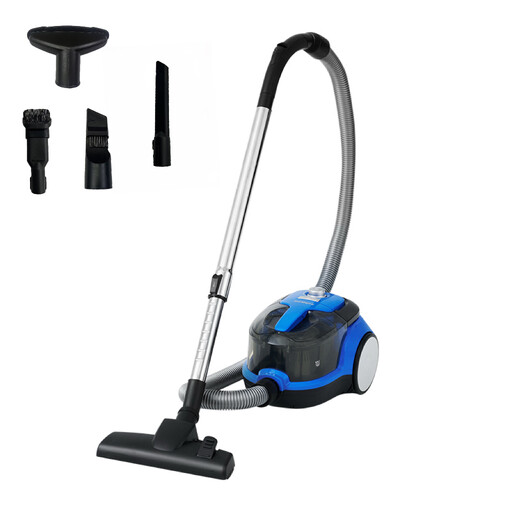
Why this product fits the profile: This corded model is aimed at households looking for a simple basic setup for floors, carpets and furniture.
The product specs mention automatic cord rewind, a 1.1-litre bin and a washable filter. This means no regular purchases of vacuum bags.
800 W motor, 17.5 kPa suction power according to the product info, multiple brush heads and automatic cord rewind.
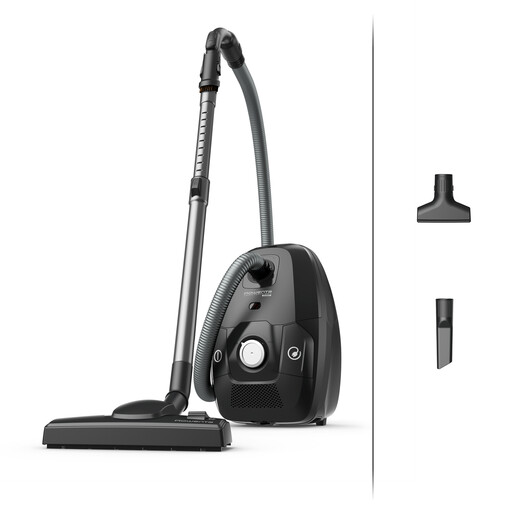
Why this product fits the profile: This bagged cylinder vacuum is suited to larger homes and users who prefer long cleaning sessions without battery interruptions.
The selection considers not just motor power, but also a 12-metre cleaning radius, a 4.5-litre bag and the stated HEPA filtration.
According to the manufacturer, 65 dB(A), 900 W motor, 4.5-litre dust bag and HEPA filtration up to 99.98 per cent.
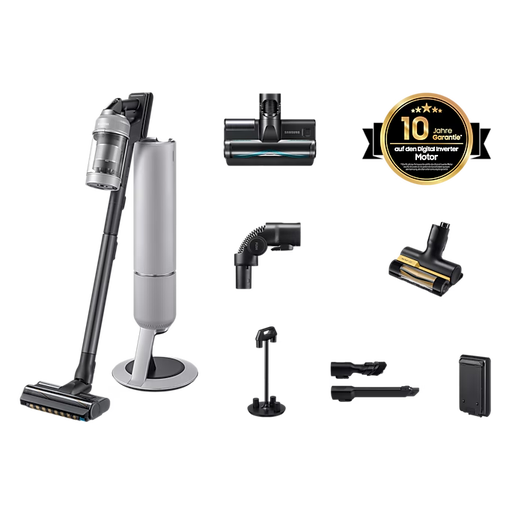
Why this product fits the profile: This cordless vacuum combines pet hair accessories, multiple power levels and a station that automatically empties the dust bin.
The runtime is stated per power level. A 0.5-litre bin and a 2.0-litre bin in the Clean Station are also specified.
According to the product info, up to 60 minutes runtime, five power levels, Pet Tool+, HEPA filter and All-in-One Clean Station.
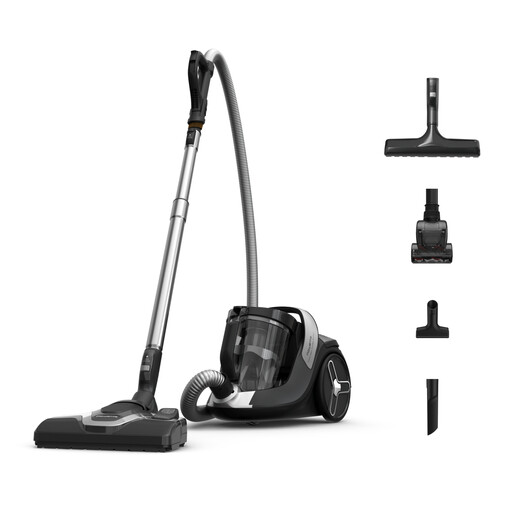
Why this product fits the profile: This bagless vacuum is designed for users who want a larger dust bin and a comparatively low noise level.
The 2.5-litre bin reduces frequent interruptions. Filter maintenance is still required and should be carried out according to the manufacturer’s instructions.
According to the manufacturer, 66 dB, 2.5-litre bin, mini turbo brush, parquet nozzle and three-stage HEPA filtration up to 99.98 per cent.
An energy-efficient vacuum cleaner isn’t determined by a low wattage alone. The cleaning time, how often you use it and the efficiency of the airflow also matter. For cordless models, you should also factor in the potential battery lifespan when planning costs.
Bagless models save on replacement bags, but need filter cleaning and possibly replacement filters. Bagged machines offer hygienic emptying, but come with ongoing costs. A wet and dry vacuum is only suitable if it’s explicitly designed to pick up liquids. A normal dry vacuum must not be used for wet messes.
Before you buy, also check:
We’ve put together a full, regularly updated list of products that meet these strict selection criteria and all applicable EU safety regulations.
A fixed wattage isn’t a reliable quality indicator. Also compare nozzles, brush bar, filter, airflow and the performance data provided by the manufacturer. For cordless machines, figures like Air Watts or Pascal only make sense within their specific measurement context.
The lifespan depends on the design, usage and maintenance. Regular filter changes, clear airways and a clean brush bar can help keep it working well. For cordless vacuums, whether the battery is replaceable is a key factor for long-term use.
A bagless model doesn’t need dust bags, but may require replacement filters and regular cleaning. A bagged vacuum incurs ongoing bag costs, but offers easy emptying. The deciding factors are bin size, filter costs and how often you clean.