
Lieferung heute & morgen

Qualitätsgarantie

Willkommens-Angebote freischalten: KOSTENLOSE Lieferung | Bis zu 80 % RABATT | Kostenlose 30-Tage-JoyPlus-Testphase
App herunterladen
Anyone looking to buy white wine online will quickly find a wide selection from Germany, Italy, France and Spain. Product images may look appealing, but the most important factors for choosing the right order are verifiable details: grape variety, flavour profile, alcohol content, bottle size and allergen information. A careful comparison is particularly worthwhile when choosing a 6-bottle white wine pack or white wine in a box, so that the quantity and style suit the occasion.
A wine can smell fruity and still taste dry. Descriptions such as peach, apple, pear or citrus initially tell you something about the aroma, not necessarily about the residual sugar. If you are looking for a dry white wine, pay particular attention to the word ‘dry’. For softer, fruit-led flavours, a semi-dry white wine or medium-sweet white wine may be more suitable.
Six bottles of 0.75 litres each make 4.5 litres. That is practical for a household, a celebration or regular entertaining, but it takes up more storage space and ties up more money than a single bottle. A 3-litre bag-in-box format may appeal to regular drinkers, but once opened it should be consumed within the period stated by the manufacturer.
‘International’ or ‘fine’ are not technical quality specifications. More meaningful details include the grape variety, country of origin, region and stated sweetness level. A German white wine made from Riesling, Pinot Blanc or Müller-Thurgau has a different style from an Italian Grillo, a French Chardonnay or a Spanish blend.
The sweetness level is more important for your buying decision than a promotional flavour description. Residual sugar and acidity can also help you compare two similar products. For example, III Freunde Riesling is listed with 8.7 g/l residual sugar and 6.6 g/l acidity, while Pfaffmann MP Riesling is listed with 6.5 g/l residual sugar and 7.0 g/l acidity.
The alcohol content of the wines featured is approximately between 9 % and 13.5 % vol. This is particularly relevant if you are planning for several glasses per person. Alcoholic drinks are not suitable for children or pregnant women. Alcohol may only be supplied to people who meet the applicable legal minimum age; age verification may be required.
White wine often contains sulphites or sulphur dioxide as an allergen that must be declared. Check the relevant labelling before buying, particularly if you have a known intolerance.
When choosing a vegan white wine, the vegan status should be clearly verifiable in the product details or on the label. Miguel Torres Magnetic Blanco is described as vegan and dry. Maybach Cabernet Blanc is listed as an organic white wine and vegan. Nevertheless, it is advisable to check the current bottle label, as recipe or packaging details may change.
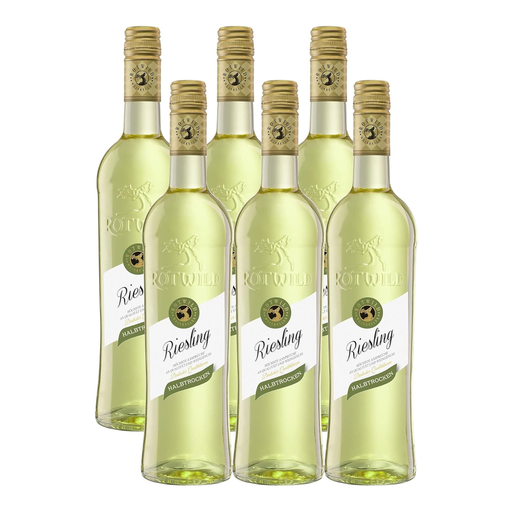
Why this product suits this profile: The 6-bottle pack is ideal for households and hosts looking for a semi-dry German Riesling to accompany light dishes and sociable occasions.
The ‘semi-dry’ description makes the style clearer than a simple description of fruity aromas. The alcohol content and serving temperature are provided.
Six 0.75-litre bottles, Riesling from Germany, 11 % vol. and a screw cap.
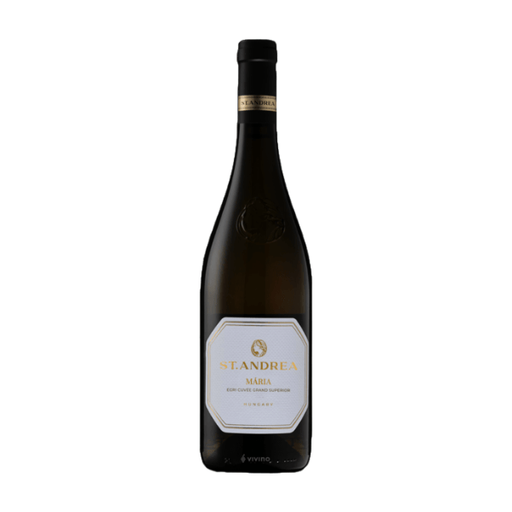
Why this product suits this profile: This single bottle from Eger in Hungary is aimed at buyers who place greater emphasis on origin, grape variety and detailed aroma descriptions than on buying a large pack.
The Eger origin, 13.5 % vol., grape variety details and declared sulphites are listed in the product information.
A single bottle with a specific region of origin, 0.75 litres and a pronounced food-friendly character according to the product description.
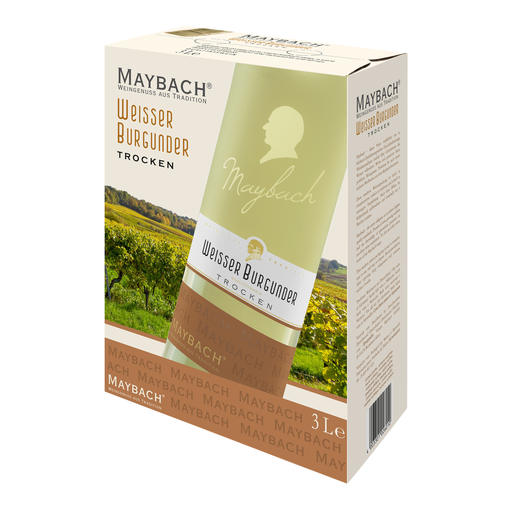
Why this product suits this profile: The 3-litre bag-in-box is designed for larger households, events and regular use.
The volume is clearly stated rather than described only by the number of bottles. Once opened, the manufacturer recommends consuming it within approximately four weeks.
3 litres, dry Pinot Blanc and recommended pairings with fish, seafood, poultry and pasta.
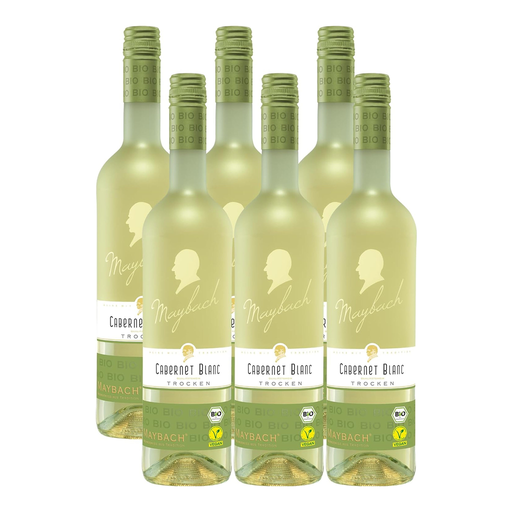
Why this product suits this profile: The 6-bottle pack combines the stated qualities ‘organic’, ‘vegan’ and ‘dry’ with a format suited to several serving occasions.
The relevant characteristics are explicitly stated in the product details. Ingredients and sulphites are also listed transparently.
Six 0.75-litre bottles, 11.5 % vol. and recommended pairings with salads and fish.
We have put together a complete, regularly updated list of products that fully meet these strict selection criteria and the safety regulations applicable in the EU.
For white wine for fish and seafood, dry Pinot Blanc, Riesling, Chardonnay and fresh international blends are among the options recommended in the relevant product descriptions. A light, fruity white wine can work well with salads, vegetables or mild sauces. Sweeter styles are often recommended with desserts, fruit salad or sweeter dishes. Ultimately, personal taste and the specific preparation of the dish remain the deciding factors.
Unopened bottles are best stored in a cool, dry place away from direct light. Strong temperature fluctuations should be avoided. Once opened, white wine should be kept in the fridge and consumed within a few days, depending on the format and the manufacturer’s instructions.
Many of the products listed are recommended at 8 to 12 °C. Lighter wines and Frizzante are often served colder, while fuller-bodied dry white wines can develop their aromas at around 10 to 12 °C. The specific manufacturer’s guidance on the product page or label takes precedence.
This can only be assessed reliably by looking at the price per litre. Alongside the total price, consider delivery costs, the volume per bottle, storage space and your planned consumption. A 6-bottle pack can be practical for regular hosts; for occasional drinkers, a single bottle is often the more suitable quantity.