
Lieferung heute & morgen

Qualitätsgarantie

Willkommens-Angebote freischalten: KOSTENLOSE Lieferung | Bis zu 80 % RABATT | Kostenlose 30-Tage-JoyPlus-Testphase
App herunterladen
If you’re looking to buy wholemeal bread online, you’ll find a wide selection of German bread, organic bread, crispbread, pumpernickel and bread baking mixes. However, product names alone don’t always reveal how high the wholemeal content is, which allergens are present, or how long a loaf can be stored. A careful check of the ingredients list and nutritional table can help you avoid a disappointing purchase.
Terms like “multigrain”, “seeded bread” or “fitness bread” aren’t standardised indicators of wholemeal content. A product may contain various grains or seeds without being predominantly made from wholemeal flour. The key is the ingredients list: if wholemeal flour or wholemeal meal appears near the top, the proportion is generally higher.
It’s also worth taking a close look at crispbread. According to the product information, Alnatura Organic Sesame Crispbread is made from 84% wholegrain rye flour and also contains 10% sesame. This makes its composition much clearer than products that simply advertise grains on the packaging.
Foods rich in fibre can still be high in energy. For example, Wasa Round Crispbread Sesame & Sea Salt contains 9.5 g of fibre and 424 kcal per 100 g according to its nutritional information. With crispbread, rusk and pretzel sticks, people often eat a larger quantity because the products are light and crunchy.
For a fair comparison, always check the values per 100 g. The most relevant ones are fibre, protein, sugar, salt and fat. Portion size remains important too.
Ordering bread online is convenient, but storage conditions vary significantly. Fresh or frozen multigrain rolls need space in the freezer. Dry products like crispbread or wholemeal rusk should be kept away from moisture. Vacuum-packed rye bread and pumpernickel can last considerably longer when unopened.
For instance, Mestemacher Westphalian Pumpernickel has an unopened shelf life of at least 329 days. Once opened, it’s best stored in a cool place and consumed promptly. The best-before date on the packaging is always the deciding factor.
Look for specific terms such as wholegrain rye flour, wholegrain wheat flour, spelt wholegrain flour or wholemeal meal. For organic bread, the EU organic logo or a traceable organic certification should appear on the packaging. “Organic” describes the production requirements but doesn’t indicate the protein or fibre content.
With a spelt bread baking mix, bear in mind that spelt is a type of wheat and contains gluten. According to the product information, the Küchenmeister Wholemeal Spelt Bread Baking Mix consists of 90% wholegrain spelt flour and contains dried spelt sourdough. Preparation requires approximately 600 ml of water per kilogram of baking mix.
As a practical guide, you can compare the fibre content of different products directly:
A higher protein value doesn’t automatically make a product suitable for every diet. Protein bread often contains ingredients such as wheat protein, soya, milk components or seeds. So always check the allergen labelling too.
The most common relevant allergens in German bread are gluten from wheat, rye, barley, oats or spelt, as well as sesame, soya, milk and nuts. Even a bread labelled as vegan should be checked against the current ingredients list.
Mestemacher Pumpernickel is described in the product information as vegan and lactose-free, and contains wholegrain rye meal, water, beet syrup, salt, barley malt extract and yeast. With other varieties, trace warnings may differ. If you have allergies or intolerances, the packaging information on your specific delivery is the definitive source.
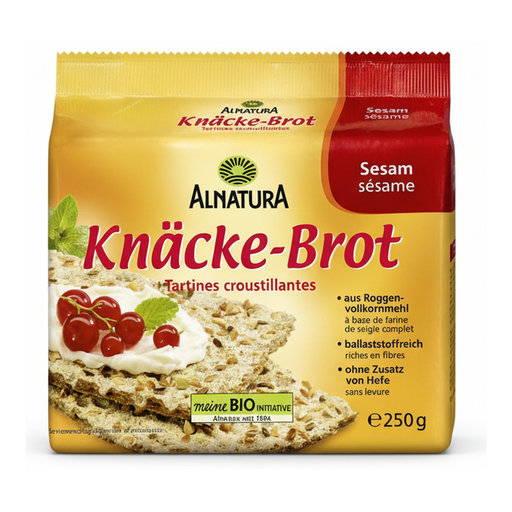
Why this product fits the profile: This crispbread is ready to eat, vegan and can be stored dry. It’s ideal for breakfast, the office and small snacks.
The stated wholegrain rye content of 84% makes the grain base clear. The ingredients list only contains wholegrain rye flour, sesame and sea salt.
16 g fibre per 100 g, organic certification according to product information, and at least 80 days unopened shelf life.
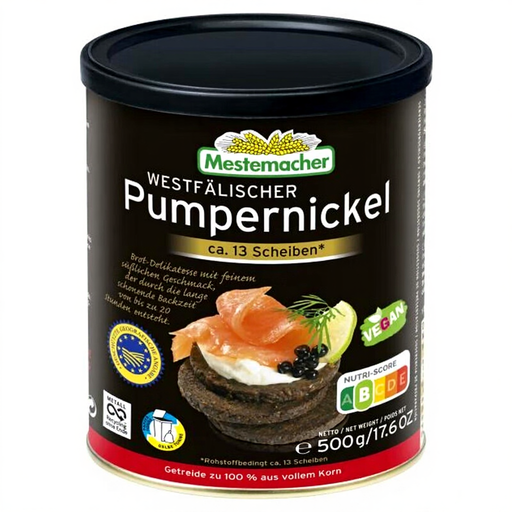
Why this product fits the profile: This pre-sliced Westphalian pumpernickel combines traditional production with a long unopened shelf life.
The product information lists wholegrain rye meal as the main ingredient and mentions a long, gentle baking time. This makes the bread type easy to identify.
11.5 g fibre per 100 g, pre-sliced slices and at least 329 days unopened shelf life according to the product description.
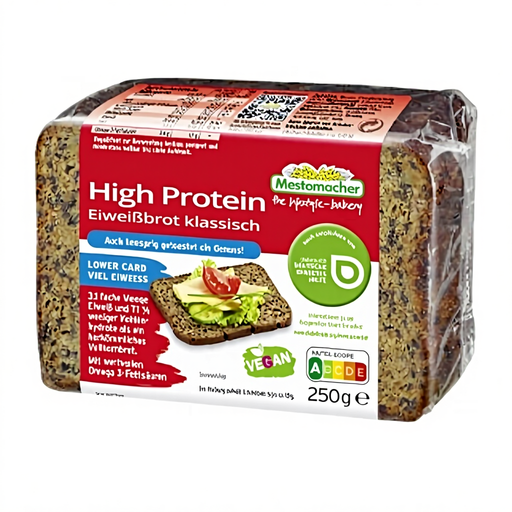
Why this product fits the profile: The compact pack is ideal for athletes and shoppers who are specifically watching their protein intake and keeping carbohydrates low.
The protein value is clearly stated at 22 g per 100 g. At the same time, soya, milk, sesame and gluten-containing grains are explicitly listed as allergens.
22 g protein, 7.5 g carbohydrates and 13 g fat per 100 g according to nutritional information; ready to eat and pre-sliced.
For families and offices, wholemeal pretzel sticks from Lorenz or wholemeal rusk from Brandt can be practical. According to the product description, Saltletts contain 84% whole wheat flour, while Brandt rusk contains 74% wholemeal wheat. However, both products contain gluten; the rusk also includes sugar, palm oil and soya, among other ingredients.
If you prefer to bake yourself, you can opt for the Küchenmeister Spelt Bread Baking Mix. For a vegan option, depending on the ingredients list, pumpernickel or certain rye crispbreads may be suitable. Frozen multigrain rolls, on the other hand, are only practical if you have enough freezer space.
We’ve put together a complete, regularly updated list of products that fully meet these strict selection criteria and the safety regulations in force in the EU.
Check the ingredients list for terms like wholemeal flour or wholemeal meal. The product name alone isn’t enough. You can also compare the fibre content per 100 g.
It depends on the product type. Crispbread and rusk are stored dry; vacuum-packed pumpernickel often has a long shelf life when unopened. Fresh or frozen rolls need different storage. Once opened, seal the packaging and follow the manufacturer’s instructions.
Yes, some rye breads and crispbreads are offered without animal ingredients. Nevertheless, always check the current ingredients and allergen list, as recipes and trace warnings can vary between products.