
Lieferung heute & morgen

Qualitätsgarantie

Willkommens-Angebote freischalten: KOSTENLOSE Lieferung | Bis zu 80 % RABATT | Kostenlose 30-Tage-JoyPlus-Testphase
App herunterladen
Anyone looking to buy a freezer will often compare the price and capacity first. But that only tells part of the story: a model may look spacious on paper yet be difficult to access in everyday use, consume too much electricity or be unsuitable for its intended location. This is particularly important in kitchens, cellars and garages, where you should check the design, climate class and dimensions before buying.
A large freezer does not automatically offer the most practical layout. A chest freezer often provides plenty of space for bulky food, but smaller packs can easily disappear beneath larger supplies. An upright freezer with drawers makes sorting easier, but requires more vertical clearance.
So, pay attention to:
A No Frost freezer reduces ice build-up and usually eliminates the need to defrost the freezer compartment manually. However, the function does not remove the need for cleaning, checking the door seal or ensuring free air circulation. If you choose a model without No Frost, plan to defrost it regularly, as a thick layer of ice reduces the usable space.
The EU energy scale ranges from A to G. A model with an energy rating of C, D or E should not be judged by the letter alone. Other important factors include:
A small freezer with low annual consumption may be a more sensible choice for a small household than a large compartment that is rarely filled.
For the kitchen, you can choose a freestanding or integrated freezer, a fridge with freezer compartment or a fridge freezer. An integrated model must fit the niche height and furniture door exactly. For example, the Beko B1754FN is designed for an 88-cm niche and offers 97 litres of fridge capacity and 13 litres of freezer capacity. Its fixed-door fitting system must be compatible with your existing kitchen design.
A fridge freezer saves floor space when you need both refrigeration and freezing in one appliance. If you already own a fridge and mainly need extra freezer space, a separate appliance is usually the more targeted choice.
The climate class indicates the ambient temperature range in which the manufacturer says the appliance should be operated. This is particularly relevant when choosing a freezer for a garage or cellar. Unheated rooms can become very cold in winter, and not every appliance is designed for these conditions.
Examples from the selection include:
The manufacturer’s specific installation instructions remain decisive. You must also take ventilation clearances, a dry, level surface and a suitable power connection into account.
Freezing capacity is stated in kilograms per 24 hours. It shows how much fresh food the appliance can freeze under the specified conditions. For households that regularly batch-cook or store larger shopping loads, this figure is more important than an eye-catching extra feature.
Storage time during a power cut can also be relevant. The Gorenje F49DPW, for example, specifies up to 15 hours, while the Bauknecht GKN W19170D specifies 17 hours. Keep the door closed during a power cut. These figures are not a guarantee for every situation, but refer to the respective manufacturer’s conditions.
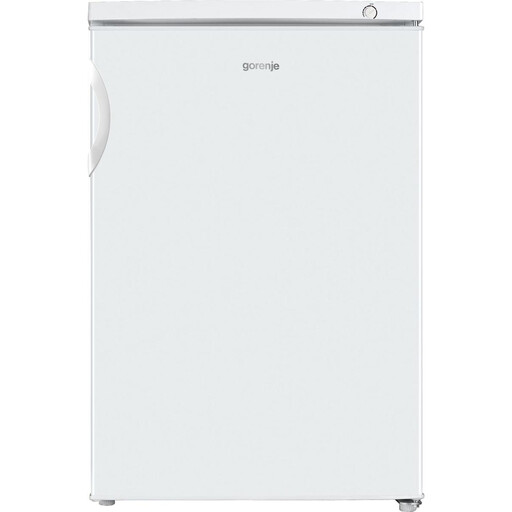
Why this product suits this profile: With 85 litres of usable capacity, this compact freezer is ideal for small households, flats or as additional storage space.
Three transparent drawers prevent small packs from becoming difficult to find inside the appliance. Manual defrosting remains a maintenance task that needs to be taken into account.
Energy rating D, annual consumption of 131 kWh according to the product information, freezing capacity of 4 kg per 24 hours and 15 hours of storage time during a power cut.
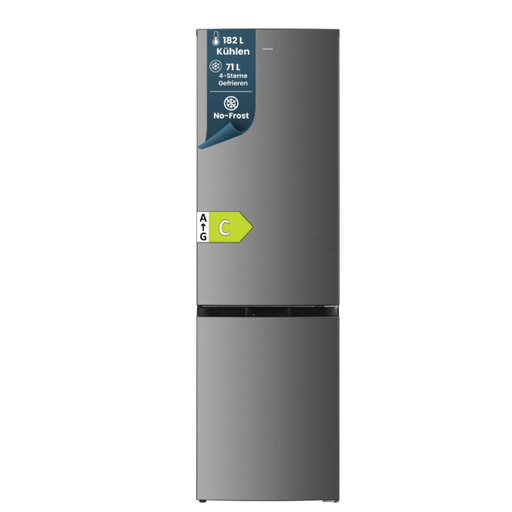
Why this product suits this profile: If you need refrigeration and freezing in one appliance, you get 182 litres of fridge capacity and 71 litres of freezer capacity in a compact width.
No Frost tackles the common problem of ice build-up. The reversible door and adjustable glass shelves make it easier to adapt the appliance to your kitchen.
Energy rating C, annual consumption of 141 kWh, noise level of 39 dB(A) and Super Freeze function according to the product data.

Why this product suits this profile: This chest freezer is designed for households with larger food supplies, particularly for cellars, utility rooms or suitable secondary spaces.
The WinterProof specification down to -15 °C takes cold, unheated rooms into account. Two baskets make sorting easier than a completely undivided interior.
198 litres of capacity, energy rating C, annual consumption of 126 kWh, Multi-Zone switching and freezing capacity of 13 kg per 24 hours.
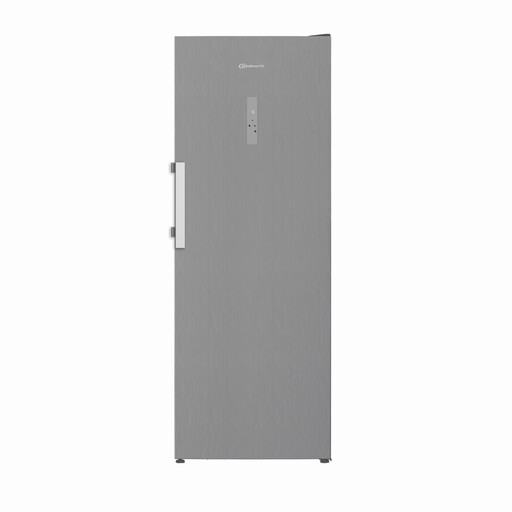
Why this product suits this profile: This large freezer is designed for substantial food supplies and regularly freezing larger quantities.
No Frost reduces the effort associated with ice build-up. Six drawers keep everything organised, while the installation location must be measured carefully because the appliance is 191.2 cm high and 70 cm wide.
404 litres of capacity, energy rating D, freezing capacity of 19 kg per 24 hours, 38 dB(A) and switchable fridge or freezer mode.
We have put together a complete, regularly updated list of products that fully meet these strict selection criteria and the safety regulations applicable in the EU.
Before placing your order, tick off these points:
That depends on your shopping habits and the fridge you already have. A small freezer of around 85 to 100 litres can provide additional storage for individuals or couples. If you regularly batch-cook or store larger quantities, determine your needs based on the amount of food rather than household size alone.
You can estimate the running costs using the stated annual consumption: kWh per year × your electricity price per kWh. The actual figure may vary depending on room temperature, how full the appliance is, how often the door is opened and how well it is maintained. Comparing energy ratings C, D and E is therefore worthwhile, but should always be done alongside usable capacity and purchase price.
Only if the stated climate class and installation instructions cover the garage’s temperature range. The appliance also needs a dry, level location with sufficient ventilation. If temperatures fluctuate considerably, pay particular attention to models whose product data explicitly states that they are suitable for unheated rooms or low ambient temperatures.