
Lieferung heute & morgen

Qualitätsgarantie

Willkommens-Angebote freischalten: KOSTENLOSE Lieferung | Bis zu 80 % RABATT | Kostenlose 30-Tage-JoyPlus-Testphase
App herunterladen
Anyone looking to buy cake glaze will find a wider selection than they might initially expect: clear cake glaze, red cake glaze, strawberry cake glaze, chocolate glaze or cake glaze for melting. The products differ not only in colour and flavour, but also in preparation, quantity, allergens and storage.
For home bakers, families and professional bakers, three typical purchasing challenges are particularly important:
Cake glaze powder is typically mixed with sugar and liquid, brought to the boil while stirring continuously, and then poured over the topped cake. This version is particularly suitable as cake glaze for fruit flans, as it can create a glossy layer that sets firmly enough for slicing.
A chocolate glaze or other cake glaze for melting, on the other hand, is heated in its sealed packaging. The temperature and wattage instructions should be followed precisely. Some products, for example, specify a maximum of 240 to 250 watts in the microwave. Heating too intensely or for too long can affect the product quality.
A red cake glaze can be a visually suitable choice for strawberries, raspberries or cherries. Strawberry cake glaze also adds a corresponding flavour. For mixed fruit, peaches or light-coloured cream cakes, clear cake glaze is generally more versatile, as the natural colour of the ingredients remains visible.
For biscuits, brownies, doughnuts and chocolate bakes, melting glazes are more practical. They can be applied directly or used to create fine lines and patterns. A runny glaze should be applied to completely cooled bakes so that it can be spread more evenly.
Checking the ingredients list helps prevent unsuitable purchases. Anyone looking for cake glaze without gelatine can look for products containing a plant-based gelling agent such as carrageenan. The specific ingredients list and allergen information on the packaging remain decisive.
Melting glazes may contain milk ingredients, soya or nuts, or may indicate that traces of these ingredients could be present. Even with products suitable for vegans, the labelling of the individual item should be checked. Nutritional values such as sugar and fat content vary particularly between melting glazes and should suit your recipe.
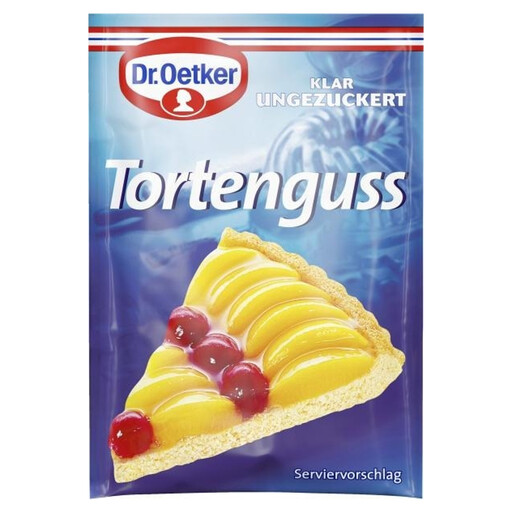
Why this product suits this profile: Three individual 12 g portions are suitable for several fruit flans and make it easier to measure out the right amount for individual baking projects. The colourless recipe leaves the topping clearly visible.
The clear version prevents unwanted colour changes. The instructions specify 250 ml of liquid per pack and also take liquid from tinned fruit into account.
Colourless, vegan-friendly according to the product information, and suitable for fresh and preserved fruit.
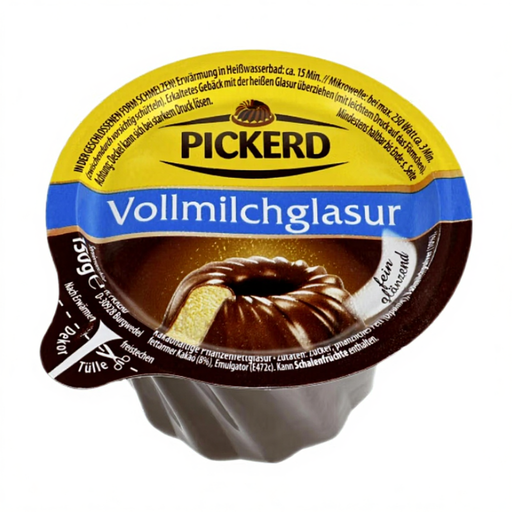
Why this product suits this profile: The glaze is heated in a resealable container and features a decorating nozzle. This makes it suitable for cakes, gateaux, biscuits and precise decoration.
The clear melting instructions for a bain-marie or microwave reduce the risk of overheating. The glaze is only applied once the bake has cooled.
150 g portion, milk powder and low-fat cocoa powder according to the ingredients information, plus a practical decorating nozzle.
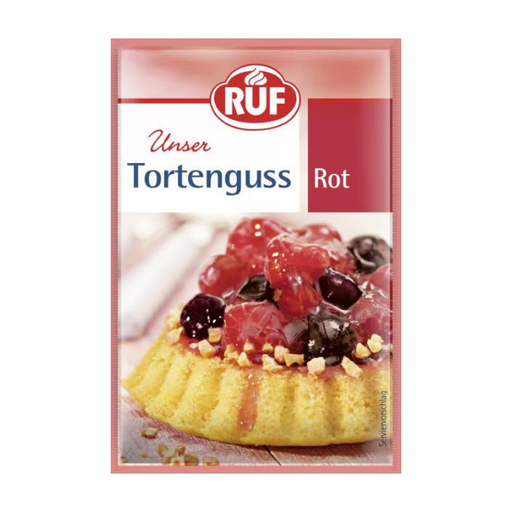
Why this product suits this profile: The red colouring complements berries, cherries and other darker fruits. Three sachets allow for several uses without having to prepare a large quantity.
The product colour is clearly visible before purchase. According to the ingredients information, carrageenan is used as the gelling agent; gelatine is not listed.
Three individual 12 g portions, preparation with 250 ml of water or diluted fruit juice, and a plant-based gelling agent according to the product description.
We have compiled a complete, regularly updated list of products that fully meet these strict selection criteria and the safety regulations applicable in the EU.
A few simple steps can help when using cake glaze made from powder:
When using cake glaze for melting, the sealed packaging should occasionally be moved or kneaded while heating, if the instructions specify this. Apply the glaze to completely cooled bakes. Any leftovers should be sealed properly and stored according to the information on the packaging.
Many powdered products are designed to be used with around 250 ml of liquid per sachet. This is generally enough for a classic fruit flan, but the exact quantity depends on the diameter, the height of the topping and the desired thickness of the layer. The information on the packaging is decisive.
Yes. Some products use plant-based gelling agents such as carrageenan. If you want to avoid gelatine, check the ingredients list rather than relying solely on the colour or brand name. For specific dietary requirements, the complete product labelling is also relevant.
Unopened products should be stored in a dry, cool place away from direct sunlight. The specific best-before date is shown on the packaging. Cake glaze that has already been mixed should be used immediately, as it sets as it cools. Once opened, melting glaze should be stored in an airtight container; here too, the manufacturer's instructions apply.