
Lieferung heute & morgen

Qualitätsgarantie

Willkommens-Angebote freischalten: KOSTENLOSE Lieferung | Bis zu 80 % RABATT | Kostenlose 30-Tage-JoyPlus-Testphase
App herunterladen
Anyone looking to buy children’s products online will find a wide range of toys, children’s vehicles and practical everyday items. However, your decision should not be based solely on colour, a discount or a striking advertising claim. Age recommendation, build quality, dimensions, cleaning requirements and the child’s actual everyday needs are what really matter.
Parents, grandparents and other relatives frequently encounter three typical pitfalls when shopping:
For toys for toddlers, the age limit should be compared directly with the child’s stage of development. Loose small parts are particularly important for children under three. Warnings such as ‘Choking Hazard’ or ‘Not suitable for children under 36 months’ must not be overlooked.
With a product such as LEGO DUPLO from age 2, the larger bricks are designed for small hands. Even so, packaging materials should be removed and the pieces checked regularly for damage. An interactive educational toy with cards, books or stickers may contain small parts and may therefore only be suitable from the age of three.
Practical products also need a clearly defined use: a children’s toothbrush is not a toy and children should be supervised while brushing their teeth. For a toothbrush for ages 0 to 2, a soft nylon brush head, suitable handle materials and regular replacement are important points to check.
For a children’s pedal-free bicycle, wheel size and colour are not the only factors that matter. Check the following:
A balance bike for children with airless tyres can be practical for families who want to avoid regular inflation. However, the actual fit depends on the child’s height and inside-leg measurement. The age indication ‘2 to 6 years’ or ‘3 to 6 years’ is therefore only a guide.
Wooden toys should be free from visible splinters and sharp edges. The HABA peg puzzle has been designed with large wooden knobs to make it easier for small hands to grip. Before each use, check that the knobs are firmly attached. Clean the puzzle with a damp cloth; it is not designed to be fully immersed in water.
For electronic products, battery life, the charging connection and replacement options are relevant. For sets containing batteries or rechargeable batteries, parents should also check that the battery compartment is secured against children and whether the product must be operated under supervision.
A children’s pocket knife requires particular care: even a rounded blade does not turn a functional metal tool into a toy. The child should learn how to open, use and close it safely together with an adult. In Germany, statutory regulations also apply to carrying knives. Further restrictions may apply in schools, at events and in weapon-free zones.
The following selection groups specific products according to typical everyday situations. Product details and safety information should also be checked on the relevant product page before purchase.

Why this product suits this profile: This wooden puzzle is designed for children from 12 months and requires neither batteries nor assembly. Large grasping knobs and simple shapes make it an easy introduction to a first peg puzzle.
The age limit, material and cleaning instructions are clearly stated. Nevertheless, damaged parts or loose knobs must be ruled out before use.
Solid wooden toy, no batteries required, 30 × 21 cm puzzle board and easy-to-grip pieces.
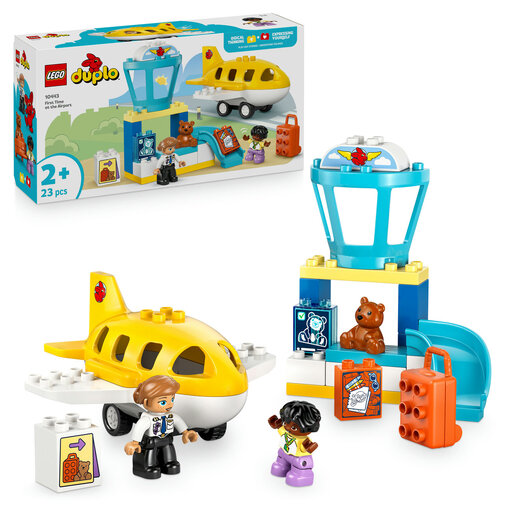
Why this product suits this profile: This set is aimed at children from age 2 and contains 23 pieces, an aeroplane, a control tower and three figures. Everyday scenes offer several opportunities for shared role play.
The piece size and age recommendation are aimed at toddlers. Packaging must be removed and the bricks checked regularly for damage.
23-piece set, three figures, visual building instructions and hand cleaning with warm water and mild detergent.
Why this product suits this profile: This pedal-free bicycle is designed for children aged 2 to 6 and has an adjustable seat and handlebars. Airless tyres reduce ongoing maintenance.
Adjustable components help prevent an unsuitable saddle height. Before buying, however, you should still compare the child’s inside-leg measurement, the overall weight and the intended riding surface.
12-inch version, adjustable seat and handlebars, airless tyres, low weight and easy assembly.
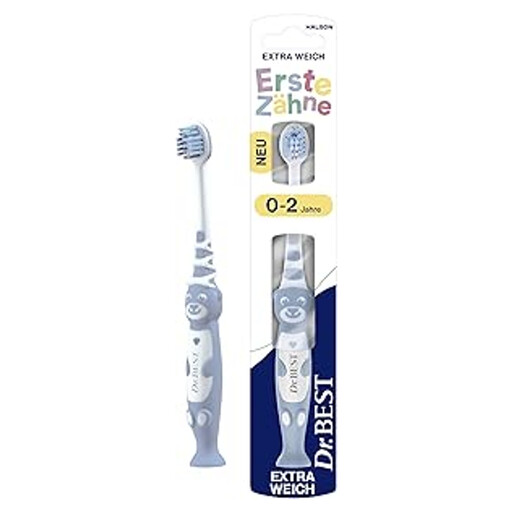
Why this product suits this profile: This toothbrush is designed for daily oral care for children aged 0 to 2. The extra-soft nylon brush head and handle made from PP and TPE are clearly specified.
Its use is clearly separate from play. Adults should supervise toothbrushing and replace the brush if the head is damaged or after three months at the latest.
Extra-soft bristles, age range 0–2 years, German origin information and compact individual packaging.
We have put together a complete, regularly updated list of products that fully meet these strict selection criteria and the safety regulations applicable in the EU.
For a gift, it is important to consider how it will be used together, as well as the child’s age. Board games from age 3 are suitable for two to four players, for example, and introduce children to simple rules, colours and taking turns. Schmidt Spiele ‘Meine 6 ersten Spiele’ contains six variations and requires no batteries.
For children who enjoy nature, a Victorinox My First Children’s Pocket Knife with a rounded tip may be an interesting choice. The model offers nine functions, is approximately 8.4 cm long and weighs 45 grams in the transparent blue version, according to the product details. It remains a functional tool and may only be used with responsible instruction and supervision. Check the applicable legal requirements at the location where it will be used.
Educational learning toys from age 1 do not have to be electronic either. A peg puzzle or a simple sorting game allows for short, repeatable play sessions. For older children, LEGO DUPLO, role-play sets or an interactive educational toy with audio content may be more suitable. Pay attention to volume, battery life, small parts and whether content can be used without a permanent internet connection.
Start with the age recommendation and safety warnings. Then consider dimensions, materials, included items and care requirements. For vehicles, inside-leg measurement, saddle height and weight are more important than the stated age group alone. For toys, check for small parts and the condition of moving components.
Their service life depends on the material, level of use, storage and care. Wooden puzzles should be cleaned with a dry method and checked regularly for splinters or loose knobs. For balance bikes, check the frame, handlebars, saddle and tyres before every use. Without specific information about usage and the manufacturer’s specifications, it is not possible to give a reliable fixed service life.
Battery-operated or rechargeable toys may incur electricity or battery costs. With balance bikes featuring airless tyres, regular inflation is not required; replacement parts may still be needed later. Children’s toothbrushes involve recurring costs because they should be replaced after three months at the latest or sooner if the bristles are damaged.