
Lieferung heute & morgen

Qualitätsgarantie

Willkommens-Angebote freischalten: KOSTENLOSE Lieferung | Bis zu 80 % RABATT | Kostenlose 30-Tage-JoyPlus-Testphase
App herunterladen
Cushioned running shoes are designed to provide a comfortable stride and support your feet during repeated impacts. However, a model that feels soft is not automatically the right shoe for you. What matters is the combination of midsole, fit, stability and outsole, as well as the surface you mainly run on.
This guide from the Joybuy Product Recommendation Officer explains what runners in Germany should look for before buying. The featured models cater to different needs – from lightweight men's running shoes for road runs to outdoor running shoes for changing surfaces.
A very soft midsole can feel comfortable when you first try it on. For longer runs or faster sessions, however, it is not just the soft sensation that matters, but also how controlled the shoe feels on landing and during toe-off. Cushioning with sufficient rebound can be more practical for high training volumes than a construction that focuses solely on softness.
A shoe can feel stable around the heel and midfoot while still restricting your toes at the front. If you have a wider forefoot, look specifically for running shoes with a wide toe box or a wider last. The key is that your toes do not touch the front when standing and can spread out sufficiently as you roll through your stride.
Smooth or lightly lugged rubber can be efficient on tarmac, but may offer less grip on wet woodland floors, loose stones or mud. For trail running, a hard-wearing outsole and a tread suited to the surface are more important than keeping weight to a minimum.
The midsole affects the impact sensation, roll-through and weight of the shoe. EVA foams or brand-specific foam platforms are often used. Pay attention to the following:
Figures such as percentage improvements in cushioning or energy return should be understood as manufacturer claims. They cannot be compared directly between different brands without further context.
Where possible, try running shoes on with the socks you use for training. There should be a small gap between your longest toe and the front of the shoe. During longer runs, your feet may become slightly more swollen as a result of heat and exertion.
Also check:
According to the product descriptions, some models fit true to size. With the Li-Ning models featuring a widened toe area or last, choosing half a size larger may be sensible if you have particularly wide feet or want more room.
For road runs, a flat rubber sole with flexible zones is often sufficient. If you regularly run on woodland paths, gravel or wet trails, look for non-slip running shoes with a clearly defined tread. For trail running shoes, resistance to abrasion and protection from sharp stones are also important.
A breathable mesh upper can help move heat and moisture outwards more easily. However, it is not a substitute for a waterproof membrane. If you frequently run in the rain or on wet paths, bear in mind the difference between breathable running shoes and waterproof protection from the elements.

Why this product suits this profile: This model is suitable for people looking for a lightweight shoe for roads, paved paths and occasional off-road sections. According to the product description, the standard version is designed for normal to wider feet.
The product description specifies a highly elastic EVA midsole and a ROCKYTEC rubber outsole with a defined tread. It therefore does not rely solely on a soft running feel.
Lightweight mesh upper, EVA midsole and a rubber outsole designed for wet or loose surfaces.
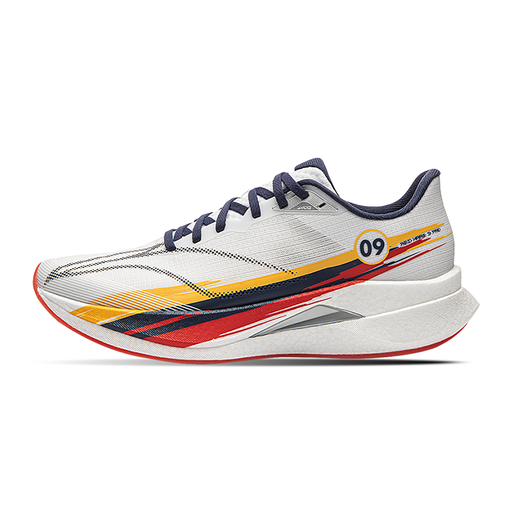
Why this product suits this profile: This model is aimed at runners looking for a lightweight training and speed shoe with a roomier forefoot and a stability-focused platform.
The widened platform addresses the common combination of wanting stability while having a tight forefoot. According to the product description, the BOOM-FIBER upper is ventilated.
Dual-layer BOOM midsole, rocker geometry, widened base and GCR rubber outsole with a structured tread.
Why this product suits this profile: For runners who frequently switch between the city, paved paths and trail sections, this model offers a construction designed for a range of surfaces.
The combination of a hard-wearing upper, EVA midsole and ROCKYTEC outsole is designed for changing conditions, rather than just dry tarmac.
Sandwich mesh for airflow, a highly elastic EVA midsole and a treaded sole designed for wet stones, mud and loose sand according to the product description.
We have put together a complete, regularly updated list of products that fully meet these strict selection criteria and the safety regulations applicable in the EU.
The lifespan of a shoe depends more on running volume, body weight, surface, running style and care than on any general time estimate. Replace your shoes when the outsole is visibly worn unevenly, the midsole appears permanently compressed or the heel no longer provides sufficient support.
For a longer service life:
Yes, provided the fit, stability and intended use are right. Beginners should not choose solely on the basis of the softest midsole. Instead, look for a secure heel fit, sufficient toe room and a tread suited to the surface.
It is not possible to give a reliable fixed mileage limit for every model. Check the tread, midsole and upper regularly. Visible deformation, reduced support or new pressure points are signs that it is time for a replacement.
That depends on the cushioning, fit and your personal tolerance. Lightweight models can be suitable for long runs if they provide sufficient stability and the midsole matches your running style. For changing terrain, you should also consider traction and protection for the upper.