
Lieferung heute & morgen

Qualitätsgarantie

Willkommens-Angebote freischalten: KOSTENLOSE Lieferung | Bis zu 80 % RABATT | Kostenlose 30-Tage-JoyPlus-Testphase
App herunterladen
When temperatures drop, a portable heater quickly becomes a welcome source of warmth. But the market for fan heaters is crowded and confusing, and many devices overpromise and underdeliver. Misleading marketing claims and unsuitable technology often lead to high electricity bills or inadequate heating performance. As your Joybuy Product Recommendation Officer, I'll help you identify the crucial features and make an informed choice.
Before you decide on a model, you should be aware of the typical pitfalls that often lead to disappointment.
To find the right electric heater, focus on these three objective criteria.
The technology determines how quickly and evenly a room is heated.
The heating power, specified in watts, must match the room size. A rule of thumb is that you need about 80–100 watts of power per square metre (with standard ceiling height and average insulation). A portable heater with 2000 watts is therefore suitable for rooms up to approx. 20–25 m?. A higher wattage doesn't necessarily mean higher electricity costs if the device has a good thermostat.
Modern convenience and safety features are essential for efficient and safe operation.
Here are some recommendations tailored to specific user profiles.
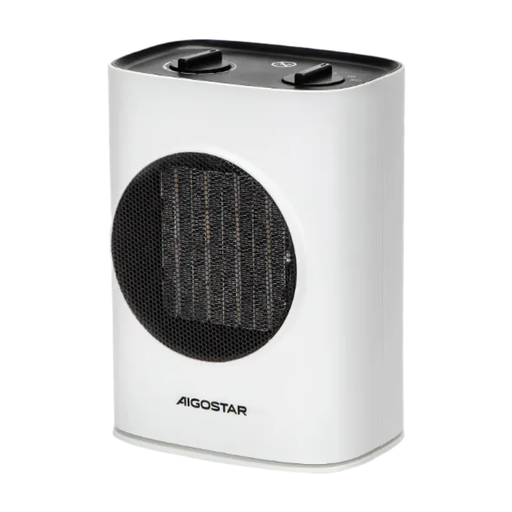
Why it's a good fit: Ideal for a home office or small rooms that need to be warmed up quickly and easily. Its compact design and simple mechanical controls focus on the core function: providing fast heat.
This device avoids the trap of unsafe, low-cost products by integrating essential safety standards like tip-over and overheat protection, confirmed by its VDE certification.
Fast heat-up time thanks to PTC heating technology. The 45° oscillation ensures better heat distribution in the immediate area.
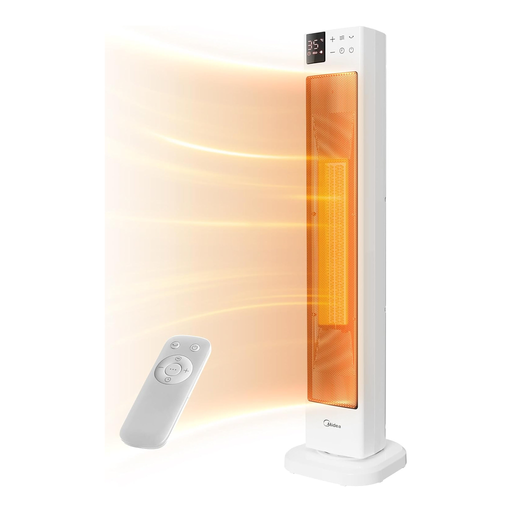
Why it's a good fit: For users who value comfort, efficiency, and full control. Ideal for living rooms or larger offices where features like a remote control, timer, and a precise thermostat make daily life easier.
This model counters the "energy-saving" trap with a tangible ECO mode and an adjustable thermostat (5–35°C). These features actively regulate power consumption instead of just making empty promises.
Comprehensive control via remote and digital display, including a 24-hour timer. The 75° oscillation provides wide heat distribution in rooms up to 30 m?.
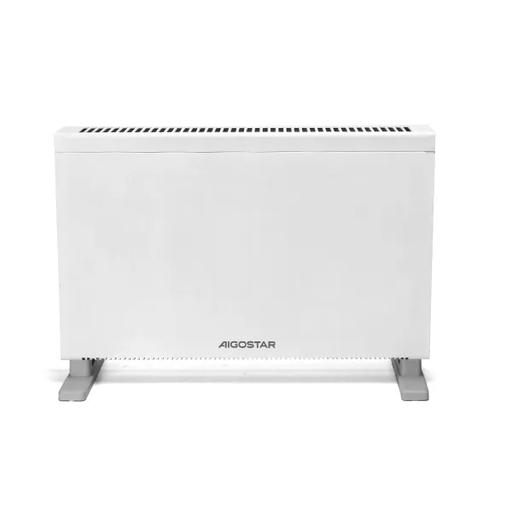
Why it's a good fit: Perfect for users who need even, quiet warmth for extended periods, such as in a living room or bedroom. The convection technology ensures a pleasant, draft-free room temperature.
This device solves the problem of using the wrong heating technology. Instead of a loud fan, it uses natural convection heating, which is more efficient and pleasant for continuous operation in larger rooms (20–25 m?).
Silent operation and even heat distribution. Control via remote and a 24-hour timer offer added convenience for long-term use.
We have compiled a complete, up-to-date list of products that fully meet these strict selection criteria and European safety regulations.
Power consumption depends on the wattage and duration of use. The cost is easy to calculate: Power in Kilowatts (kW) × Hours of Operation × Price per Kilowatt-hour ($/kWh). A 2000-watt fan heater (2 kW) running at full power for one hour consumes 2 kWh. At an electricity price of $0.30/kWh, that would be $0.60 per hour. However, a device with a good thermostat and ECO mode does not run continuously at full power, which significantly reduces the actual costs.
Yes, ceramic fan heaters with PTC (Positive Temperature Coefficient) technology are generally considered safer. The ceramic elements are self-regulating: their electrical resistance increases as their temperature rises, which naturally prevents overheating. Additionally, they don't glow as intensely as traditional heating coils, reducing the fire risk from contact with dust or other particles.
Only if the device is explicitly designed and certified for it. Heaters for damp environments must have at least an IP21 rating (protection against dripping water). Using a standard fan heater in the bathroom is extremely dangerous due to high humidity and the risk of water splashes, which can lead to an electric shock. Always check the manufacturer's specifications regarding suitability for damp rooms.