
Lieferung heute & morgen

Qualitätsgarantie

Willkommens-Angebote freischalten: KOSTENLOSE Lieferung | Bis zu 80 % RABATT | Kostenlose 30-Tage-JoyPlus-Testphase
App herunterladen
Charging your own electric car at home is a key advantage of e-mobility. It's convenient, predictable, and often more cost-effective than public charging. However, with a vast array of models and features, choosing the right charging station can be a challenge. This guide serves as a reference to help you understand the technical requirements and make an informed decision on an 11kW wallbox that fits your needs. We will outline objective criteria and present a selection of models with different specialisations.
The decision for a wallbox should be based on your individual living situation, your vehicle, and your usage habits. Three key aspects are particularly important.
The charging power, measured in kilowatts (kW), determines how quickly your vehicle's battery is charged. While 22kW wallboxes offer higher charging power, in Germany they are subject to approval by the grid operator, which is not always granted. An 11kW wallbox, on the other hand, only requires notification. For most use cases, this power level is more than sufficient to fully charge an EV overnight. It represents an excellent compromise between charging speed and straightforward installation, making it a widespread and practical solution for charging your EV at home.
A smart wallbox offers far more than just charging. Using a wallbox with app control, you can start, stop, and monitor charging sessions remotely. You can also schedule charging times to take advantage of cheaper off-peak electricity tariffs, for example. A particularly relevant feature for homeowners is the function for a wallbox with solar surplus charging. This allows the electric car to be charged specifically with surplus electricity from your own photovoltaic system. This maximises self-consumption and significantly lowers charging costs.
The classic EV charging station is permanently mounted on a wall in a garage or carport. It is a durable and robust solution for daily use. Alternatively, there is the mobile wallbox. This is a high-performance charger that is not permanently installed and can be connected to an existing CEE high-power socket. This option offers high flexibility, as the device can be taken with you when needed, for instance to a holiday home or a second residence.
Based on the aforementioned criteria, we have compiled a selection of chargers that cover different requirements—from maximum flexibility to intelligent solar power utilisation.
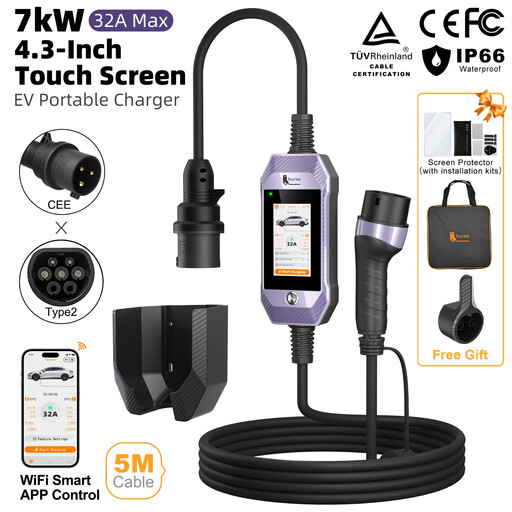
Why it stands out: This mobile charger combines the functionality of a wallbox with the flexibility of a portable device. The large 4.3-inch touchscreen display provides a clear overview of all charging data and settings directly on the unit. Paired with Wi-Fi app control, it allows for comprehensive control and scheduling of charging sessions. Dual temperature monitoring at the plug and control box ensures added safety.
Advantages:
Who is it for? For EV drivers looking for a straightforward and flexible charging solution without permanent installation. Ideal for renters or individuals who regularly want to charge their vehicle at different locations with a high-power socket.
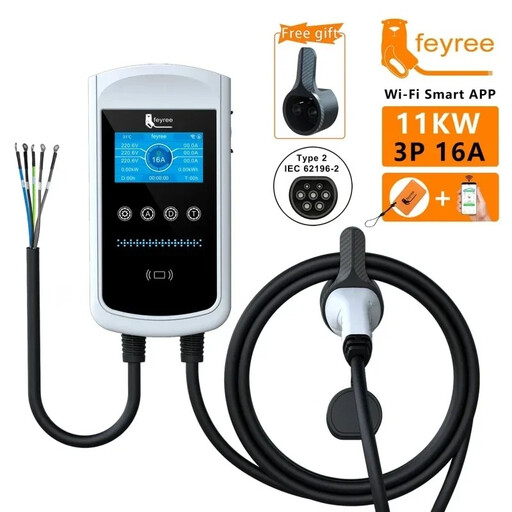
Why it stands out: This permanently installable 11kW wallbox is a comprehensive solution for smart charging at home. It integrates seamlessly into your smart home via the Tuya Smart App. The device not only offers solid charging performance but also provides detailed records of charging sessions and any errors, simplifying management and troubleshooting. The integrated Type B residual current protection (AC 30mA + DC 6mA) is an important safety feature.
Advantages:
Who is it for? For homeowners who want a reliable, permanently installed, and intelligently controlled charging station for daily use and who value detailed usage data.
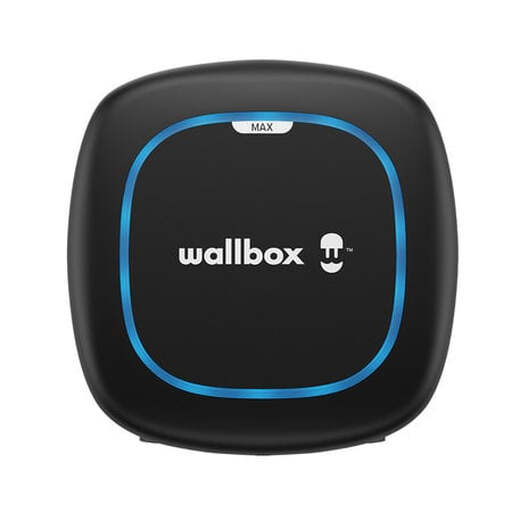
Why it stands out: The Pulsar Max from Wallbox is specifically designed for intelligent integration into the home energy grid. Its standout feature is Eco-Smart, which enables charging with 100% solar power or a mix of solar and grid power. In conjunction with an optional power meter, the wallbox dynamically adjusts the charging power to the available energy. The Power Sharing Smart function also allows for intelligent load management for up to 100 charging points, making it attractive for larger installations as well.
Advantages:
Who is it for? For tech-savvy homeowners with a photovoltaic system who want to optimise their self-consumption and minimise charging costs. Also a great choice for multi-family homes or business locations that require a scalable charging system.
The models presented here cover common use cases and demonstrate the range of modern charging solutions. However, if you wish to compare more features or discover additional models with different specifications, you can find a broader selection of chargers for your electric vehicle in our category.
Discover our full range of smart car chargers
The main difference lies in the maximum charging power and the regulatory requirements in Germany. An 11 kW wallbox charges more slowly but is sufficient for a full overnight charge for most EVs. It only needs to be registered with the grid operator. A 22 kW wallbox charges faster but requires approval from the grid operator, which may be subject to technical conditions.
No, in Germany, an 11kW wallbox does not require a permit, but it must be registered. This means you or your electrician must notify the responsible grid operator of the installation before commissioning. The installation itself must be carried out by a qualified electrician.
Most electric cars and wallboxes sold in Europe use the Type 2 wallbox plug (also known as the Mennekes plug). This has become the European standard. All models presented here use this plug type. Nevertheless, it is advisable to check your vehicle's specifications before purchasing to ensure compatibility.