Joybuy Insights

Gas Grill Buyer's Guide: Find the Perfect Model

The search for the right grill can quickly become overwhelming. The market is filled with models that promise a multitude of features. However, not every innovation adds real value, and often, grandiose marketing claims hide design flaws that can quickly sour the grilling experience. Before you make a decision, it's wise to know the common pitfalls to avoid a bad investment.

Many buyers focus on the number of burners or the overall size, but overlook crucial quality features. The most common problems include:

  1. Unstable Construction: Especially with models advertised as "portable," wobbly legs or thin sheet metal that warps under heat are a common nuisance. Such a grill is not only a safety hazard but is often unusable after just one season.
  2. Misleading Size Specifications: Manufacturers often list the external dimensions of the grill, while the actual usable cooking area is significantly smaller. This leads to disappointment when there isn't enough space for the food you planned to cook for your guests.
  3. Complicated Cleaning: The claim "easy to clean" is often optimistic. Non-removable parts, inaccessible corners, and low-quality coatings can turn cleaning into a tedious chore.

A closer look at the fundamental product characteristics helps to bypass these problems and find a durable, functional appliance.

What Really Matters: Crucial Criteria Before You Buy

To find a grill that meets your needs, you should focus on three core areas: material, grilling surface, and heat regulation. These factors are the primary determinants of performance, longevity, and user-friendliness.

Material and Workmanship: The Foundation of Durability

The quality of the material is a direct indicator of a grill's robustness and heat retention.

  • Stainless Steel: Offers high corrosion resistance and is relatively easy to maintain. Pay attention to the grade of the stainless steel (e.g., 304-grade), as cheaper alloys can be more susceptible to rust.
  • Cast Iron: Retains heat exceptionally well, ensuring even heat distribution and distinctive sear marks. Enamelled cast iron is also protected from rust and simplifies cleaning.
  • Powder-Coated Steel: A cost-effective option that provides adequate protection with proper care. However, the coating is susceptible to scratches, which can lead to rust. The material thickness of the lid and firebox is crucial for heat insulation and stability.

The Actual Grilling Surface and Grate

Don't measure success by the external dimensions, but by the usable cooking area. Consider how many people you regularly grill for. The grill grate itself is the direct contact surface for your food.

  • Chrome-Plated Grates: Standard on many entry-level models. Functional, but the coating can wear off over time.
  • Enamelled Grates: Offer good non-stick properties and are easier to clean.
  • Stainless Steel Grates: Very durable, rust-proof, and easy to clean, but they retain heat less effectively than cast iron.
  • Cast Iron Grates: The top choice for high-heat searing and deep sear marks. However, they require more maintenance (seasoning with oil) to prevent rust.

Fuel and Heat Regulation: Control Over Your Results

The type of fuel determines not only the flavour but also the ease of use.

  • Charcoal Grill: Delivers the classic smoky flavour. A good kettle grill allows for precise temperature control for direct and indirect grilling through adjustable vents on the top and bottom.
  • Gas Grill: Ready to use quickly and easy to regulate. The number of burners and their separate controls allow for the creation of different heat zones.
  • Electric Grill: Ideal for a balcony grill or for indoor use, as it produces very little smoke. A precise thermostat is the most important feature here for controlled cooking results. Models like a contact grill also offer the advantage of double-sided cooking.

Top recommendations for every user

Instead of naming a single "perfect" model, it's more useful to consider grills based on specific use cases. Here are three recommendations tailored to different needs.
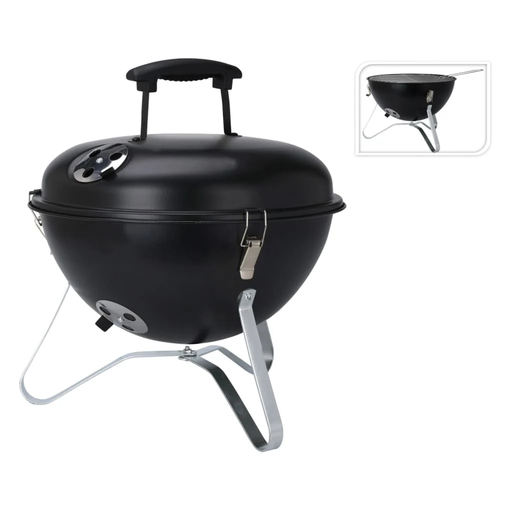
MATCH FOR: Spontaneous Grillers & Balcony Owners
ProGarden Kompakter Tisch-Kugelgrill 37CM

ProGarden Compact Table Kettle Grill 37CM

Why This Fits Their Persona: Ideal for use on a balcony, patio, or as a portable grill for picnics. This small grill with a kettle design delivers authentic charcoal flavour in a compact space and is quick to set up.

How It Avoids the Trap

The three silicone-coated locking clips and sturdy metal frame directly address the instability problem common in portable grills. It ensures safe transport and a robust build.

Key Advantage & Pros

Compact design with secure transport clips. Two air vents allow for good temperature control, which is not a given for grills of this size.
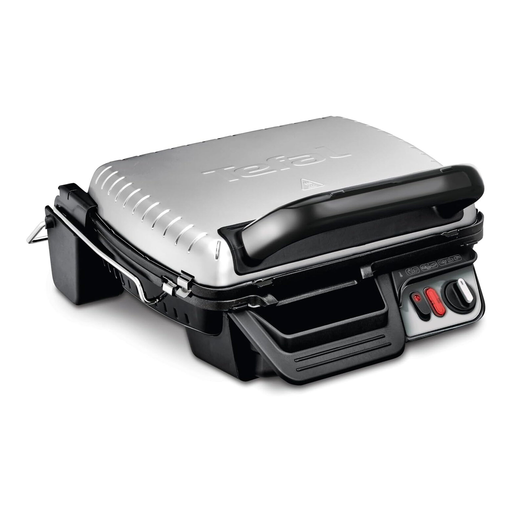
MATCH FOR: Flexible Indoor & Outdoor Grillers
Tefal 3-in-1 Kontaktgrill mit Backfunktion, GC3060

Tefal 3-in-1 Contact Grill with Baking Function, GC3060

Why This Fits Their Persona: Perfect for year-round use. Use it as a contact grill for paninis and sandwiches, or open it flat to use as a tabletop grill for a small gathering. As an electric grill, it's low-smoke and therefore ideal for apartments.

How It Avoids the Trap

This model decisively solves the cleaning problem: the non-stick grill plates and the grease drip tray are removable and dishwasher-safe. This makes cleanup genuinely easy.

Key Advantage & Pros

High versatility thanks to its 3-in-1 function. The adjustable thermostat with three settings allows for precise temperature control for different types of food.
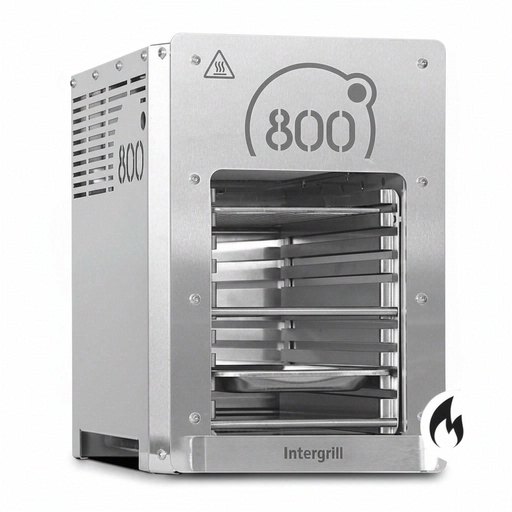
MATCH FOR: Steak Enthusiasts & High-Temp Searing
Intergrill 800° Gas Steak Grill – Professional

Intergrill 800° Gas Steak Grill – Professional

Why This Fits Their Persona: This specialised steak grill is designed for users who want to cook the perfect steak with an intense crust. The infrared gas burner reaches temperatures that are not possible with conventional grills.

How It Avoids the Trap

As a purpose-built device, it avoids the compromises of all-in-one solutions. The stainless steel construction is designed for durability and the stresses of high temperatures, which prevents the problem of unstable materials.

Key Advantage & Pros

According to the manufacturer, it reaches temperatures of up to 800°C for a perfect Maillard reaction. Eight rack levels for the grill grate allow for precise control over the cooking process.

Looking for more options?

The models presented here are just a snapshot. If you're looking for other solutions that are ready to go in an instant, we've put together a suitable selection for you.

## Frequently Asked Questions (FAQ)

What type of grill is permitted on a balcony in Germany?

The regulations can vary depending on building rules and your rental agreement. In general, electric grills are the safest and most widely accepted option, as they have no open flames and produce minimal smoke. Gas grills are also sometimes permitted, while charcoal grills are forbidden on most balconies in multi-family buildings due to fire hazards and heavy smoke. Always check your local building regulations first.

How do I properly clean a cast iron grill grate?

A cast iron grill grate should not be cleaned with washing-up liquid, as this removes the protective patina. The correct method is:

  1. After use, heat the grill to a high temperature to burn off any food residue.
  2. Brush the cooled, but still warm, grate with a brass or stainless steel brush.
  3. After cleaning, lightly coat the grate with a high-smoke-point vegetable oil (e.g., rapeseed oil). This protects against rust and maintains its non-stick properties.

What is the difference between direct and indirect grilling?

These are two fundamental grilling methods that differ in the position of the food relative to the heat source.

  • Direct Grilling: The food is placed directly over the heat source (charcoal, gas burner, heating element). This method is suitable for fast cooking at high temperatures, ideal for steaks, burgers, or sausages that are done in less than 20-25 minutes.
  • Indirect Grilling: The food is placed next to the heat source, not directly above it. On a kettle grill, the charcoal is placed on the sides; on a gas grill, only the outer burners are turned on. With the lid closed, the hot air circulates like in a convection oven. This method is ideal for larger cuts of meat like whole chickens, roasts, or ribs that need to be cooked slowly and gently.