
Lieferung heute & morgen

Qualitätsgarantie

Willkommens-Angebote freischalten: KOSTENLOSE Lieferung | Bis zu 80 % RABATT | Kostenlose 30-Tage-JoyPlus-Testphase
App herunterladen
Purchasing a new car seat is an important decision. A 360-degree rotating car seat promises maximum convenience for getting your child in and out, easing the strain on parents' backs. However, the market is flooded with models whose marketing promises often create more confusion than clarity. Before you invest, it's crucial to understand the common pitfalls that can lead to a poor purchasing decision.
As your Joybuy Product Recommendation Officer, I'm here to help you define objective criteria for your selection. This guide focuses on the facts that truly matter, showing you what to look for to make an informed choice.
The sheer number of options can be overwhelming. Many products advertise long lifespans and numerous features. Here are three common assumptions that often lead to disappointment:
To avoid making the wrong choice, you should focus on verifiable technical features and standards. These three points are crucial for safety and functionality.
The i-Size standard is not just a recommendation but a current approval standard that enhances safety. Look for seats certified under UN R129. Specifically, this means:
Ergonomics are especially critical during the first few years. A car seat for birth to 4 years is often a well-balanced solution. When considering one, look for:
The 360-degree function should be smooth and operable with one hand. It's important that the seat locks firmly into the driving positions (forward and rear-facing) without any wobble. A high-quality mechanism is an indicator of the seat's overall build quality.
Based on the objective criteria above, we have identified a few models that are well-suited for specific user profiles.

Why it's a good fit: For parents who want a single, high-quality solution from birth to around four years old. The focus is on maximum comfort and safety without needing to switch products. The 360° rotation significantly simplifies daily handling.
This model is specifically designed as a car seat from birth to 4 years, avoiding the compromises of a 0-12 year seat. The included newborn insert and adjustable recline function are tailored to the needs of the youngest infants.
Meets the i-Size (UN R129/03) standard. Integrated Linear Side-impact Protection (L.S.P. System). According to the manufacturer, the Plus version offers up to six times more breathability thanks to mesh inserts.
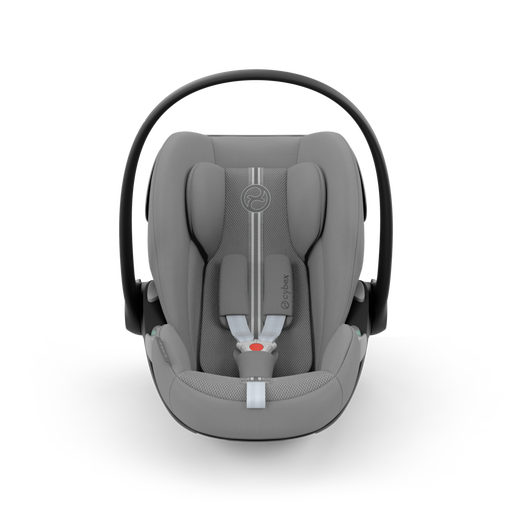
Why it's a good fit: Ideal for parents who want maximum flexibility in the first few months. This lightweight infant car seat can be removed from the car and clicked onto a stroller (travel system). The 180° rotation on the base station makes placing the baby inside easier.
This product is highly specialised and doesn't promise to do everything. It provides an ergonomic, flat recline position that many convertible seats cannot achieve. It's part of a modular system (Base G) that allows for a seamless transition to the next-stage seat.
Ergonomic recline position both in and out of the car. Lightweight for high portability. Certified for aircraft use. Compatible with the Base G, which can also be used for the Sirona G i-Size follow-up seat.
Choosing the right accessories for travelling with children can be a challenge. We've curated a selection of products designed for safety, comfort, and practicality.
1. How long should my child travel in a rear-facing car seat? The i-Size standard (UN R129) mandates a rear-facing position up to a minimum age of 15 months and a height of 76 cm. However, safety organisations like the ADAC recommend keeping children rear-facing for as long as possible, ideally up to the age of four. This position offers significantly better protection for the head, neck, and spine in a frontal collision.
2. Is a car seat with Isofix always safer than one installed with a seatbelt? A car seat with Isofix primarily reduces the high risk of incorrect installation. The rigid connection to the car's chassis ensures high stability. A seat installed correctly with the vehicle's seatbelt can also be safe, but studies show that the error rate for seatbelt installation is significantly higher. Therefore, in practice, Isofix offers a higher degree of reliable safety.
3. What does the search term "safest car seat test" mean? This term usually refers to the independent and comprehensive product tests conducted by motoring clubs or consumer organisations, such as the ADAC in Germany. These tests go far beyond the legal minimum requirements and evaluate criteria like crash safety (frontal and side-impact), handling, ergonomics, and presence of harmful substances. Instead of looking for a single "test winner," it is advisable to review the detailed results for the models on your shortlist.