
Lieferung heute & morgen

Qualitätsgarantie

Willkommens-Angebote freischalten: KOSTENLOSE Lieferung | Bis zu 80 % RABATT | Kostenlose 30-Tage-JoyPlus-Testphase
App herunterladen
Anyone looking to buy honey will find a wide selection online: organic honey, blossom honey, acacia honey, linden blossom honey, forest honey, forest blossom honey and specialty products such as Manuka honey MGO 100+. The differences go beyond flavour. Origin, ingredients, labelling, consistency and pack size all determine whether a product suits your everyday needs.
The term “honey syrup” does not automatically mean that a product consists of 100% honey. According to the product information, Asbal Suzme Bal Honey Syrup 486 g is a blend containing at least 10% honey and glucose-fructose syrup. This may be suitable for drinks, desserts or recipes, but it should not be equated with pure blossom or forest honey.
If you specifically want to buy honey, check the ingredients list. For pure honey, the only listed ingredient should be “honey” or the specific type of honey.
Honey is inherently a natural product. Its flavour, however, depends on the plants from which the nectar or honeydew was collected. Mild acacia honey, for example, is well suited to sweetening tea, while forest honey generally has a more intense, malty flavour.
Marketing terms such as “premium” or “from selected landscapes” are no substitute for verifiable information on ingredients, net quantity, country of origin and the responsible food business operator.
Many types of honey crystallise over time. This is a natural change and, by itself, is not an indication of adulteration or spoilage. Depending on its sugar composition, some varieties crystallise faster than others. A warm water bath can restore a more fluid consistency. Direct high heat and microwaves are not suitable, as they may affect the flavour and product characteristics.
For classic honey, the ingredients list should be as clear as possible. Products such as blossom honey, fruit blossom honey or linden blossom honey are generally marketed as single-variety honeys. The label should also state the net quantity and the best-before date.
A closer look is particularly important with blended products. Turkish honey syrup may offer an interesting flavour and convenient portioning, but depending on the recipe, it may contain additional sugar syrups. It is therefore not the right choice if you are looking for a 100% honey variety.
The origin may vary even within the same variety. According to the product information, Langnese Organic Pure Blossom Honey 250 g is described as German organic honey, 100% organic blossom honey and bears the DE-ÖKO-005 certification. Organic certification confirms compliance with applicable organic standards; it does not automatically indicate a particular flavour or special nutritional properties.
It is also worth checking the country of origin for forest honey or forest blossom honey. According to the product description, the Langnese Pure Liquid Forest Blossom Honey 250 g is bottled in Germany and described as a blend of EU and non-EU honeys.
For Manuka honey, MGO refers to the methylglyoxal content. According to the stated product data, a product labelled MGO 100+ contains at least 100 mg/kg of MGO. This is a measurable product parameter, but it is not a medical claim.
UMF is a separate certification system. The Manuka Doctor Manuka Honey UMF 18+ / 690+ MGO lists both values together. MGO and UMF ratings should not be treated as directly equivalent. Anyone looking to buy Manuka honey should pay attention to clear labelling, the stated net quantity and the information provided by the responsible supplier.
For everyday household use, 250 g of honey is often a manageable size. It is suitable for breakfast, tea, yoghurt and cereal without leaving a large jar open for an extended period.
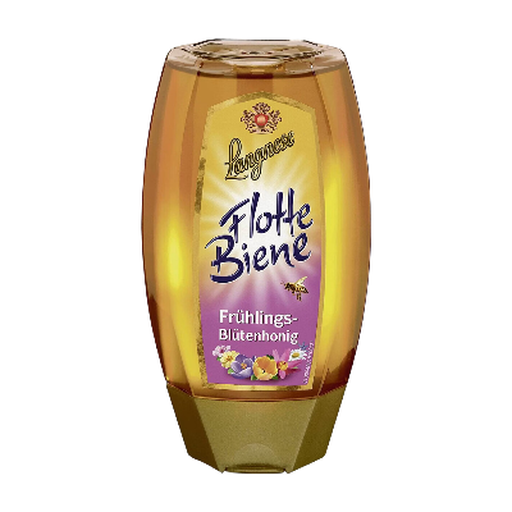
Why it fits: A classic spring blossom honey for bread, yoghurt, tea and recipes. The 250 g portion is a manageable size for everyday household use.
According to the product information, the product consists of honey, making the ingredients list clearer than those of honey syrup blends.
250 g net quantity, liquid consistency according to the product name and versatile uses.
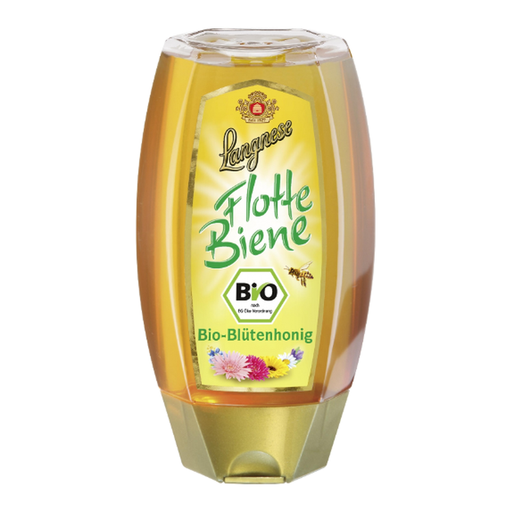
Why it fits: For households that prioritise organic certification and German organic blossom honey when shopping for honey.
The product data specifies 100% organic blossom honey and DE-ÖKO-005 certification rather than making only general claims about naturalness.
250 g, 100% organic blossom honey and storage at room temperature in a dark place.
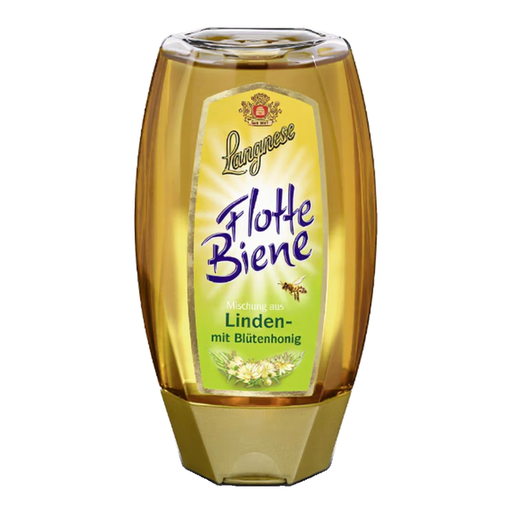
Why it fits: Its creamy consistency and mildly minty blossom aroma, according to the product description, pair well with tea, toast, yoghurt and fruit.
The variety designation makes the expected aroma and consistency more transparent than general product advertising.
100% linden blossom honey, 250 g and, according to the product information, made in Germany.
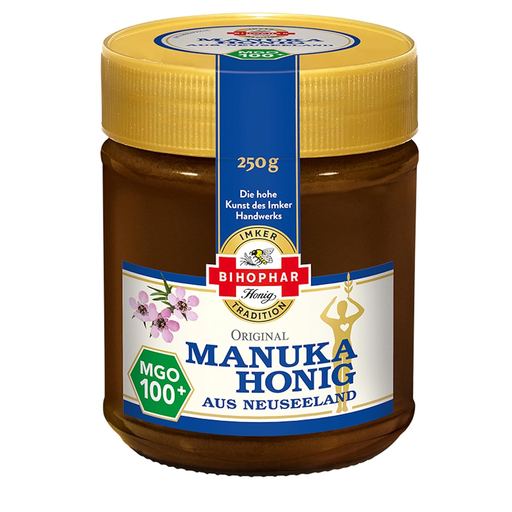
Why it fits: For adults seeking Manuka honey from New Zealand with a clearly stated MGO value.
According to the product data, the MGO 100+ designation indicates at least 100 mg/kg of MGO. This makes comparison with products lacking a specific value easier.
100% Manuka honey according to the product description, 250 g and origin: New Zealand.
Browse the complete selection to compare honey jars by variety, size and product features.
Honey should be stored in a cool, dry place away from light. Normal room temperature is generally sufficient for the products mentioned; refrigeration can accelerate crystallisation. The jar or bottle should be tightly resealed after use. A clean, dry spoon helps prevent additional moisture and contamination.
Honey is a sugar-rich food and should be incorporated into a balanced diet accordingly. Children under twelve months must not be given honey, regardless of variety, origin or organic certification. People with a known allergy to bee or pollen products should check the ingredients and allergen information. If you have diabetes or specific dietary requirements, individual medical advice is advisable.
Mild varieties such as acacia honey, spring blossom honey or fruit blossom honey can be easily used in tea, cereal and yoghurt. Those who prefer a more pronounced flavour can choose forest honey. To preserve its product characteristics, honey should not be stirred into boiling-hot liquids.
When stored in a dry, dark place and kept tightly sealed, honey has a long shelf life. The best-before date on the relevant packaging remains authoritative. Crystallisation primarily changes the consistency and is not automatically a sign of spoilage.
No. MGO 100+ is a designation for the stated methylglyoxal content and describes a product parameter. Manuka honey is a food product and should not be regarded as a substitute for medical treatment or professional medical advice.