
Lieferung heute & morgen

Qualitätsgarantie

Willkommens-Angebote freischalten: KOSTENLOSE Lieferung | Bis zu 80 % RABATT | Kostenlose 30-Tage-JoyPlus-Testphase
App herunterladen
Anyone looking to buy a blender will find countless appliances boasting high wattages, extensive accessories and promises of exceptionally smooth results. In practice, however, motor power is not the only deciding factor. For smoothies, shakes, soups, sauces or baby food, the design, container, blades, cleaning requirements and safety features all need to suit your everyday routine.
A powerful blender can process hard ingredients more effectively, but wattage alone does not show how efficiently the blades, motor control and container work together. Even a 500-watt appliance may be perfectly adequate for soft fruit, sauces or soups. For frozen fruit, nuts or a blender with an ice-crush function, the blade design, pulse function and permitted operating time are also important.
The capacity stated on the blending container does not always correspond to the maximum recommended amount of liquid. Safety markings such as “MAX” should never be exceeded. A small smoothie maker with a capacity of 0.6 litres is suitable for individual portions, while a countertop blender with a capacity of 1.5 to 2.1 litres is better suited to families, several shakes or preparing meals in advance.
A blender with accessories may include a whisk, chopper, measuring jug or grinding cup. What matters is whether these attachments are suitable for the tasks you have in mind and whether they can be cleaned separately. With a hand blender, you should also check whether the motor unit must not be immersed in water and which parts are dishwasher-safe.
A countertop blender, also known as a blender, works in a fixed container. It is practical for larger quantities, smoothies, shakes and frozen ingredients, and may also offer ice crushing depending on the model. A hand blender is used directly in a saucepan or suitable container. This reduces the need for decanting and is particularly suitable for soups, sauces and purées.
A personal blender or portable smoothie maker is designed for individual portions. Depending on the design, the drinking containers can be sealed with a lid immediately after blending. For small kitchens, student accommodation, offices or motorhomes, a compact blender often takes up less space than a large countertop model.
When choosing a blender, motor power and controls should be considered together. Multiple speed settings make it easier to adapt the appliance to soft and firm ingredients. A pulse function operates in short intervals and can be useful for ice, frozen fruit or ingredients that need to be roughly chopped.
Pay attention to the maximum operating time stated in the instructions. Many appliances should not be run for longer than around 60 seconds without a break. If you are blending several batches, allowing the appliance to cool down is advisable. An overheating protection system or safety cut-off can stop the appliance if it is overloaded, but this does not replace following the recommended filling levels.
A BPA-free blender has containers or accessories made from materials that the manufacturer identifies as BPA-free. This is a specific material declaration, but it is not a promise of any particular health effect. Stainless steel blades are standard for most appliances. Removable blades make cleaning easier, but they must be handled carefully because of their sharp edges.
Dishwasher-safe parts save time, while the motor housing can generally only be cleaned with a damp cloth. Unplug the appliance before cleaning it. Hot liquids should only be processed if the instructions expressly permit this. With some appliances, steam can cause pressure to build up inside the container.
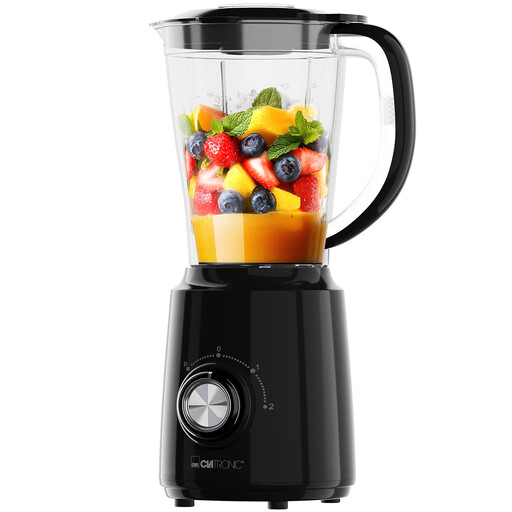
Why this product suits this profile: The 1.5-litre container, three speed settings and turbo or pulse function cover typical tasks in the home.
The scale on the BPA-free blending container helps you fill it accurately. The ice-crush function is listed as a specific feature rather than being inferred from a high wattage.
1.5-litre container, four-blade stainless steel knife, filling opening and safety cut-off.
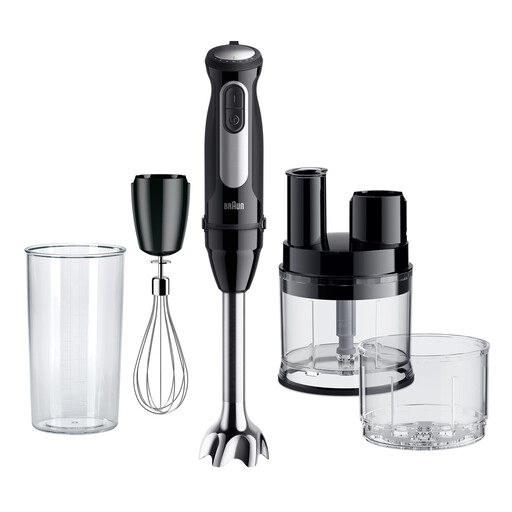
Why this product suits this profile: This hand blender offers 25 speed settings plus turbo, as well as several attachments for different kitchen tasks.
Variable control allows you to process ingredients in stages rather than relying on turbo mode continuously. The EasyClick Plus system is designed to make it easy to change attachments frequently.
1,000-watt motor, blending foot, whisk, chopper, ice-crush blade and BPA-free 600-ml measuring beaker.
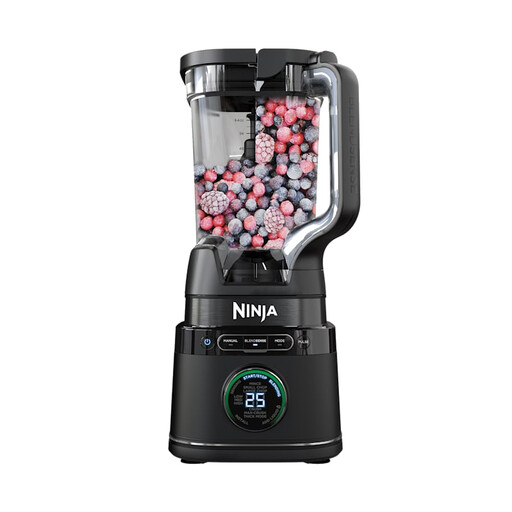
Why this product suits this profile: The large container is designed for bigger quantities and can be used for family portions, frozen drinks, smoothies and salsas.
The maximum liquid volume is stated as 1.9 litres within the 2.1-litre container. Three speeds and pulse mode allow you to achieve different consistencies.
1,000-watt motor, six stainless steel blades, 2.1-litre jug and dishwasher-safe removable parts.
We have put together a complete, regularly updated list of products that fully meet these strict selection criteria and the safety regulations applicable in the EU.
For soft fruit, milkshakes and simple sauces, 300 to 500 watts may be sufficient. For ice, frozen fruit or hard ingredients, models with higher power and suitable blade technology are a sensible choice. You should also check the permitted operating time and maximum filling capacity.
The lifespan depends on how the appliance is used, cleaned and stored, as well as whether it is overloaded. Short blending intervals, sufficient liquid and regular breaks can help protect the motor. Blades, seals and containers should be replaced when worn, in accordance with the manufacturer's instructions.
Electricity costs can be calculated using the power consumption, operating time and electricity tariff: power in kilowatts multiplied by the operating time in hours and the price per kilowatt-hour. As a blender usually runs for only a few minutes per use, the operating time has a greater impact on running costs than wattage alone.