
Lieferung heute & morgen

Qualitätsgarantie

Willkommens-Angebote freischalten: KOSTENLOSE Lieferung | Bis zu 80 % RABATT | Kostenlose 30-Tage-JoyPlus-Testphase
App herunterladen
If you’re looking to buy a blender, you’ll quickly find yourself faced with a huge choice: smoothie blenders, countertop blenders, personal blenders, stick blenders and cordless blenders all differ significantly in power, capacity and intended use. A machine that’s fine for single smoothies won’t automatically be suitable for hot soups or larger family portions.
Three marketing pitfalls in particular often lead to the wrong purchase:
Before you buy, you need to decide how you’ll use it. A personal blender or blender with a drinking cup is ideal for single portions, drinks and taking to the office or gym. The ingredients are usually blended directly in the cup, which then doubles as your drinking vessel.
A classic countertop blender typically offers more capacity and is suitable for multiple portions. For soups, it’s crucial to check whether the jug is approved for warm or hot liquids according to the instruction manual. Some compact smoothie blenders may only be used with cold ingredients.
A stick blender – also known as a hand blender – is flexible: soups, sauces, purées and baby food can be processed directly in the pan or a suitable container. Models with a whisk and chopper attachment cover additional kitchen tasks. A cordless blender, on the other hand, offers portability but needs regular charging and has a limited run time per charge.
A higher wattage can help with hard or frozen ingredients, but it’s not a standalone mark of quality. Also check:
The nutribullet Pro NB907CP, according to the product specifications, operates with 900 watts, a stainless steel blade with six cutting edges and one-touch operation. The manufacturer lists ice, frozen fruit, nuts and seeds as suitable ingredients. Use should be in short intervals of less than 60 seconds.
For single portions, around 500 to 700 ml is usually sufficient. Families or users who want to prepare multiple portions at once will need a larger capacity. Look for a clear MAX marking and suitable lids.
For a BPA-free blender, the information must be explicitly stated in the product description or manual. The nutribullet Pro comes with a 925 ml cup and a 700 ml cup made from BPA-free material. The WMF Küchenminis Smoothie-to-Go Mini Blender features two 0.6-litre Tritan containers with screw-on lids.
Removable, dishwasher-safe parts reduce maintenance effort. However, the motor base, power cord and plug must never be immersed in water. Sharp blades should only be handled by the plastic or housing base.
A dishwasher-safe blender is therefore not necessarily fully dishwasher-proof. Check which components can actually go in the top rack. With the nutribullet Pro, the cups, lids and blade unit are suitable for the top rack of the dishwasher according to the product information. With the nutribullet Flip, the blade unit must be cleaned by hand, while the insulated cup can go in the top rack.
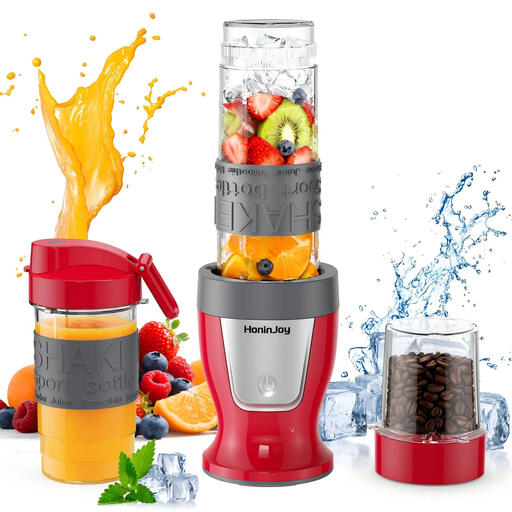
Why this product fits the profile: Two BPA-free portable cups (20 oz and 14 oz) plus an additional grinding cup cover drinks and small dry ingredients.
The product specifications mention a pulse function, overheat protection and a locking mechanism for the cup and blade unit.
650-watt motor, two drinking cups, grinding cup and dishwasher-safe removable parts.
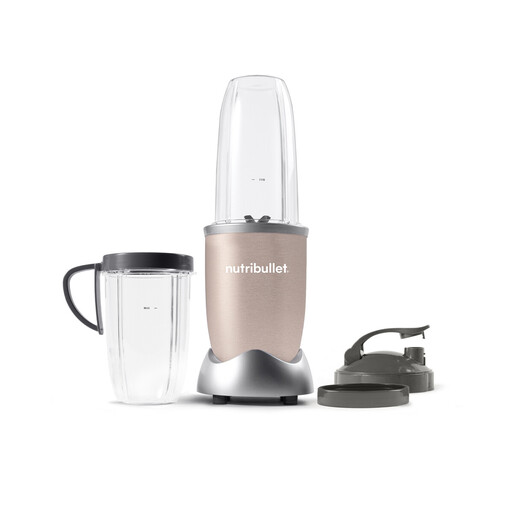
Why this product fits the profile: The compact machine is designed for smoothies, frozen fruit and single portions up to larger drink quantities.
The usage instructions limit the run time and exclude hot liquids, so the operating limits are clearly defined.
900 watts, six-blade stainless steel blade, 925 ml and 700 ml cups, plus dishwasher-safe contact parts.
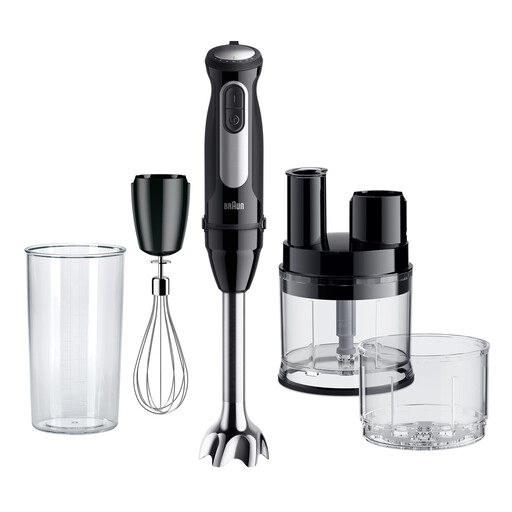
Why this product fits the profile: This stick blender is aimed at households that want to cover smoothies, soups, sauces, chopping tasks and whipped cream with one set.
25 speed settings plus turbo allow graduated processing rather than a single, hard-to-control power level.
1000 watts, 25 speeds plus turbo, EasyClick-Plus system, whisk, chopper and BPA-free 600 ml measuring jug.
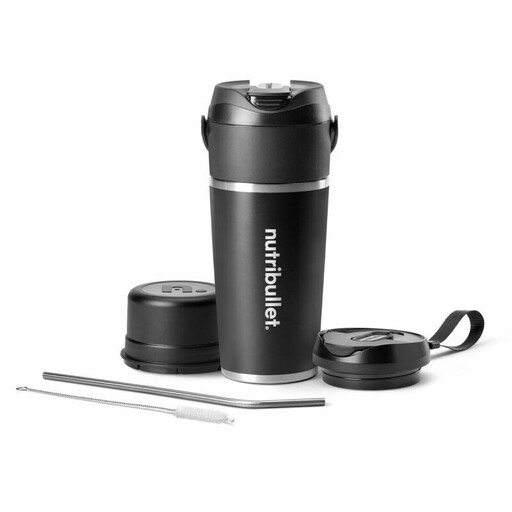
Why this product fits the profile: This cordless blender combines a 590 ml insulated cup with USB-C charging and a carry handle for the office, gym or travel.
The manual specifies short blending intervals, a limited quantity of ice cubes and the exclusion of hot liquids.
Rechargeable 11.1-volt battery, USB-C charging, insulated stainless steel cup and, according to the product information, over 14 cycles per charge.
We’ve put together a full, regularly updated list of products that fully meet these strict selection criteria and the safety regulations in force in the EU.
For cold smoothies, personal blenders, countertop blenders and many stick blenders are all suitable. For soups, a stick blender is particularly flexible because it can be used directly in a suitable pan. With countertop blenders, you must check the permitted temperature according to the manual. Not every machine is designed for hot liquids.
That depends on the intended use. For soft fruit and simple drinks, compact machines with lower power may be sufficient. For ice, frozen fruit or frequent chopping tasks, you need to evaluate the motor power, blade design, pulse function and permitted run time together. A wattage figure alone doesn’t guarantee a specific blending result.
It’s impossible to give a general lifespan. It depends on frequency of use, ingredients, cleaning and adherence to the operating intervals. Overfilling, running dry, unsuitable hard objects and excessively long run times can strain the motor and blades. If you observe the MAX marking, take breaks and clean removable parts promptly, you’ll reduce typical wear and tear in daily use.