
Lieferung heute & morgen

Qualitätsgarantie

Willkommens-Angebote freischalten: KOSTENLOSE Lieferung | Bis zu 80 % RABATT | Kostenlose 30-Tage-JoyPlus-Testphase
App herunterladen
A blender should be reliable for everyday use: making smoothies in the morning, blending a post-workout shake or processing frozen fruit and ice. Product descriptions often focus on high wattage and bold marketing claims, but other details are often more important when choosing what to buy.
A powerful motor alone doesn’t guarantee smooth results. The blade design, number of blades, jug shape and recommended operating time all matter too. A 1,000-watt appliance may be less effective with ingredients that don’t circulate well than a lower-wattage model with a well-designed jug.
Also check whether the stated power is the continuous rating or the peak rating. These figures aren’t directly comparable.
A blender with a 1.5-litre jug doesn’t necessarily offer 1.5 litres of usable capacity. The maximum fill line is often lower, particularly for liquids or recipes that foam. A larger jug makes sense for a family, while a personal blender is designed more for individual portions.
Not every appliance has dishwasher-safe parts. Blenders with fixed blades can be trickier to clean. A secure jug lid, non-slip feet and an overheating cut-out are important too. Never touch sharp blades with your fingers, whether the blender is running or you’re rinsing it.
For soft fruit, milkshakes and juices, several speed settings and a pulse function are often enough. If you plan to crush ice or blend frozen ingredients, look for a dedicated ice-crush function or a clear statement from the manufacturer that the blender is suitable. Also check the recommended maximum running time. Some compact models should only be used for short bursts and need time to cool down afterwards.
A high-performance blender with several speed settings or automatic programmes gives you more control over different consistencies. A compact smoothie maker may be all you need for simple smoothies. Choose a model to suit how you’ll actually use it.
A glass jug is heavier, but may have different cleaning and temperature-resistance properties from a plastic one. Plastic jugs should have clear information about their material. A BPA-free blender is an important consideration for many households; check that the claim applies specifically to the jug and lid.
For families and multiple portions, jug capacities of 1.2 to 2.1 litres are worth considering. Smaller drinking cups are handy for the office, gym or travel. A portable blender with a rechargeable battery is more flexible, but needs regular charging and makes smaller portions.
Look for removable blades, dishwasher-safe jugs and seals that are easy to reach. The motor unit should never be immersed in water. A jug with a filling opening can be useful while blending, but use it only as instructed.
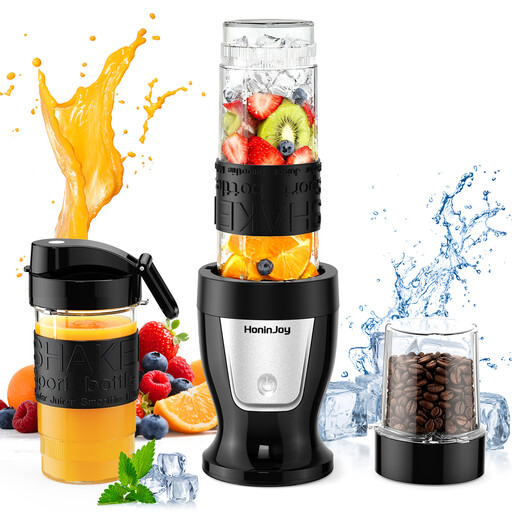
Why it suits this kind of user: Two BPA-free drinking cups in 20 and 14 oz, plus a grinding cup, make it a good fit for individual portions, shakes and smaller kitchens.
The product specifications list pulse control, overheating protection and a locking mechanism for the cup and blade assembly.
650-watt peak motor, two portable cups and, according to the product details, dishwasher-safe cups, lids and grinding cup.
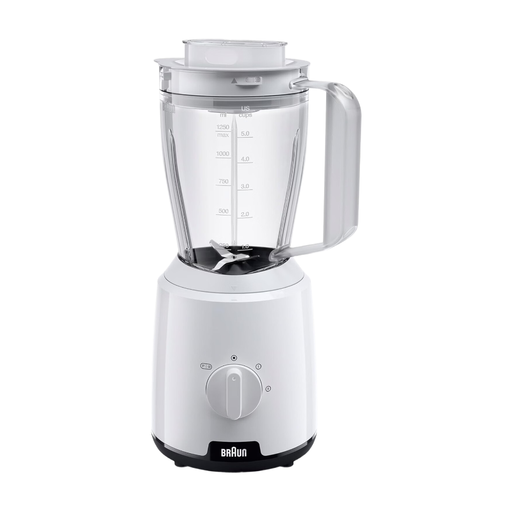
Why it suits this kind of user: The 1.5-litre jug, two speed settings, pulse function and ice-crush setting cover common kitchen tasks.
The TriAction jug design is intended to guide ingredients towards the blades. The product details also mention a safety lock and overheating protection.
600-watt motor, 1.5-litre capacity and, according to the product details, removable parts that are dishwasher-safe.
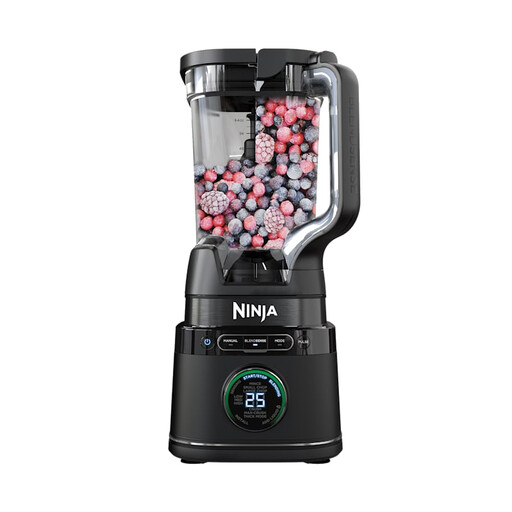
Why it suits this kind of user: The large jug is designed for multiple portions, frozen drinks and preparing recipes for the household.
The specifications distinguish between the 2.1-litre jug capacity and a maximum liquid capacity of 1.9 litres. They also state a maximum running time of 60 seconds.
1,000 watts, three speed settings plus pulse, and a six-blade stainless steel assembly, according to the product description.
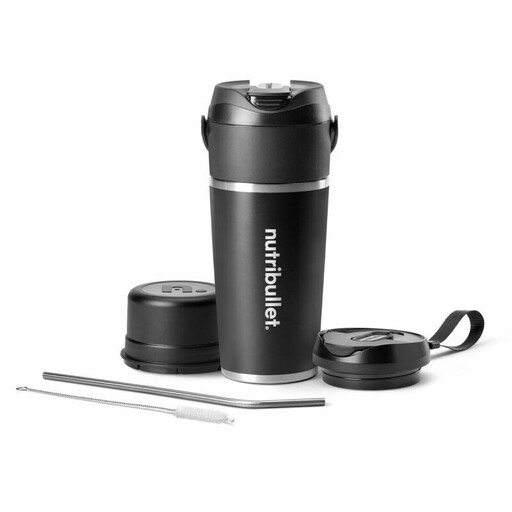
Why it suits this kind of user: This rechargeable blender comes with a 590-millilitre insulated cup, USB-C charging and a carry handle for blending on the go.
Battery life is stated as more than 14 cycles of 30 seconds each. The product details also specify a limit of a few ice cubes per cycle.
Cordless operation, double-walled stainless steel cup and drinking lid. The blade attachment should be washed by hand, according to the instructions.
We’ve put together a comprehensive, regularly updated list of products that meet these strict selection criteria and fully comply with the safety regulations in force in the EU.
There’s no single wattage that’s right for every use. Compact models can be enough for soft ingredients and simple smoothies. If you regularly blend ice, nuts or frozen ingredients, also check the blades, pulse function, how ingredients move around the jug and the manufacturer’s guidance on what the blender can handle.
Lifespan depends on how you use, clean and maintain the blender, as well as how hard you push it. Overfilling, hard foreign objects and running it for too long can put strain on the motor and blades. Stick to the maximum fill level and recommended breaks, and clean the parts straight after use.
Energy use depends on the power rating and how long the blender actually runs. As most blending takes only a few seconds to a few minutes, how often and for how long you use it is what matters. A battery-powered model also needs charging. For a fair comparison, consider the stated power alongside how much you expect to use the blender each day.